Psychological First Aid in simple terms — “Being there for someone when they need it most”

What do you say to someone who has just lost their home? In situations like these, we are often afraid of saying the wrong thing. It can feel as though only a psychologist, with the right words and specialist techniques, can help. Yet sometimes support begins with something as simple as: “I’m here. Let’s think about what we can do right now.”

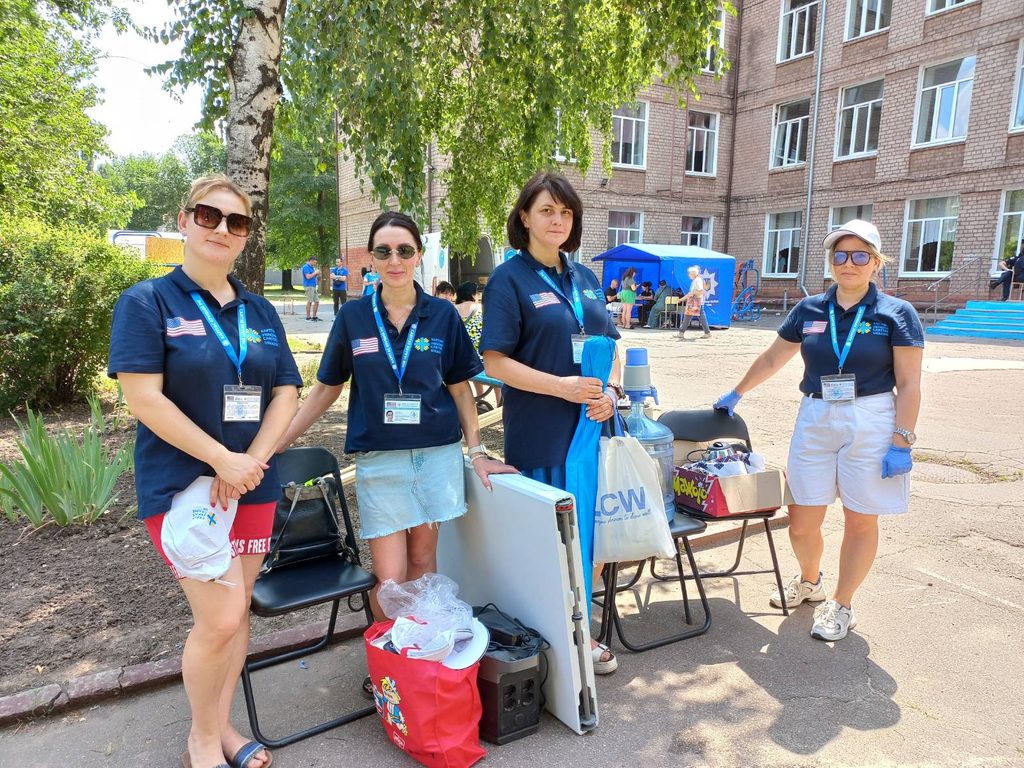
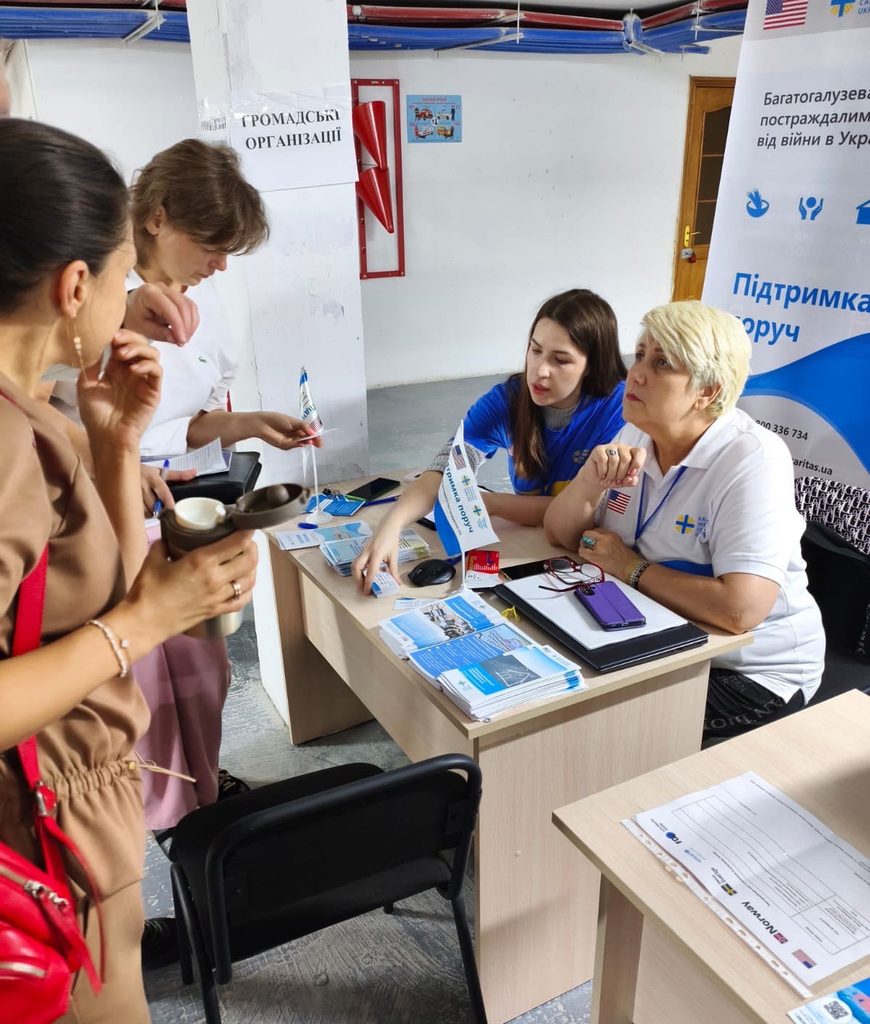
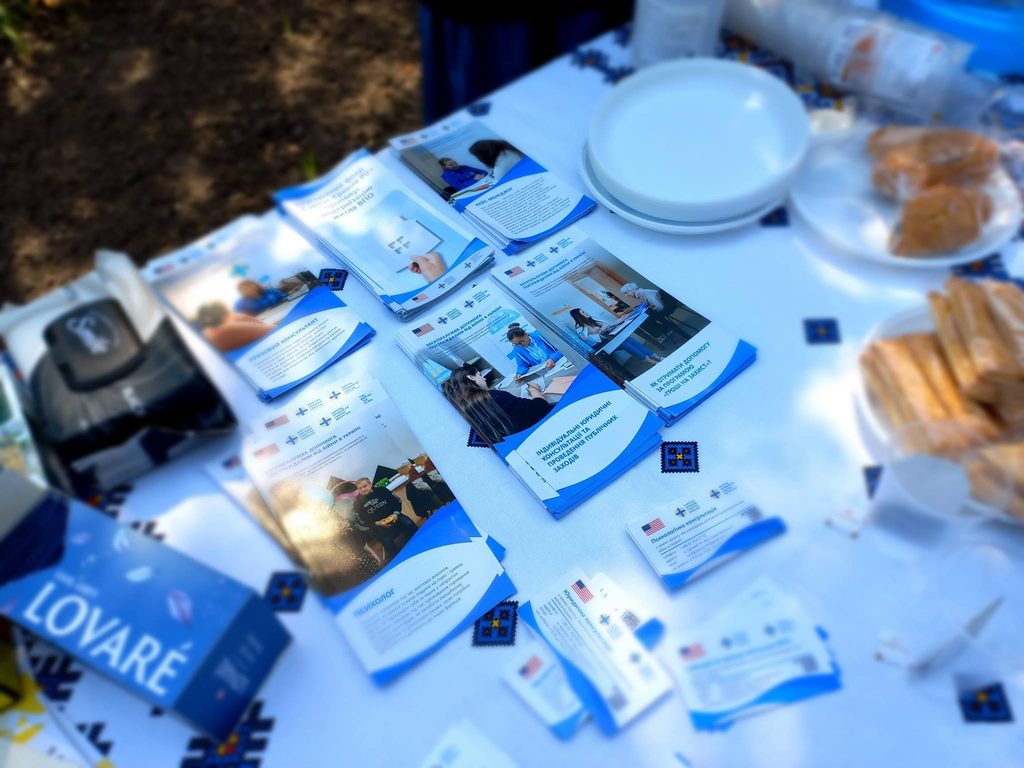
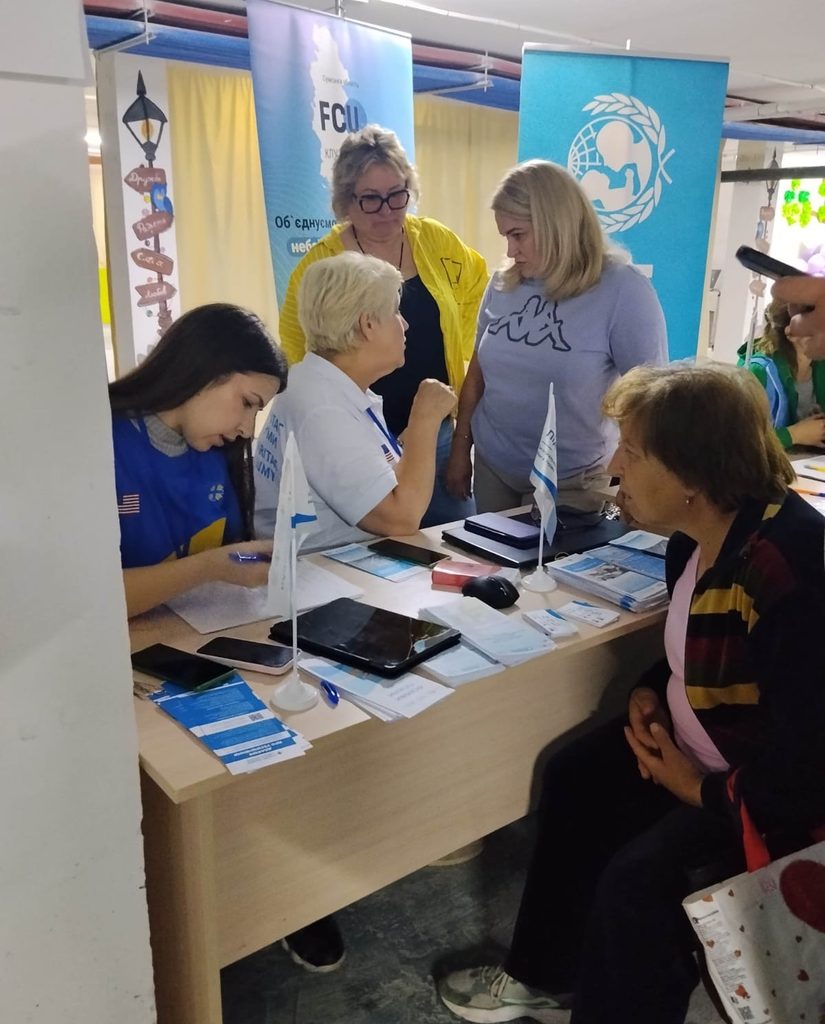
This kind of support lies at the heart of Psychological First Aid (PFA) — one of the approaches used by Caritas Ukraine under the project “Multi-Sectoral Assistance to War-Affected People in Ukraine”, implemented together with local Caritas organisations with support from the U.S. Department of State.

PFA: a complicated name for simple human acts

“Psychological First Aid is the very first support one person can offer another — being there for someone at a moment when things feel especially difficult,” explains Oksana Mykoliuk, Lead Mental Health and Psychosocial Support Expert for the project.

But what does “being there” actually mean?

Sometimes we can see that someone close to us is struggling, yet we don’t know how to help. We can offer to sit with them, listen, and give them space to cry. We don’t need to tell them to calm down immediately, insist that “everything will be fine”, or rush to solve their problems.

Their circumstances may not change after the conversation. But they may feel a little lighter because they no longer have to carry what they are going through alone.

This is one of the simplest examples of Psychological First Aid.

Oksana points out that people do not always realise they are already offering this kind of support to those around them. We call a friend after a difficult day, hug a family member, listen to a colleague or simply stay with someone when things are hard.

“PFA can consist of very simple words, spoken at exactly the right time. The main thing is not to dismiss what the person is feeling. It has to come from the heart,” she says.

A professional approach helps people do this more thoughtfully: to notice how someone is coping, understand their needs and recognise when specialist support may be required. After severe stress, it can sometimes be difficult for a person even to identify what they need.

Support first — then help the person take action

“Most often, before we can help someone, we first need to support them. The human element is the most important thing,” stresses Iryna Maksymenko, Head of the Mental Health and Psychosocial Support Programme at Caritas Ukraine.

This approach is particularly important for humanitarian teams who are often among the first to meet people following an emergency.

Take Olena, for example, who was forced to leave a frontline community with her children. Behind them were shelling, hurried packing and saying goodbye to home. Ahead lay an unfamiliar city, the search for accommodation, paperwork and the need to start again somewhere new.

During the evacuation, the team explained in detail where she could stay and what support would be available when she arrived. Yet Olena was barely able to take in the information. Her thoughts remained with her home and with what might happen to her family. In such a state, even a simple decision can be difficult to process.

An evacuation team member first gave her time to recover, offered her some water, listened and explained the immediate next steps.

Gradually, this can restore a sense that events have some structure and that the person still has some influence over what is happening.

“The greatest source of stress is the lack of control. We cannot plan for the future; we don’t know what to expect,” Oksana Mykoliuk explains.

According to her, one of the aims of Psychological First Aid is to help people regain a sense of control and restore their ability to act.

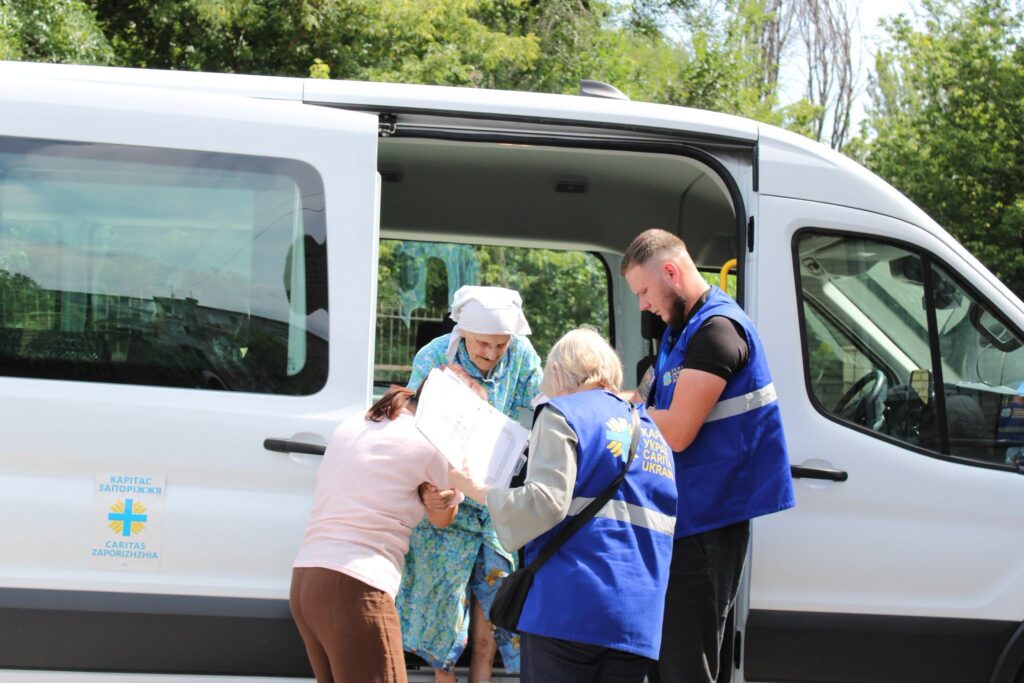
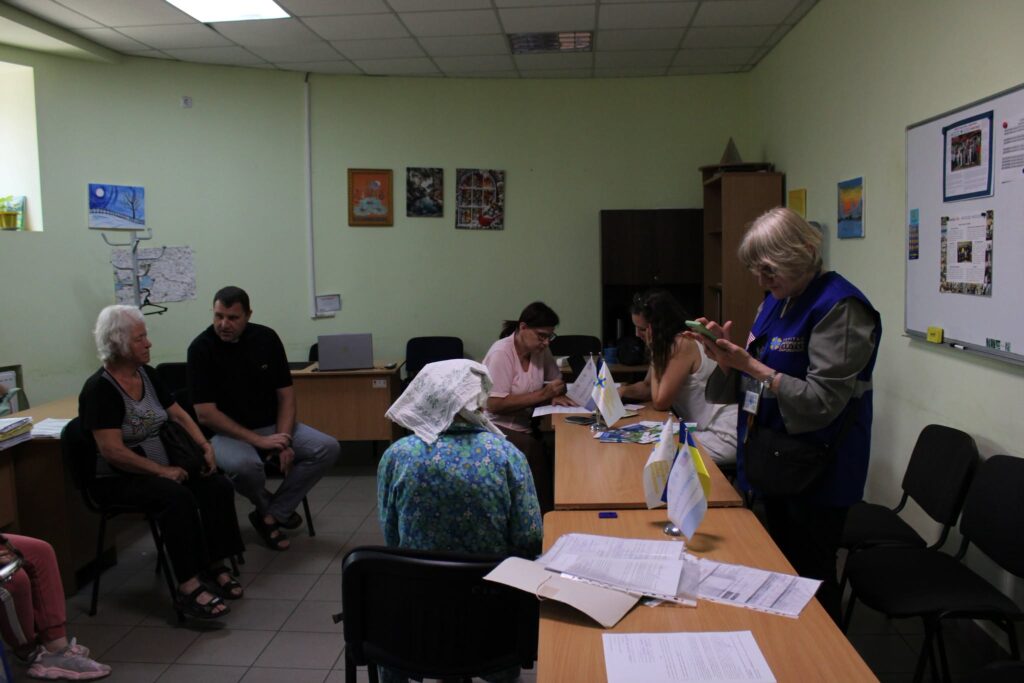
This is why psychological support is integrated into different areas of Caritas’ work. Rapid response teams support people affected by shelling; evacuation teams organise relocation to safer areas; and specialists in crisis centres can continue providing support according to each person’s needs.

“Our aim is for every team member to be able to provide Psychological First Aid, and for everyone to be able to receive it, regardless of whether they have access to a psychologist,” says Iryna Maksymenko.

Iryna explains that after a traumatic event, people may not even realise that they need psychological support. It is therefore important that Caritas teams are able to recognise signs of distress and offer support sensitively, while respecting personal boundaries.

Severe stress is not always immediately visible. A person may not be crying or panicking and may even appear calm on the outside, while internally they are struggling with what they have experienced. They may become withdrawn, speak very little or simply not know how to ask for help.

This is why Caritas teams take part in dedicated PFA training, where they learn to recognise different responses to stress, support people appropriately and understand when a psychologist or another specialist should be involved.

Teams from nine local Caritas organisations have already completed training on the principles of Psychological First Aid and team support for local focal points: in Kamianske, Kryvyi Rih, Mykolaiv, Poltava, Kharkiv, Chernihiv, Zaporizhzhia, Kramatorsk and Sumy.
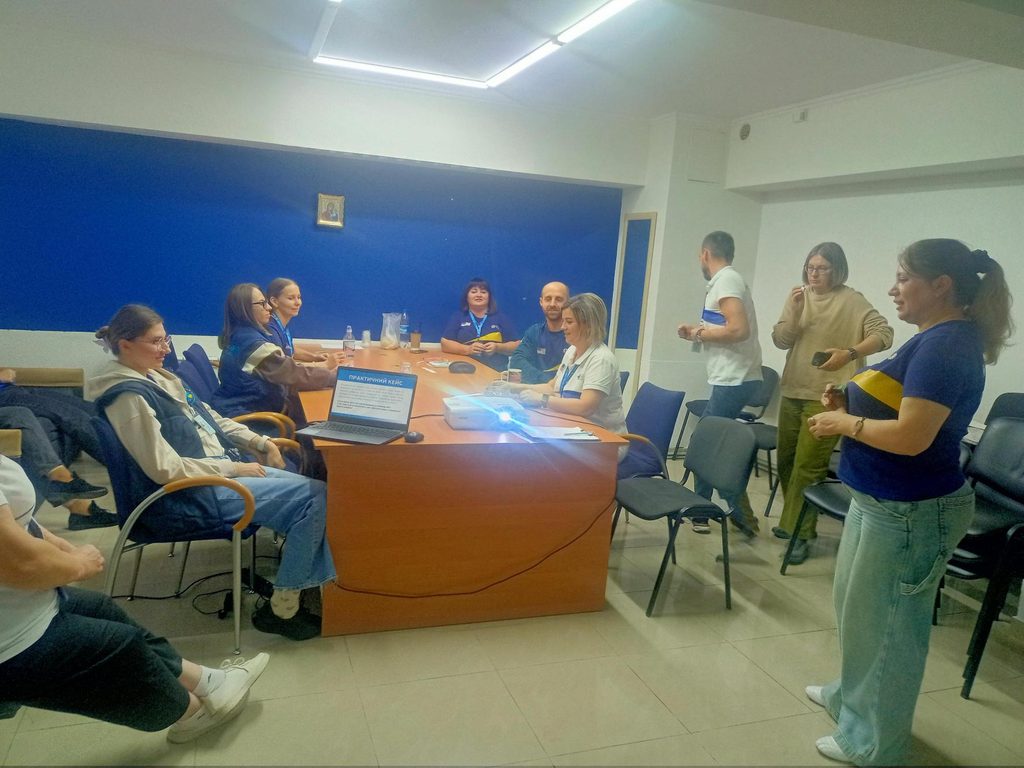
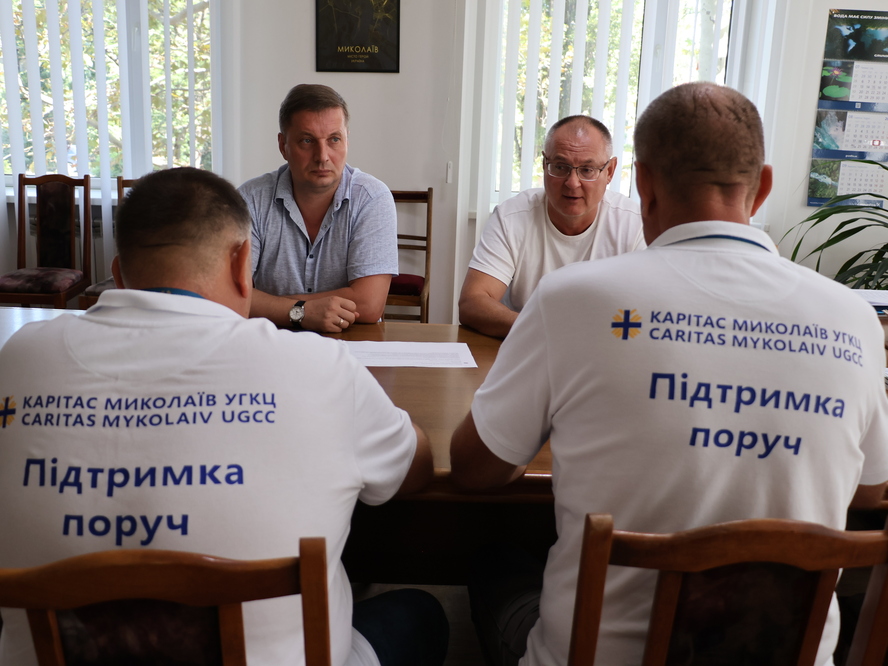
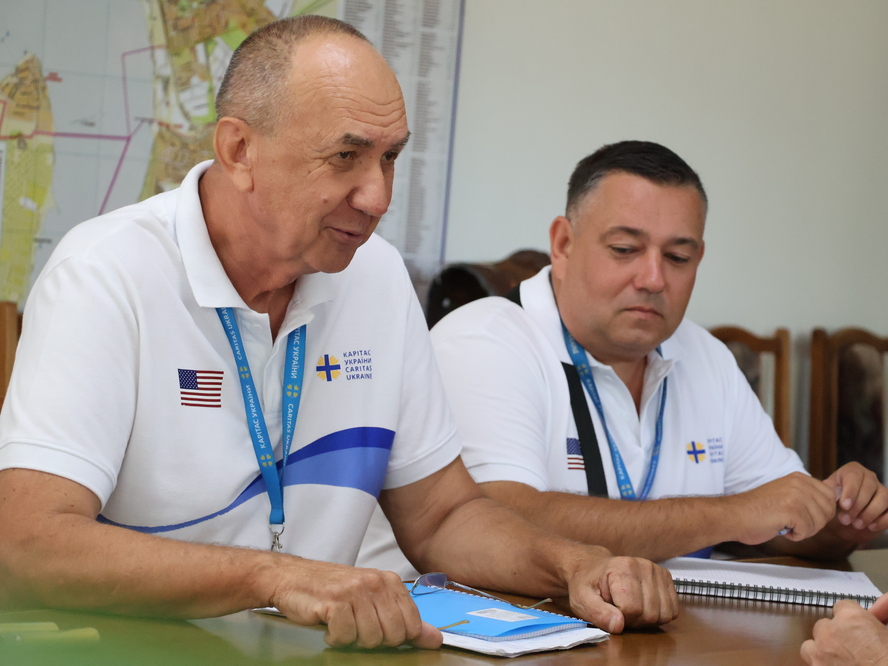
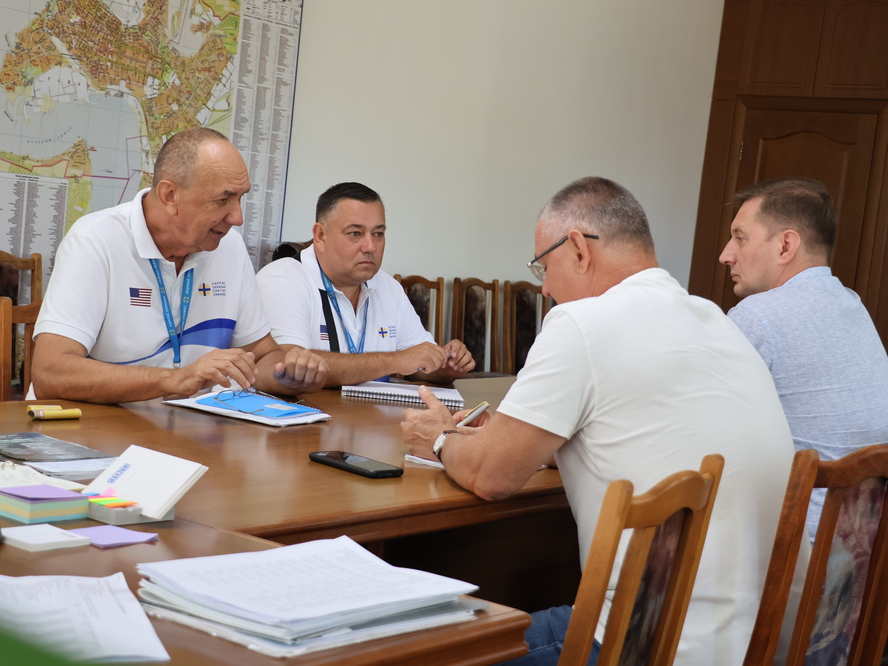
Psychological First Aid (PFA) training for Caritas Mykolaiv team.

The aim is for Psychological First Aid to become a natural part of the day-to-day work of humanitarian teams, regardless of a team member’s professional role.

Those who support others need support too

“Behind every evacuation, every response following shelling and every consultation at a crisis centre are team members who encounter other people’s pain every day.”

They listen to stories of loss, witness the consequences of destruction and support people experiencing severe stress. And although their role is to help others, they too can experience fear, uncertainty and emotional exhaustion.

Iryna Maksymenko stresses that in humanitarian work — particularly in frontline areas — psychological literacy is essential both for supporting people affected by war and for protecting team members’ own wellbeing. 

“Without this awareness, the work can very quickly contribute to burnout and leave the team exhausted.”

This is why Caritas is developing a network of Psychological First Aid focal points — team members from different areas of work who receive additional training and are able to support colleagues during difficult moments. 

According to Iryna, those who join the initiative are people who recognise the need for this kind of support themselves. Some have a background in psychology; others don’t. What they share is their experience of working in humanitarian teams and an understanding of how important it is to know what to do when someone nearby is struggling.

The network currently includes 22 team members across five Caritas crisis centres: Kamianske, Kryvyi Rih, Mykolaiv, Poltava and Kharkiv. Six are psychologists, while the others come from different professional backgrounds.

Sometimes PFA is not enough, and more comprehensive psychosocial support is needed. Individual work with a psychologist may involve between five and 15 sessions, depending on the person’s needs. During these consultations, psychologists help people address symptoms of stress and anxiety, learn stabilisation and grounding techniques, and undertake therapeutic work. 

Group sessions focus on developing self-regulation skills and coping with emotional exhaustion. If a psychologist identifies a more complex case, the person is informed about options for accessing specialised support.

Between February and July 2026, psychological services provided through the crisis centres reached:

498 people through group activities;
445 people through individual psychological support.

Oksana Mykoliuk recalls the case of a Caritas team member who, after a difficult conversation with a friend, turned to a colleague who serves as a PFA focal point. Her colleague listened and supported her. According to Oksana, after just a short conversation, the woman felt as though a weight had been lifted from her shoulders. 

“We want to build a culture in which people feel able to turn to someone who can offer immediate, focused support when they are really struggling — when something feels heavy or they simply don’t feel right. A person can come and talk, even if it is only for three to five minutes,” Oksana explains.

To make such conversations possible, Caritas is creating dedicated spaces where the team can decompress and access psychological support, as well as organising peer-support meetings.
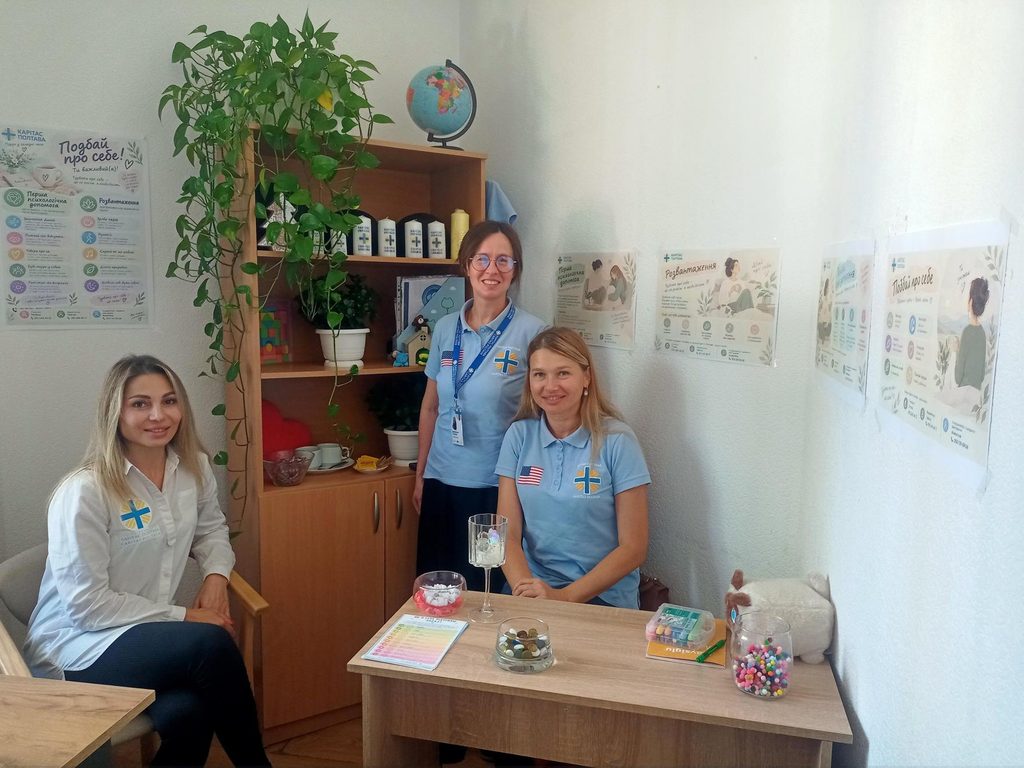
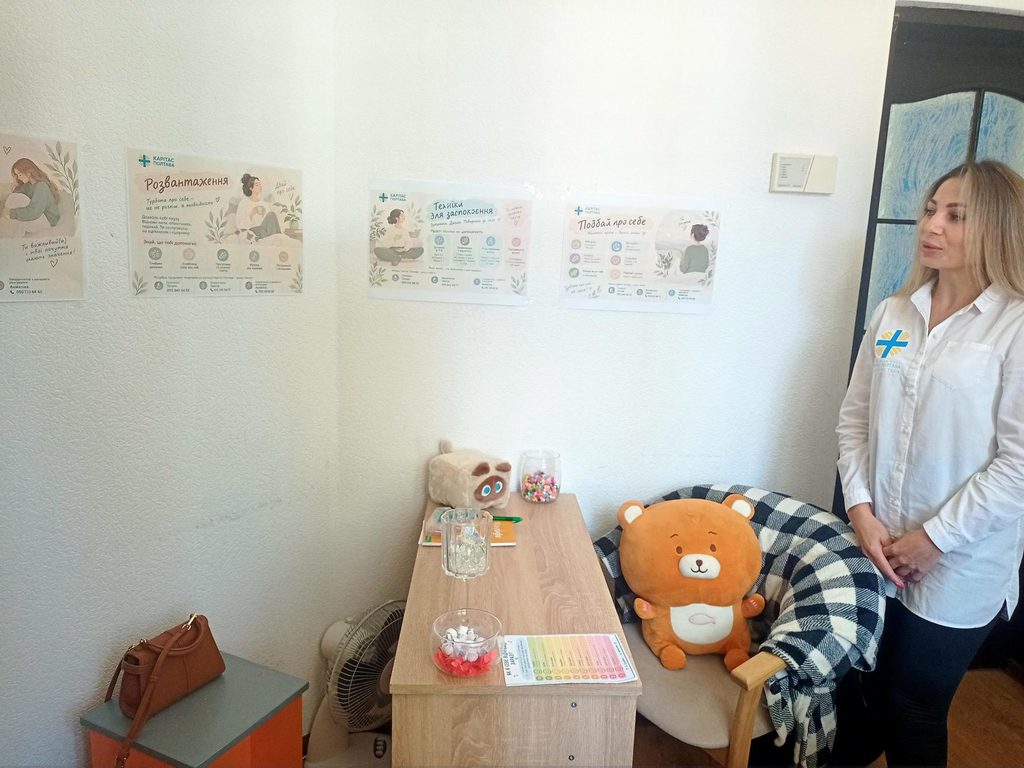
Psychological decompression space at Caritas Poltava.


In addition to general PFA training, focal points receive further preparation through online and in-person training, practical exercises and supervision sessions. During these sessions, they work through difficult situations with experts, discuss ways of providing support and receive professional guidance themselves.

Internal team support also has another important purpose: helping the team understand the limits of their own responsibility.

Iryna Maksymenko explains that humanitarian workers need to recognise when they can support someone themselves and when another professional should be involved. Constantly trying to solve every problem for other people can ultimately lead to their own exhaustion.

“A person who understands the principles of psychological stabilisation knows that they must first take care of themselves,” Iryna stresses.

Supporting others also means recognising when you need support yourself — so that you have the strength to continue helping.

For support, contact the Caritas hotline: 0800 406 506.
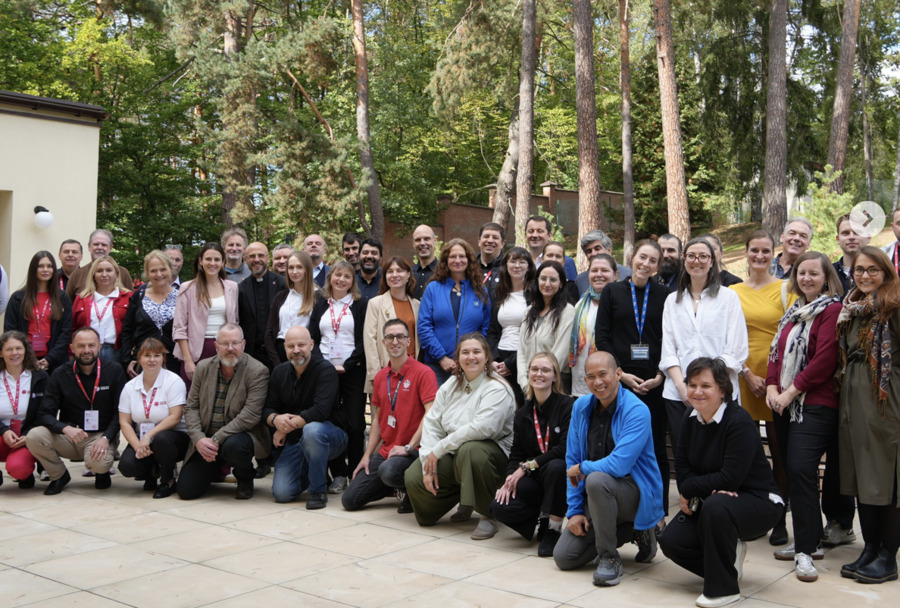
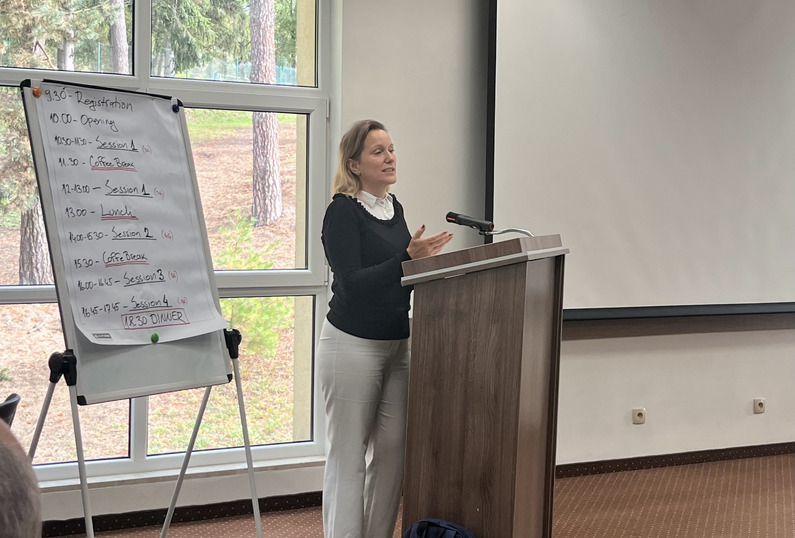
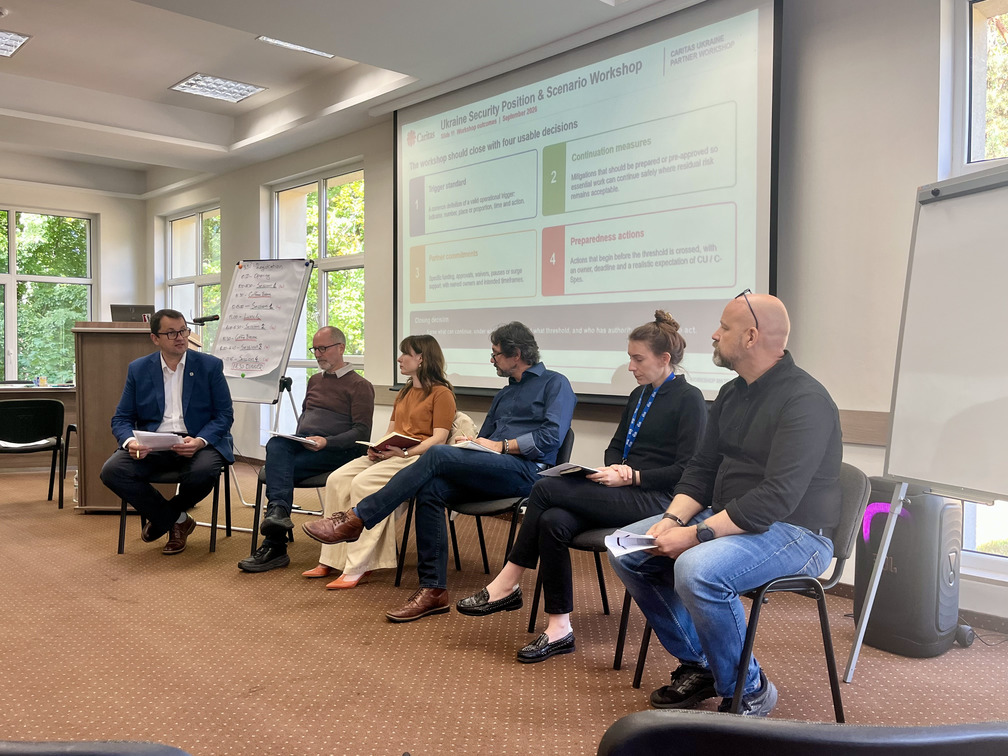
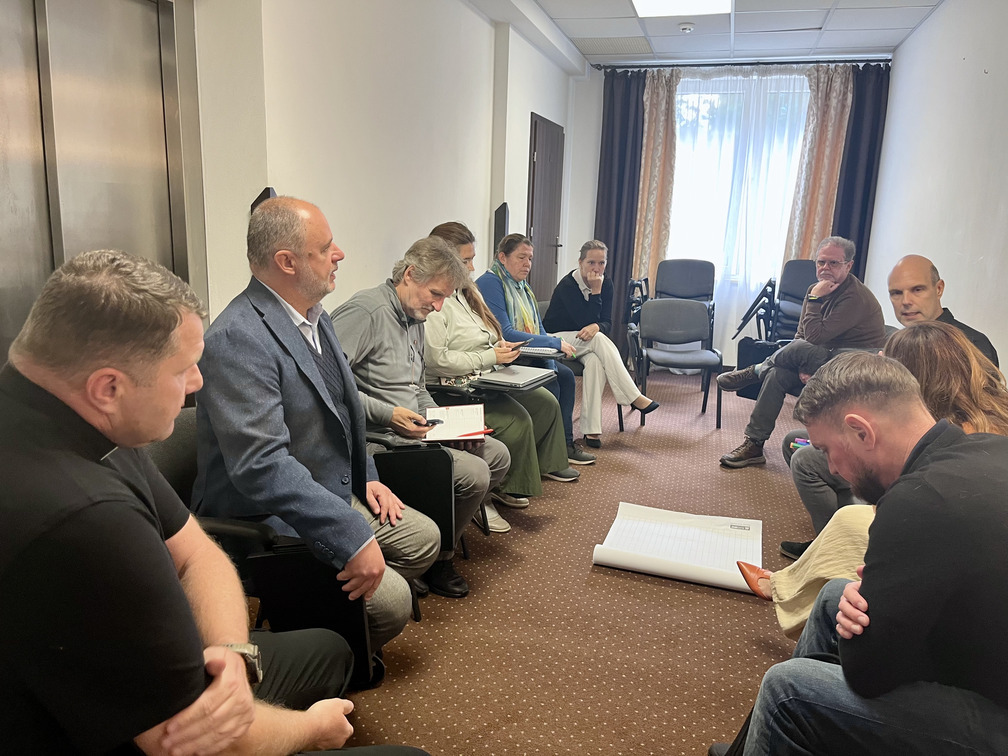
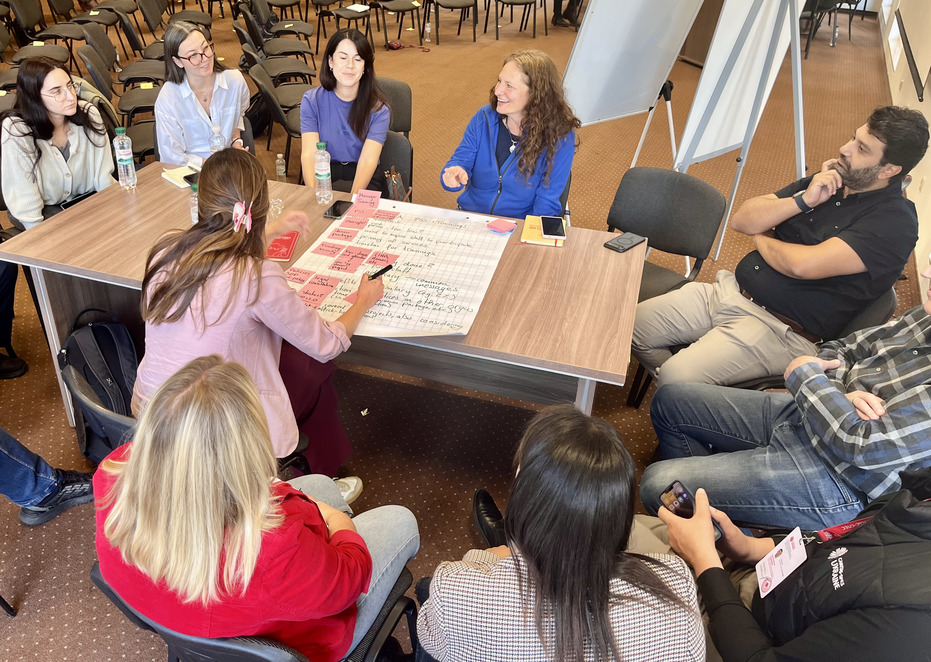
Practical solidarity: Caritas partners meet for Country Forum

The war is now in its fifth year, and much of the day came down to one practical question: how a humanitarian network keeps working in the context of a protracted war and crisis.

The Country Forum is the Caritas confederation’s standard structure for coordinating members working in the same country, meant to bring the various Caritas organizations together to share analysis, plan jointly and avoid duplication. In Ukraine it is co-run by Caritas Ukraine, founded by the country’s Greek Catholic bishops, and Caritas-Spes, the Roman Catholic Church’s Caritas mission in Ukraine. Caritas Ukraine is led by its president, Tetiana Stawnychy; Caritas-Spes Ukraine’s executive director is Fr. Vyacheslav Hrynevych, SAC.

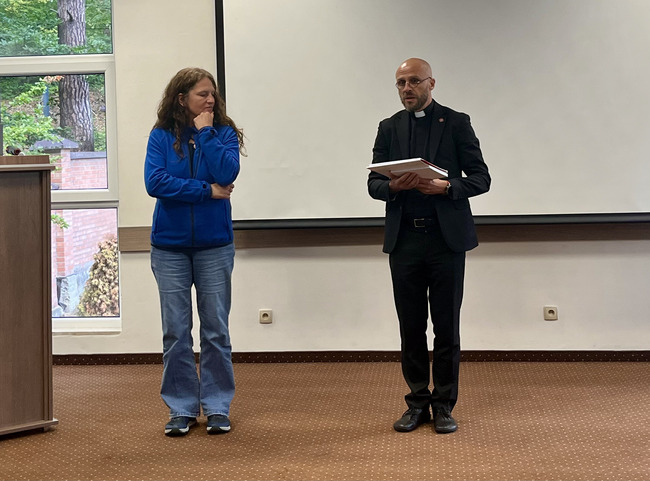
The Forum opened with an address from Maria Nyman, Secretary General of Caritas Europa, who told participants she was “proud” of the work of Caritas in Ukraine to help people suffering from the war. Speaking about the mission of Caritas, Nyman recalled a 2019 visit to Ukraine, early on in her tenure as Secretary General, where she met a Caritas Ukraine beneficiary living with quadriplegia. “Thanks to Caritas I feel hope for tomorrow,” he told her — and these words have shaped her understanding of the Caritas mission and stayed with her ever since. “It says so much of Caritas.” The hope Caritas offers, she added, “is not naive optimism” but one rooted in “cross and resurrection.”

Planning for a war that keeps intensifying

The Forum continued with a security briefing and a scenario-planning exercise. Participants identified warning signs and decision triggers, along with the practical steps that would let Caritas keep working safely if conditions worsen. The session also addressed what such shifts would mean for donors, partner commitments and communication across the network.

A second block of the day covered what organizers called “duty of care and duty of Caritas”: Caritas Ukraine and Caritas-Spes Ukraine presented draft initiatives to strengthen protection and support for staff and volunteers. Participants reviewed priorities, existing resources, gaps and where partners could help close them.

The day closed with a discussion of the Forum’s objectives and structure for 2027, under Caritas Internationalis’s updated Country Forum Framework. Participants talked through what the Forum’s role should be going forward.

A true partnership, not just emergency response

“Country Forum is a gathering of all the Caritas organizations working together on the territory of Ukraine,” said Tetiana Stawnychy, president of Caritas Ukraine. “It brings together Caritas Ukraine and our colleagues from Caritas-Spes, together with all the international Caritas organizations from other countries that are working with us and helping us develop and implement essential programming.“

The format traces back to an emergency mobilization effort. “This is an initiative that Caritas Internationalis launched back in 2022 — the Emergency Support Team,” Tetiana Stawnychy said. “That group was set up to serve as a support team for all the countries responding to the humanitarian crisis unfolding at the time, not only in Ukraine, but including, for example, our partners in Poland, the Czech Republic, Slovakia, Romania and Moldova. The team helped everyone mobilize quickly and assisted us with the additional technical support and expertise crucial to put in place the systemic approaches needed to respond to a crisis of that scale.“

“In 2023, that first team transformed — and it was in Ukraine specifically that we chose this format called the Country Forum,” she continued. “We lead the Forum together, Caritas Ukraine and Caritas-Spes, with several dedicated international staff supporting the operations.“

“It’s an opportunity to come together, to discuss shared themes that help us respond better, coordinate better, and plan our work for the future better,” Tetiana Stawnychy mentioned. “This is Caritas’s way — a way of meeting, of community — and together we are stronger, together we can resolve many difficulties. And like in any relationship, the longer you stay in it, the deeper and more mature it becomes. That’s exactly the direction we’ve been moving in for four years — better communication, supporting organizational development, coordinating better. It’s a process, a path. It’s also how we hold solidarity with one another and fulfill our mission.“

Natalia Kryva, Director of the Social Program Department at Caritas Ukraine, described the same shift in more institutional terms. “Every program has these three stages: a stage of rapid response, then stabilization, then a development stage,” she said. “And it’s very important to understand how all three of these stages are connected to one another, because it affects the implementation of the social, development programs that it’s important not to stop even in wartime — because this is systemic, transformational work that will shape Caritas’s future, people’s well-being, and Ukraine’s future.“

“Those Caritas organizations that have their own representatives here understand that this is no longer someone else’s war — that it touches them too, that it’s their war as well. Through regular engagement, partnership has taken on an additional intensity in fundraising, in designing programs and projects and working through challenges together with us, addressing needs, both programmatic and organizational,” she said.

The shift runs in both directions, Natalia Kryva added. “This hasn’t only changed the international Caritas organizations — it has changed us, Caritas Ukraine, too. Thanks to platforms like this and to this kind of dialogue, Caritas Ukraine has also grown through these encounters. We see the dedication of our partners, and it strengthens us and pushes us to continue to develop organizationally.“

“And there’s one more important shift that has changed us,” she said: “we no longer think of this as a relationship between ‘donor and Caritas Ukraine’ — for us, it’s a partnership, on equal, mutual terms.”

Volodymyr Yakymets, who works on network infrastructure development and partnerships at Caritas Ukraine, said the sharper challenge this year is not capacity but resources. “Our understanding of the complexity of the challenges has improved — we have, at the same time, an emergency humanitarian response, the beginning of stabilization, and even recovery. People who became internally displaced three years ago can already talk about a way out of that situation, while people who were evacuated yesterday or the day before are not at that stage — still need an emergency humanitarian response. And I think most partners understand this.“

“A key difference from 2022 is the changing nature of the resource needs,” he continued. “Since the beginning of the full-scale war, our partners have provided significant and sustained support, which has enabled us to respond to enormous and evolving needs. Today, both the scale of the needs and our capacity to respond continue to grow. This means that, alongside emergency funding, we also need to further develop predictable, longer-term resources that can sustain humanitarian assistance while supporting stabilization and recovery.”

When every minute counts, but rushing can put lives at risk

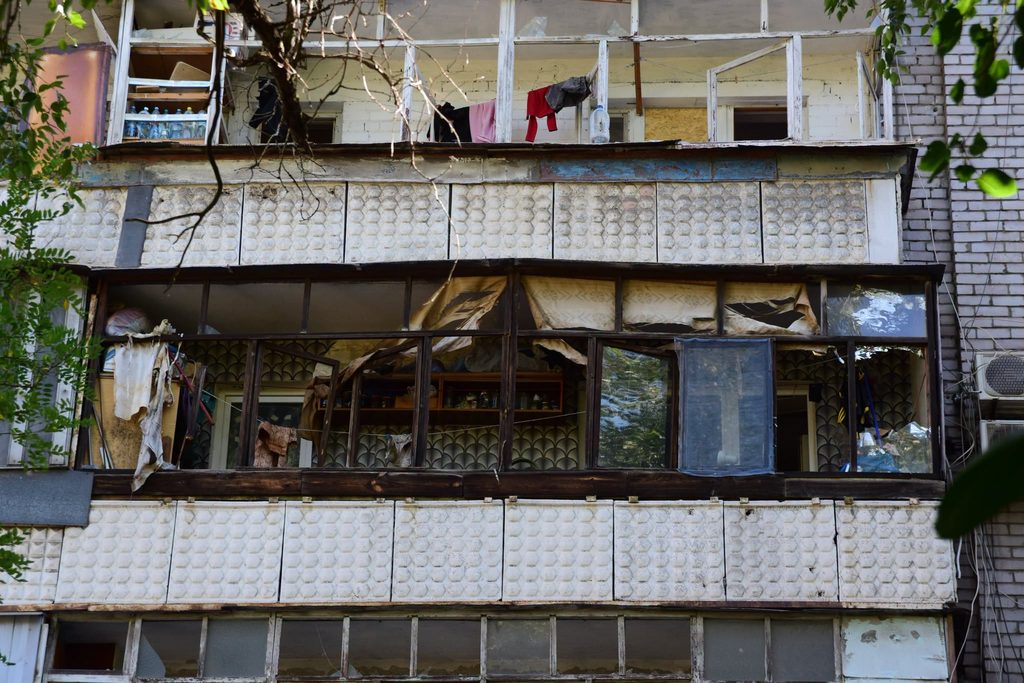
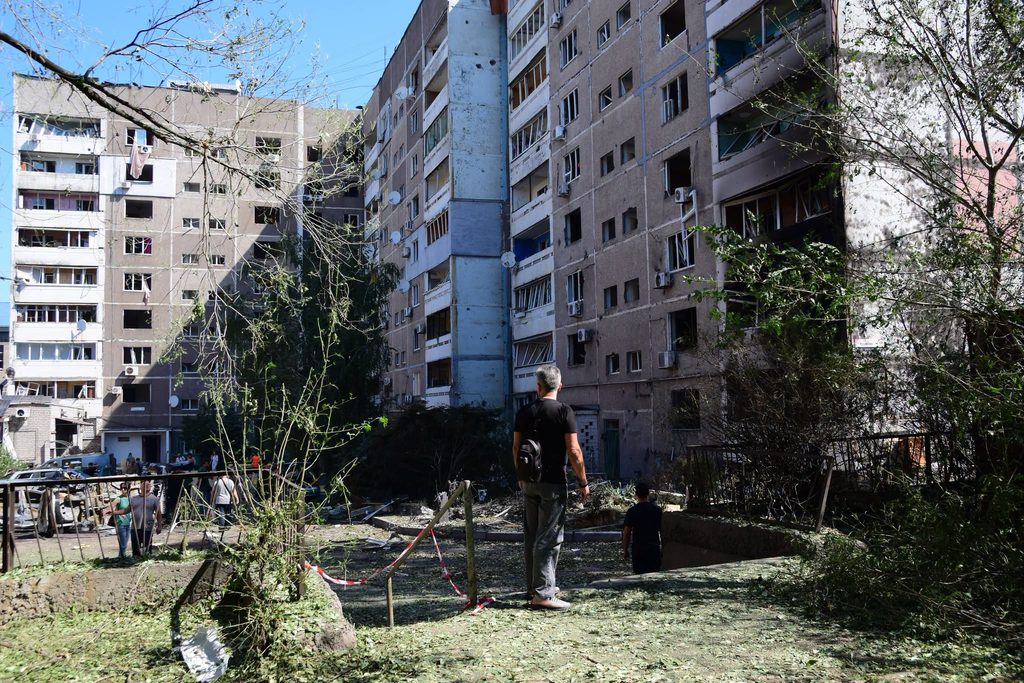
After an attack, the clock starts ticking. Information is still coming in, emergency services are already at the scene, and the Rapid Response team — before it has even set off — must answer a series of critical questions: What has happened? Is the area safe? Where is the nearest shelter? How many people may need support, and what equipment will be required?

Who takes responsibility? What does it mean to serve one’s community? And, ultimately, what is each of us prepared to do within our own capacity? Stanislav Fedorchuk, Caritas Ukraine’s Lead Rapid Response Expert, explains how emergency assistance is organised — and what lies behind the decision to help others.

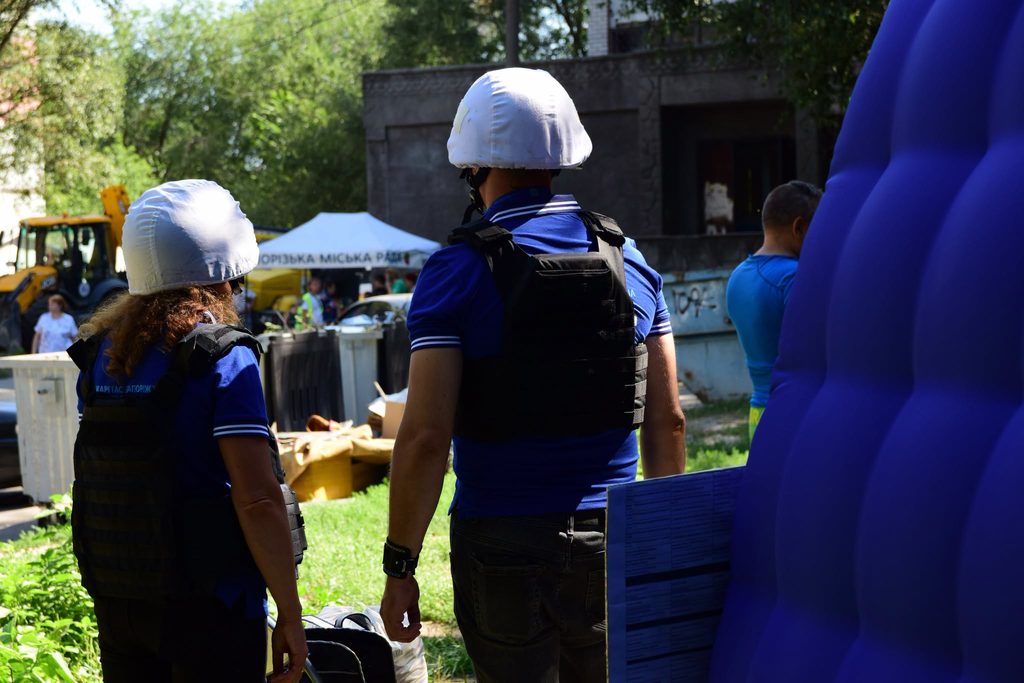
Stanislav Fedorchuk with the Caritas Zaporizhzhia Rapid Response team.

Rapid Response operates under the project “Multi-Sectoral Assistance to War-Affected People in Ukraine”, implemented by Caritas Ukraine and its local partner organisations with support from the U.S. Government. Between July and August 2026, more than 600 people received assistance from local teams following air strikes.

Step one: the alert. Who notifies the team that a response is needed?

When Rapid Response was launched in spring 2026, one of the first priorities was to establish a mechanism for sharing information with government emergency services. Local Caritas organisations signed Memorandum of Understanding with units of the State Emergency Service of Ukraine (SESU), providing details of their teams, available resources and response capabilities.

It soon became clear, however, that relying on a single notification channel was not enough.

Information about an incident may come from SESU, local authorities, military administrations, crisis response centres or designated contact persons. The essential requirement is that the team works with verified information from an official source.

— We expected SESU to be our main source of information. But we soon realised just how important local communities are. Government emergency response relies heavily on local authorities, so we need to establish working relationships with everyone involved, Stanislav explains.

Notification procedures may vary from region to region.

Caritas Kamianske team developed its own step-by-step notification procedure: the relevant services have the coordinator’s contact details, and she initiates internal coordination as soon as an alert is received.

Caritas Chernihiv decided to supplement its regular informal communication with the relevant authorities by introducing a formal notification mechanism through official correspondence.

— We realised something important: we cannot assume that information will always reach us through the same channel. We need to know in advance who is responsible for emergency response in each community — and make sure they know who we are.

The geographical reach of assistance also matters. Larger humanitarian organisations tend to concentrate considerable resources in major cities, while smaller communities may have far fewer sources of support following an attack. Caritas Rapid Response therefore also seeks to reach places where assistance is less readily available.

Step two: the alert has come in. What happens before the team can set off?

— The first decision is about safety. Wanting to help does not give us the right to disregard the risks faced by the people we send to the scene.

The local security manager assesses the situation, considering the nature of the incident, ongoing threats, the proposed route, nearby infrastructure, the availability of shelter and whether the team can work safely. A concise operational briefing is prepared for each response, setting out the verified facts needed to make a decision, without speculation or unnecessary detail.

— First, we assess the risks, check the conditions on the ground and obtain approval for the response. Speed matters in a crisis, but speed without discipline can create another crisis.

Rapid Response aims to provide emergency assistance within 48 hours of an emergency. But speed must never come at the expense of safety: the team sets off only once the risks have been assessed, its readiness confirmed and deployment authorised.

Step three: how does the team decide what to take?

— We need to have a reasonably clear picture of the scale of the incident. If we know that five blocks of flats have been damaged, there could potentially be hundreds of people affected. That changes how we calculate the resources we need. The team works through a checklist to determine what should go in the vehicle.

A Rapid Response kit may include:

  • drinking water;
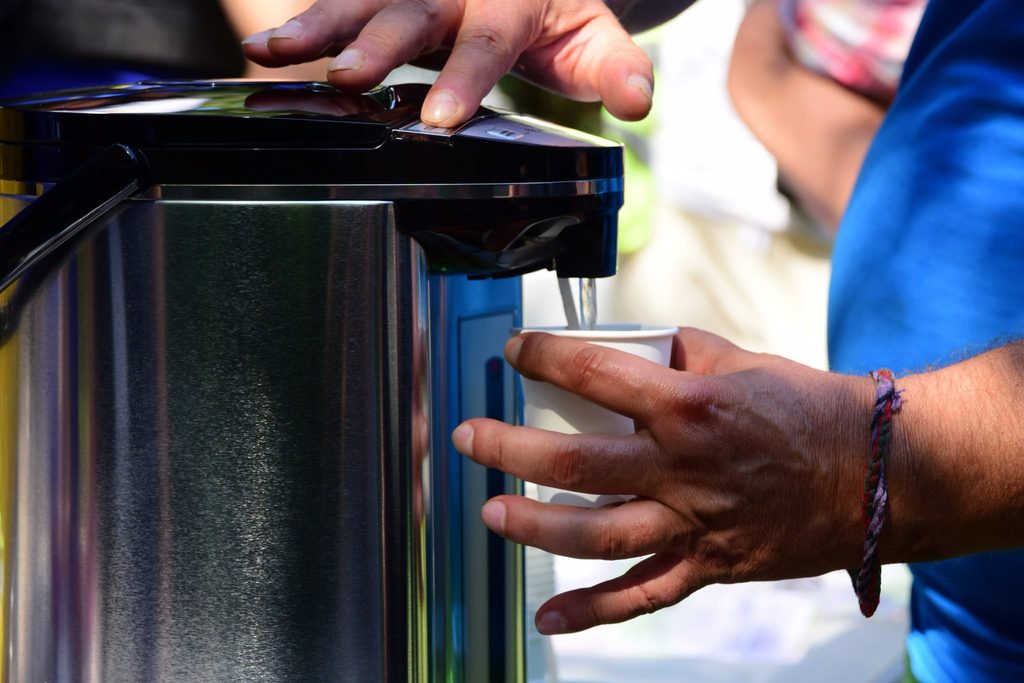
  • hot drinks and light, ready-to-eat food;
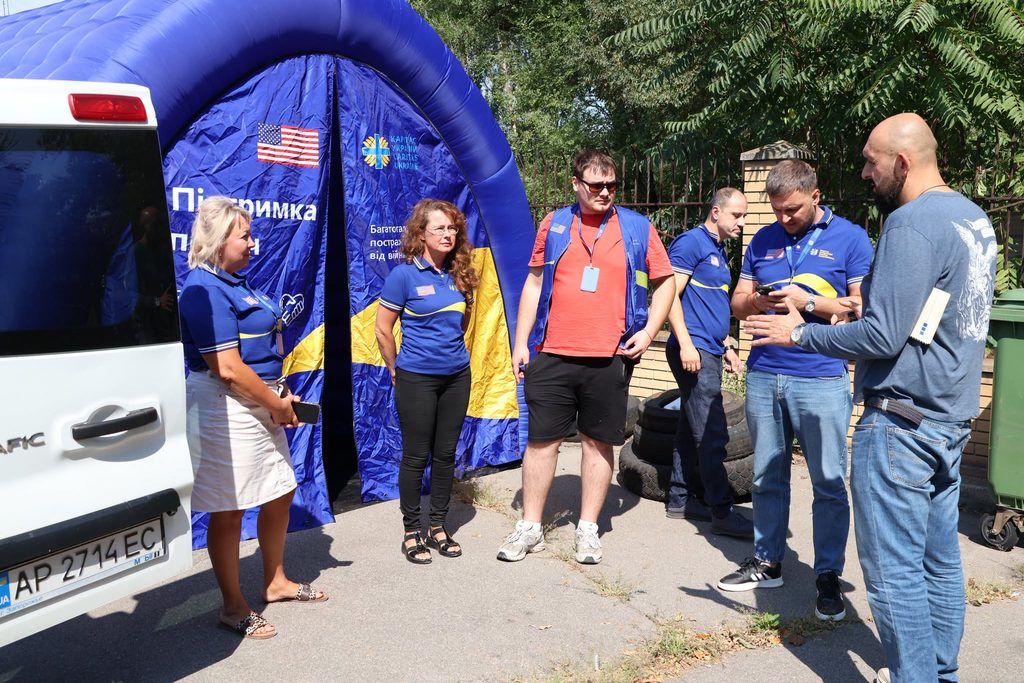
  • a mobile tent;
  • a generator;
  • lighting;
  • power banks and phone-charging equipment;
  • equipment for internet access and communications;
  • first-aid kits and supplies;
  • personal protective equipment;
  • equipment for use in cold weather.

Step four: arrival. Setting up the mobile support point

On arrival, the coordinator’s first priority is safety: identifying a suitable location for the mobile support point and checking where the nearest shelter is.

As the threat of further strikes often remains, the team agrees on a safe working location with the relevant services at the scene. Only then does it set up the mobile support point.

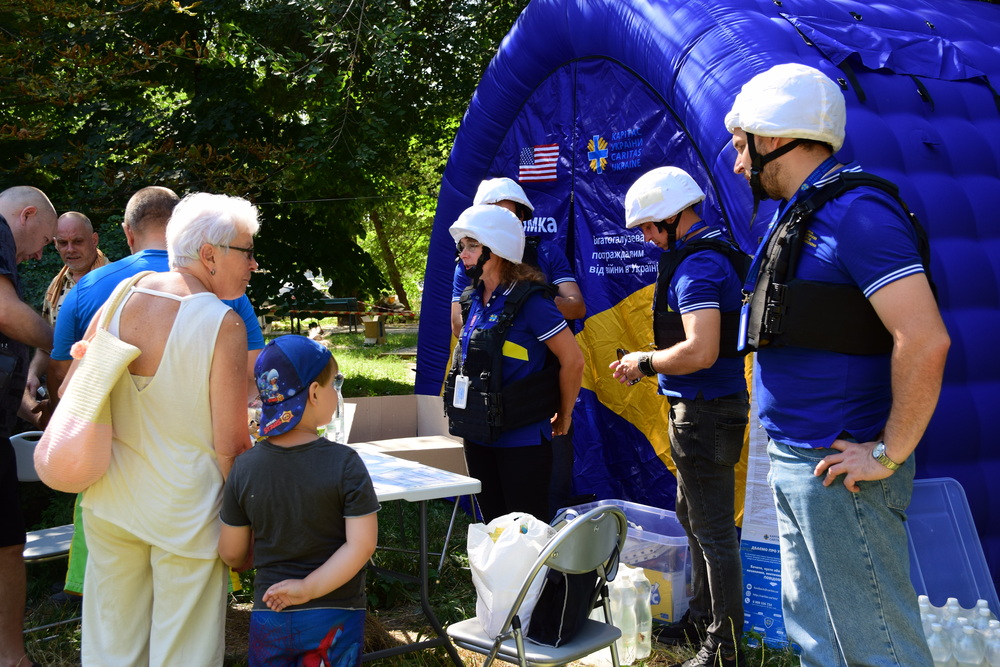
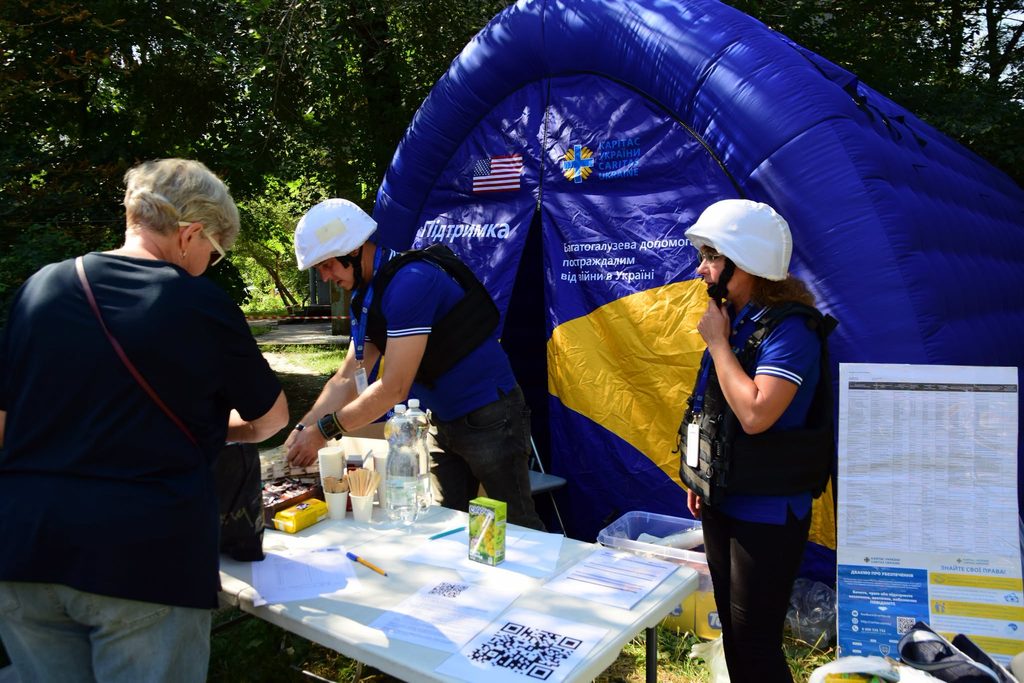
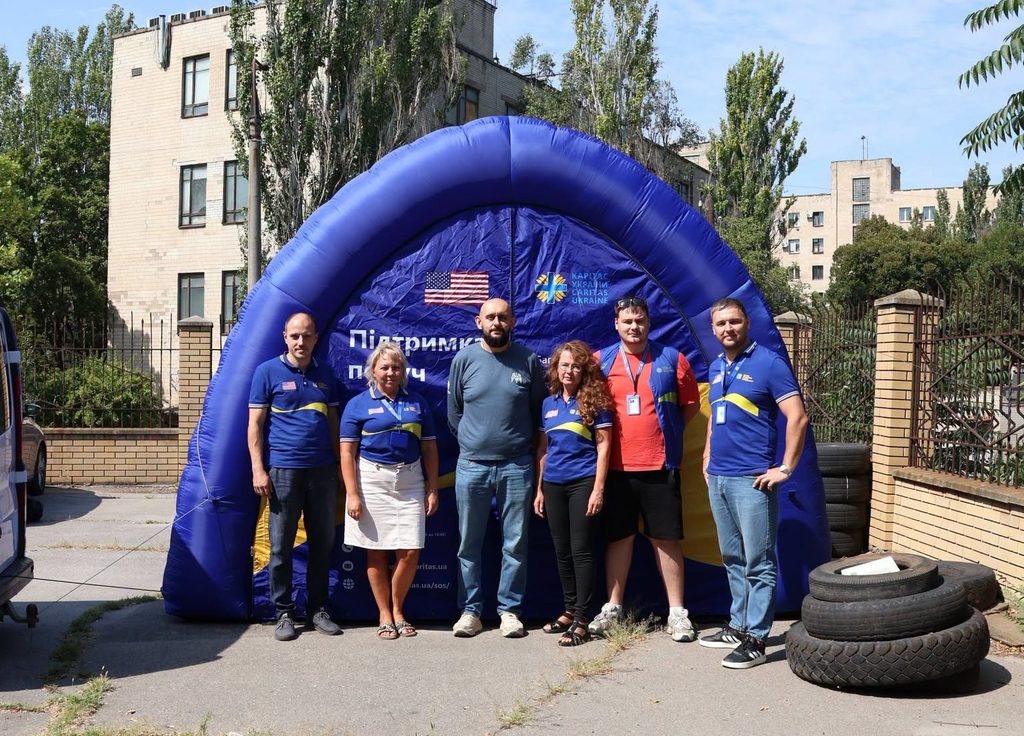
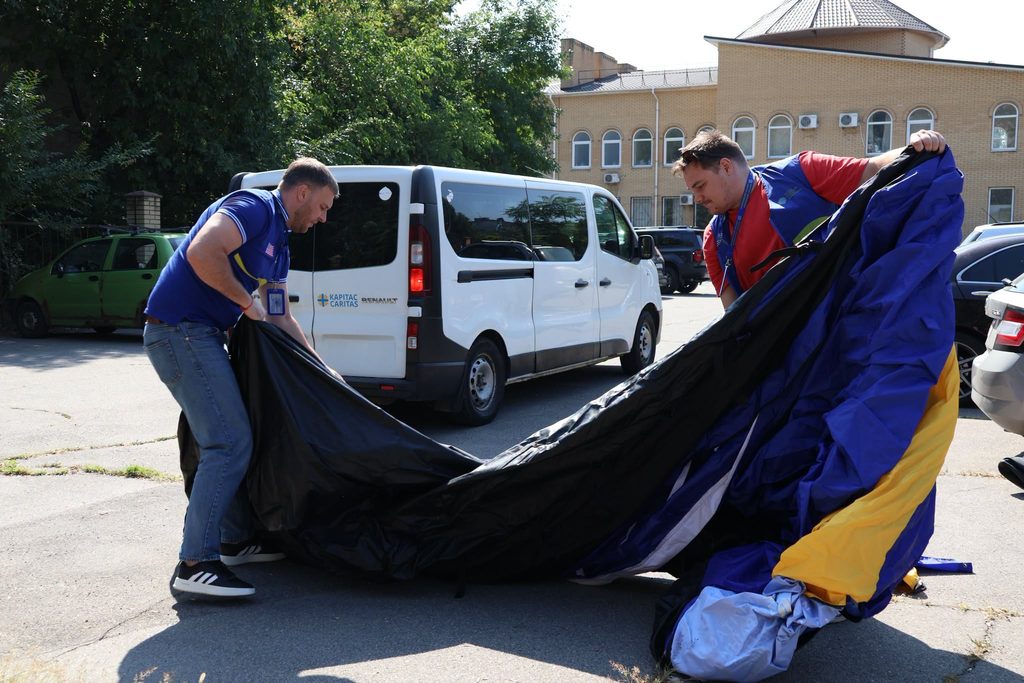
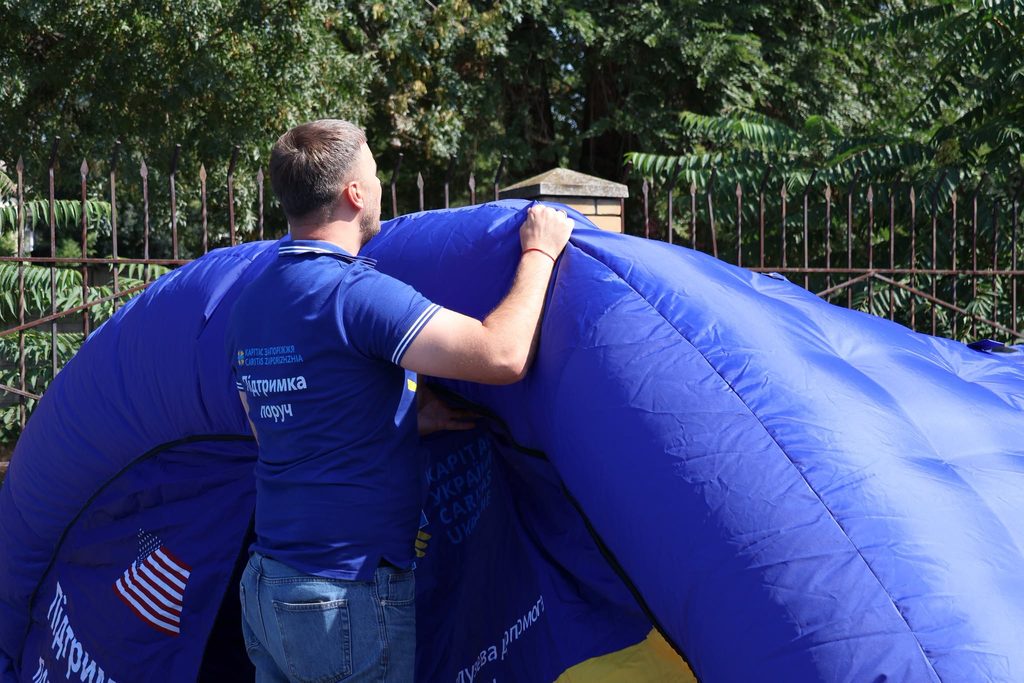
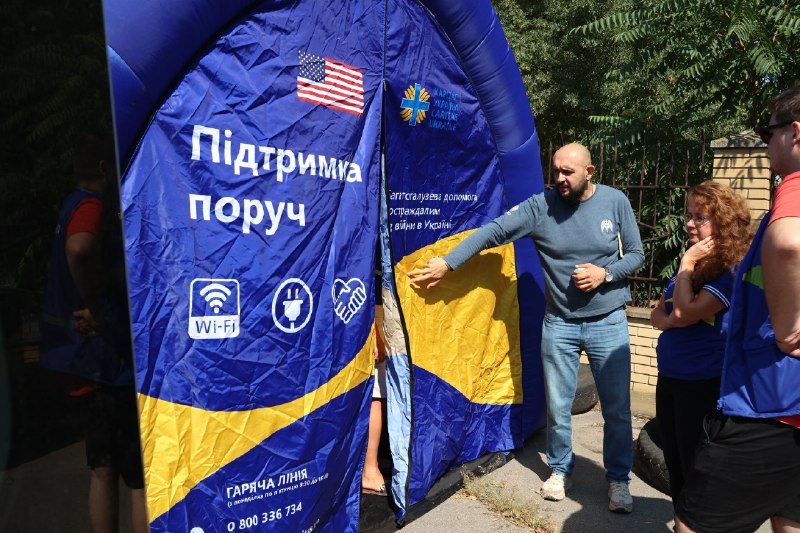
An insulated mobile tent can be ready for use in approximately 5–7 minutes.

In summer, people may spend hours queuing in the heat while waiting to complete paperwork. In winter, those same hours are spent in the cold. A phone battery can run out just when someone needs to call their family, photograph the damage to their home, find important documents or receive an update from the authorities. This is why access to water, warmth, electricity and communications matters so much in the first hours after an attack.

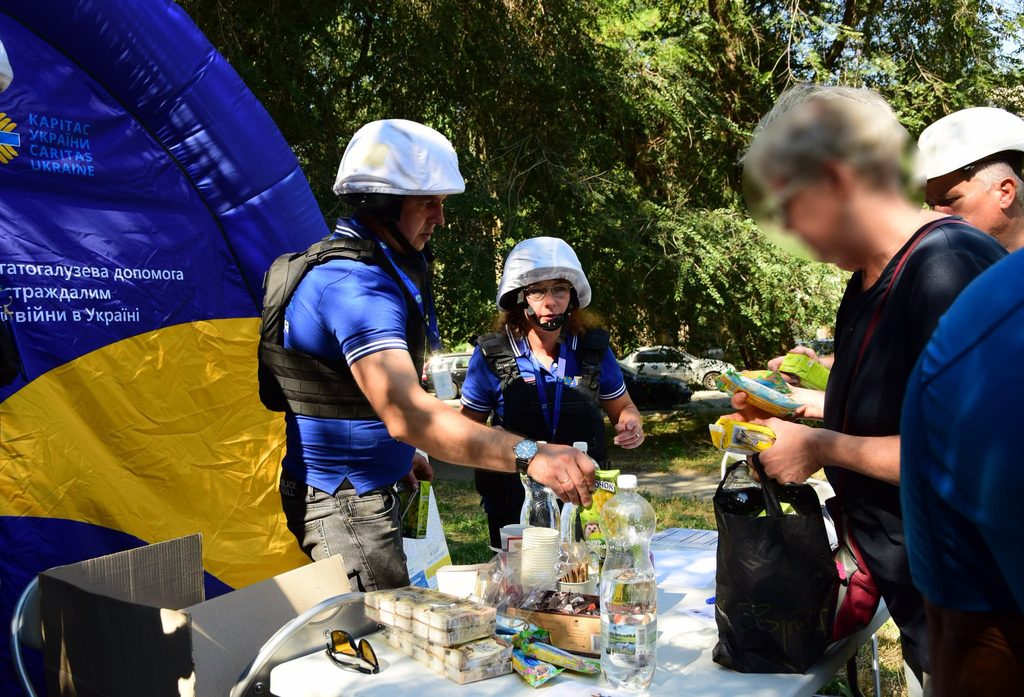
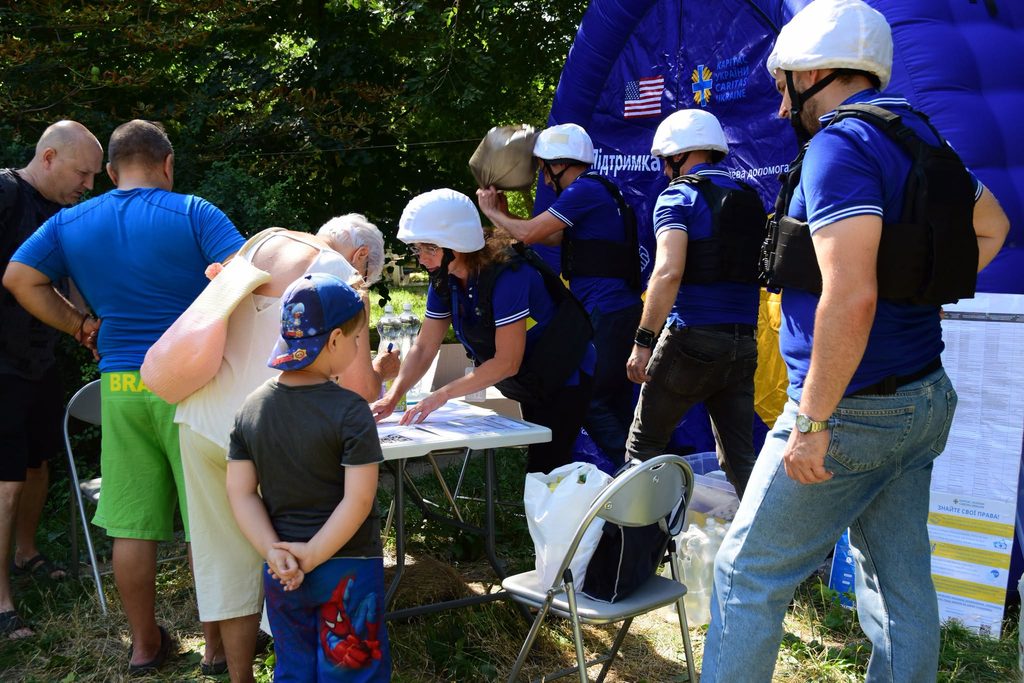
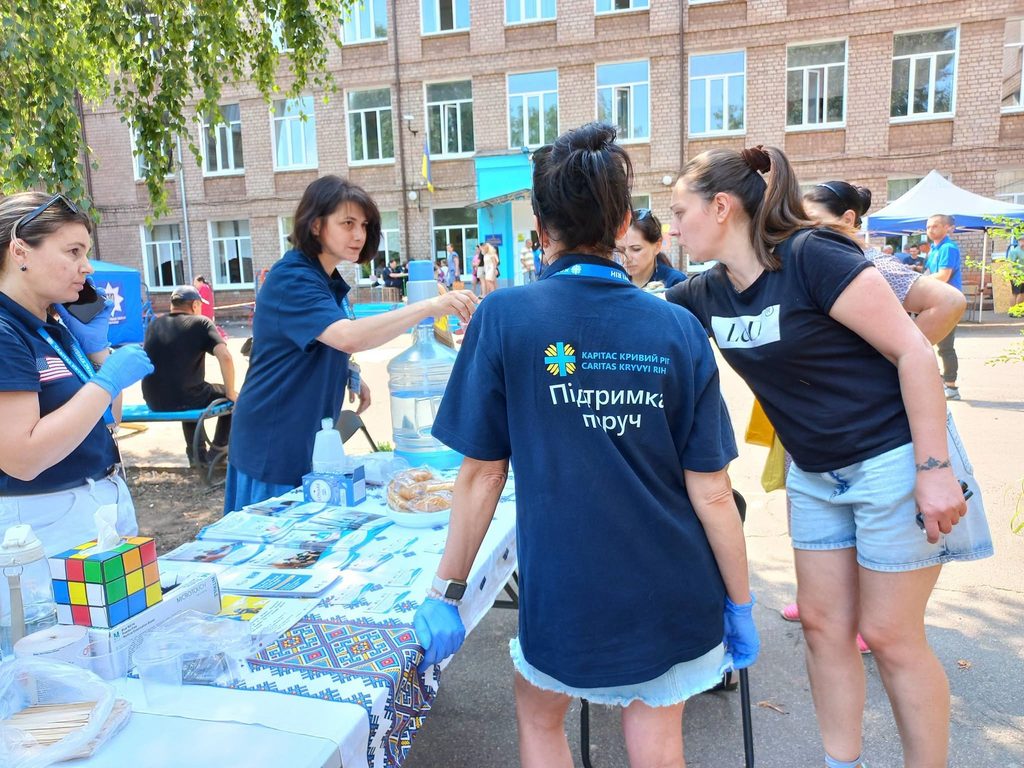
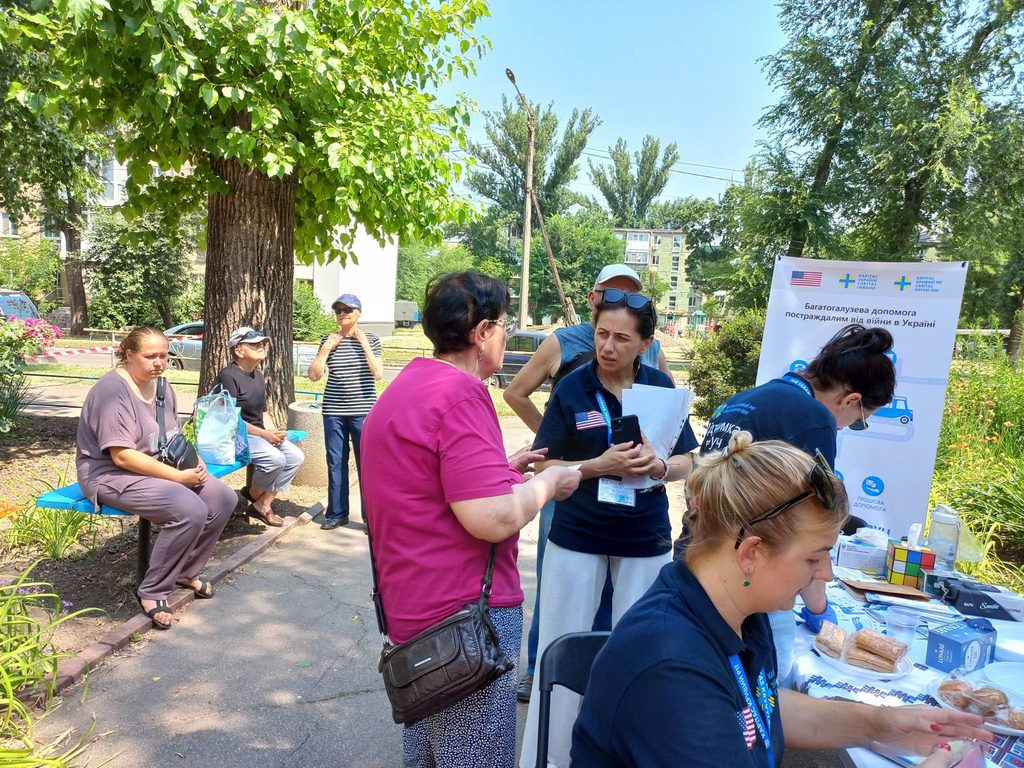
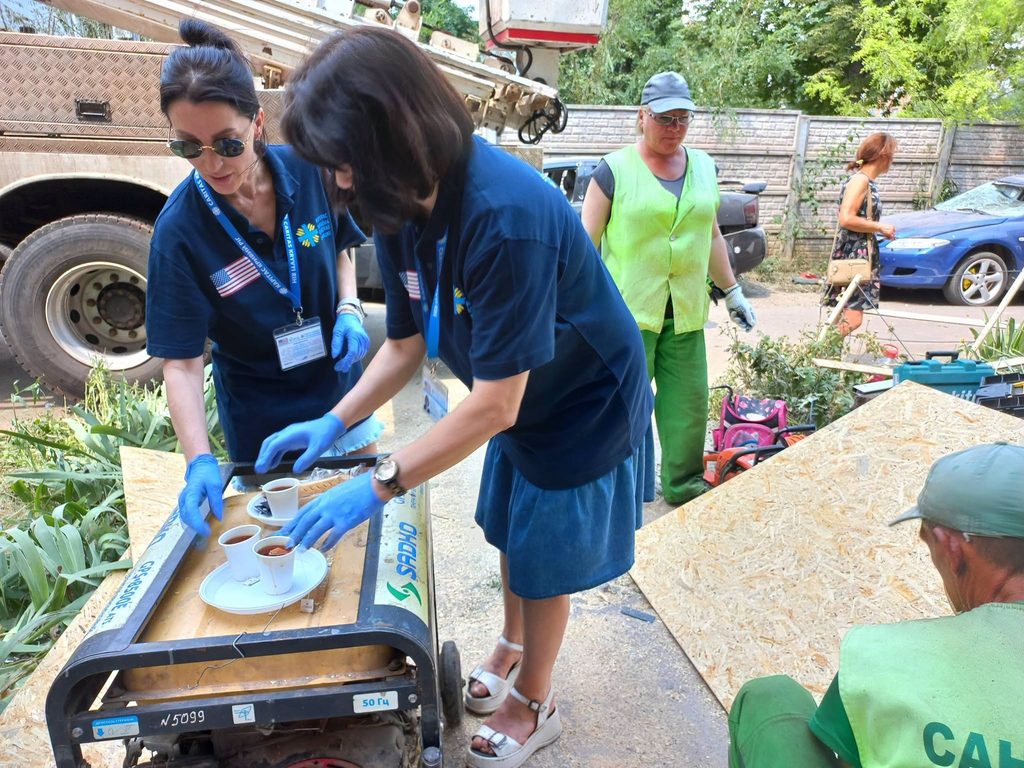
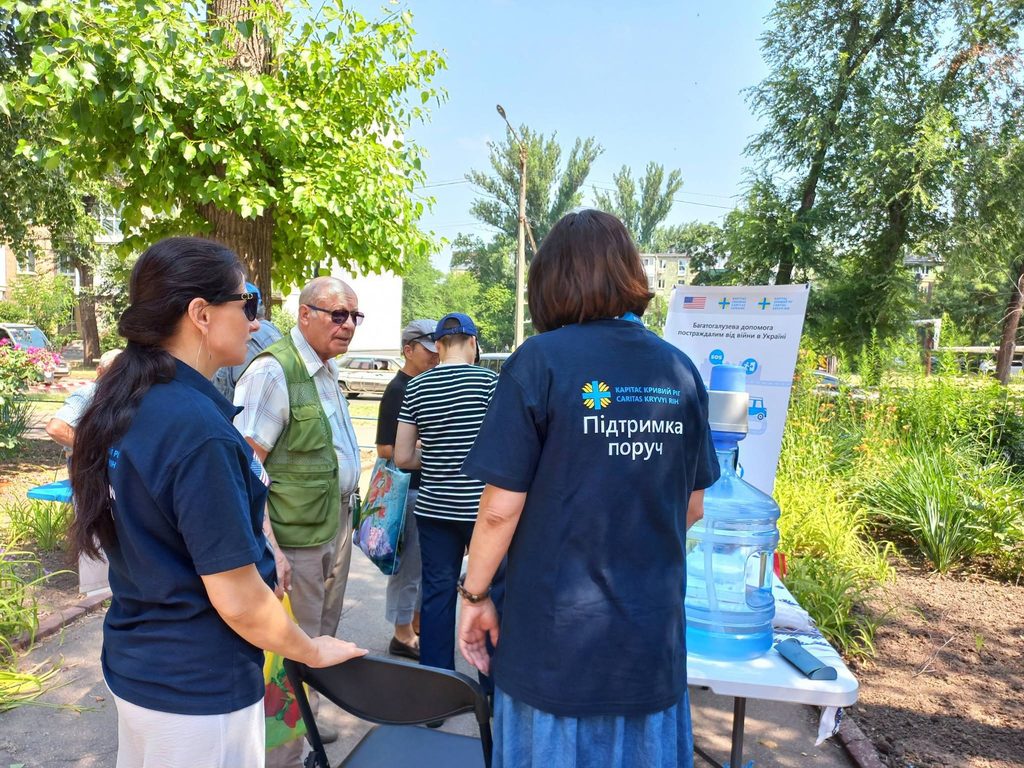
For example, in Zaporizhzhia, following Russian attacks, the Caritas team set up a mobile support point where people affected could get hot drinks and a snack, charge their phones and find out which services and organisations they could contact for further assistance.

If needed, the mobile support point can also be used by those working for hours in the aftermath of an attack: rescuers, medical personnel, utility workers, police officers and representatives of humanitarian and volunteer organisations.

Step five: support. Why is Rapid Response about more than tea, food and tents?

Material assistance is the most visible part of a mobile support point’s work. But the role of Rapid Response goes much further.

— I tell the team: our main task is not simply to make someone a cup of tea. Of course we will do that. If someone is cold, we will help them get warm. If they have not eaten for hours, we will give them something to eat. But if, afterwards, they are still just as overwhelmed and have no idea where to turn with their particular problem, we have only done part of our job.

On 2 July 2026, in Kryvyi Rih, following a missile strike on a residential area, the local Caritas Rapid Response team worked near the municipal emergency response centre. In the heat, and with so many people affected, residents spent hours queuing. Some already knew the general procedure for reporting damage to their homes, but still needed support after another attack.

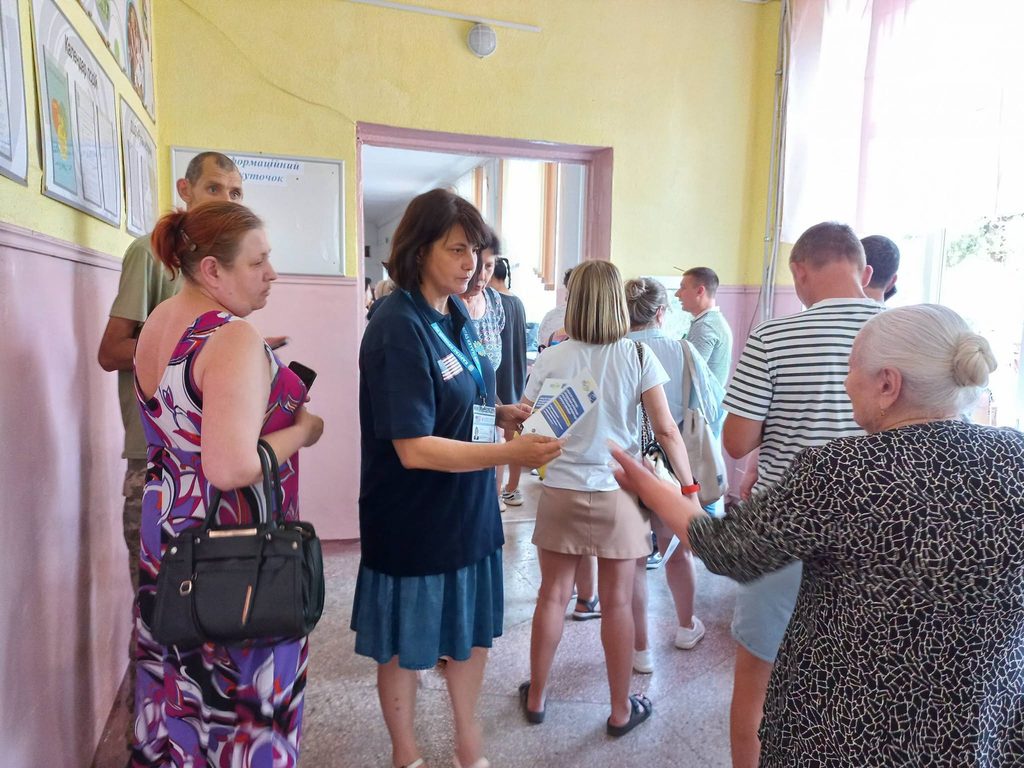
Rapid Response also provides information, practical guidance and psychosocial support. The Caritas team explain what steps to take if a home has been damaged or destroyed, provide information about government and non-governmental assistance programmes, and help people identify which service or programme to approach.

Where needed, individuals may be referred to:

  • a Caritas Crisis Centre;
  • legal assistance;
  • psychological or social support;
  • cash assistance programmes;
  • other organisations or government services, depending on their individual needs.

— What matters to me is treating each person as an individual. Not seeing people simply as ‘those affected’ and giving everyone the same information, but recognising the person in front of us. Do they understand what they need right now? Are they able to make the necessary phone call themselves? Can they explain their situation? Who exactly are we referring them to? That is what social work is about.

Step six: psychological support. What if someone cannot put their needs into words?

— The first thing is to listen. We must not arrive with ready-made answers. Through conversation, we need to understand how the person is coping, what they are able to do for themselves at that moment and where they need support.

Caritas teams apply psychological first aid principles, for which staff receive specialist training. Their role is not to replace a psychologist, but to establish contact with people affected by an attack, listen to them, identify their immediate needs and, where necessary, refer them to an appropriate specialist.

According to Stanislav, people can respond very differently to a crisis. One person may quickly regain their composure and begin organising others. Another may freeze. Someone else may repeat the same action over and over or struggle to make even a simple decision. There is no single response that applies to everyone.

— Every one of these people has their own situation. One needs information. Another needs crisis counselling. A third needs to charge their phone because they cannot contact their family. And all of this is happening at the same time.

Who can cope with such work?

— The greatest strength of Rapid Response is its people. For me, there is absolutely no question about that.

A local team typically comprises around five people, led by a coordinator. It includes social workers and a driver, with a psychologist and other specialists brought in depending on the circumstances. Some team members have extensive volunteering experience. Others are veterans or former military personnel. Teams in Chernihiv, Kharkiv, Kamianske, Sumy and Mykolaiv, for example, include people who have served in the armed forces.

Experience alone, however, is not enough without regular training.

Teams receive training in:

  • psychological first aid;
  • first aid;
  • safety and security;
  • working in high-risk environments;
  • engaging with children;
  • working with veterans;
  • supporting other groups who may need additional attention during a crisis.

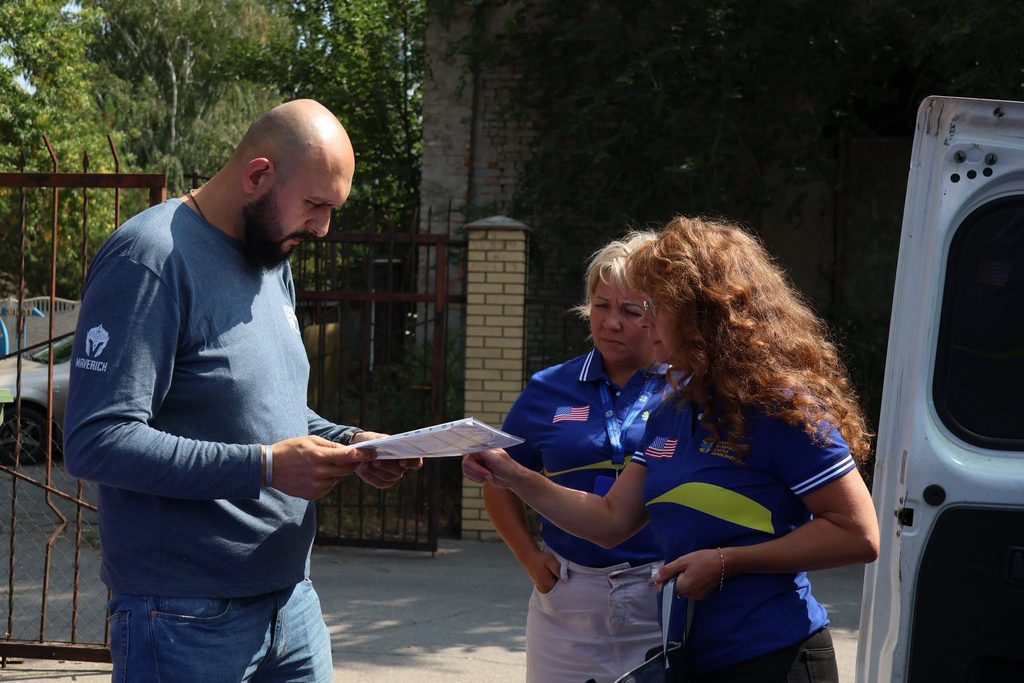
Some teams have already completed six or seven training courses. Stanislav has met the teams in person and led practical simulation exercises, during which they set up tents, checked equipment and rehearsed potential response scenarios.

Testing the Rapid Response mobile tent.


— What I find particularly encouraging is when people ask further questions. When someone asks not ‘What have I been told to do?’ but ‘What happens if the circumstances change?’ or ‘How would we help in this particular situation?’, I know they are genuinely engaged in the work. You can learn a set of instructions, but you cannot create motivation by giving orders.

Stanislav himself sees expertise and hands-on experience as inseparable:

— For me, being a lead expert is not simply about having a job title. You earn credibility by knowing your subject and working through it in practice alongside the team. That shared experience matters to me because it means we speak the same language.

Does the Rapid Response team only deploy after attacks?

— We are already looking more broadly at responding to the consequences of attacks. Take a prolonged power cut or disruption to district heating in winter, for example. There may not have been an explosion immediately beforehand, but an entire community could be left without heating for hours or even days, creating an urgent need for assistance.

Rapid Response is preparing to operate in situations beyond the immediate aftermath of air strikes. Ahead of the cold season, teams are preparing insulated mobile tents, heaters, independent power supplies and personal warming items.

Rapid Response is gradually moving beyond a single ‘attack–deployment’ scenario. Its purpose is to ensure that teams are equipped and ready to support communities when essential services are severely disrupted.

The effects of the war are cumulative. After years of attacks, the strain is felt simultaneously by emergency services, local authorities, medical staff, rescuers, utility providers, humanitarian organisations and residents themselves.

— The state and its services simply cannot be the sole providers of every kind of support. What matters is that we do not duplicate each other’s efforts, but understand our respective roles. For me, Rapid Response is one form of work that serves society, allowing us to contribute what we are uniquely placed to offer.

If you had to sum up Rapid Response in two words, what would they be?

— A form of service.

Not everyone should go to the scene of an attack — doing so requires training, coordination and clearance from security specialists. But the conversation with Stanislav takes us beyond Rapid Response to a question that the war, in different ways, poses to each of us: what are we prepared to take responsibility for within our own capabilities?

We did not choose the circumstances in which we must seek an answer. But we can choose how we act. And, ultimately, it is through those actions that we reveal what we live for.

Water through calm and air-raid alerts

When one critical component fails, thousands of people can be left without a reliable water supply.

According to UNICEF, at least 1,109 km of water supply networks, 82 pumping stations and 327 km of sewerage networks have already been damaged or destroyed in Ukraine. In 2026, around 6.4 million people require humanitarian assistance in water, sanitation and hygiene.

Another major challenge is the dependence of water supply systems on electricity. An assessment of 43 major water utilities serving 11.2 million people found that 85% do not have sufficient backup power capacity. Power outages can halt pumping stations, water treatment processes and water distribution.

During systematic attacks on Ukraine’s energy infrastructure in the winter of 2025–2026, emergency power outages affected millions of people across the country. The UN Human Rights Monitoring Mission also documented disruptions to water supplies caused by electricity outages.

There is therefore no single solution to the challenge of maintaining water supplies. Communities need wells and networks to be rehabilitated, pumps and pipelines to be replaced or upgraded, water treatment systems and reagents, as well as backup power. Municipal utilities also need equipment that enables them to respond more quickly to emergencies and keep essential systems running.

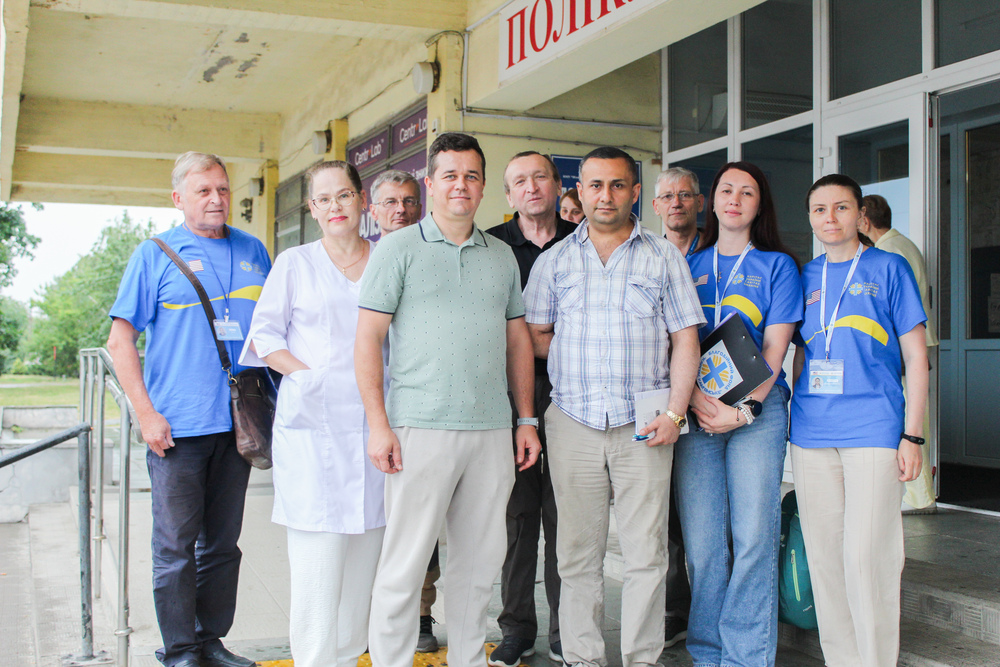
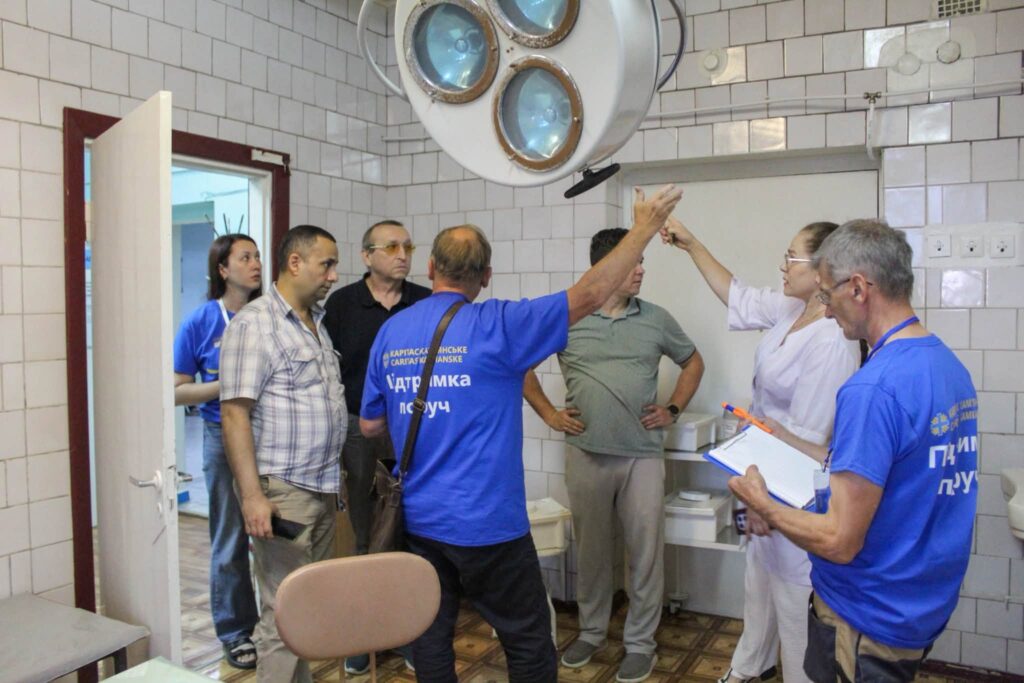
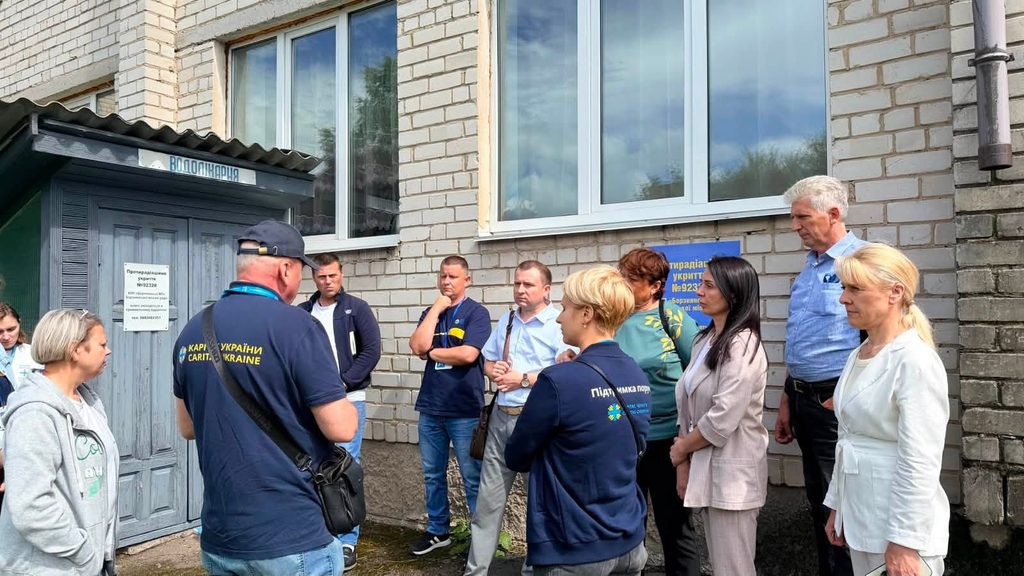
Caritas teams are working with healthcare facilities across three regions to identify needs and plan the necessary works.


This is the approach Caritas is taking through the “Multi-Sectoral Assistance to War-Affected People in Ukraine” project, funded by the U.S. Department of State and implemented by Caritas Ukraine and local Caritas organisations in partnership with Catholic Relief Services. The project includes the rehabilitation of centralised and decentralised water supply systems, as well as the provision of backup energy solutions and filtration systems.

Work on water infrastructure spans locations across eight regions: Chernihiv, Dnipropetrovsk, Mykolaiv, Sumy, Kyiv, Zaporizhzhia, Poltava and Kharkiv.

To date, 15 infrastructure sites have undergone technical assessments in preparation for repairs and the installation of energy equipment, while a further eight social facilities in the Kyiv region have been assessed for energy solutions. In five regions, technical assessments have been carried out for decentralised water supply systems, sanitation facilities and wastewater infrastructure. Procurement is also under way for municipal water treatment units, pumps, valves, pipelines and other operational equipment.

A generator can keep an entire system running

One example of support already provided comes from Caritas Kamianske in the Dnipropetrovsk region.

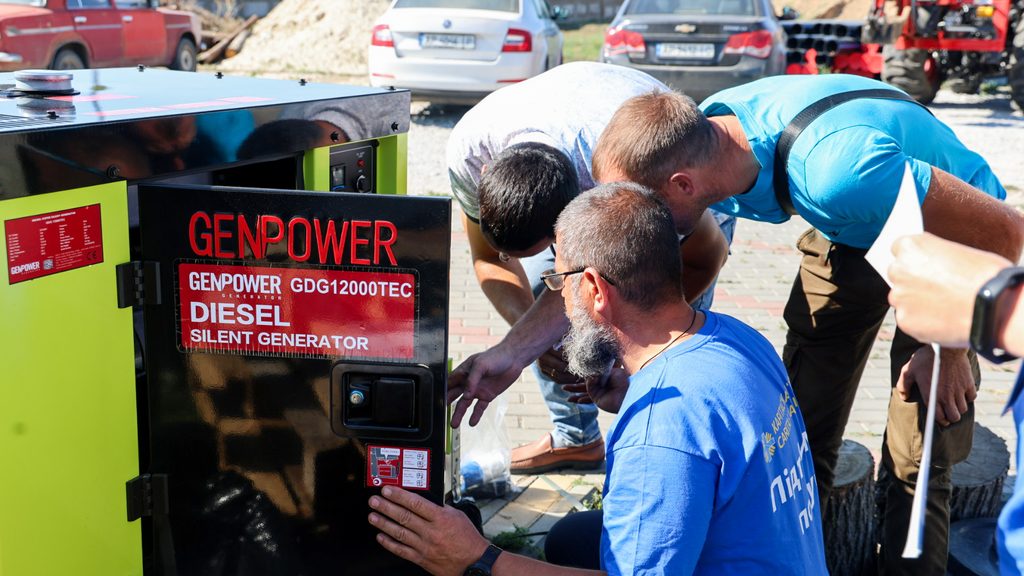
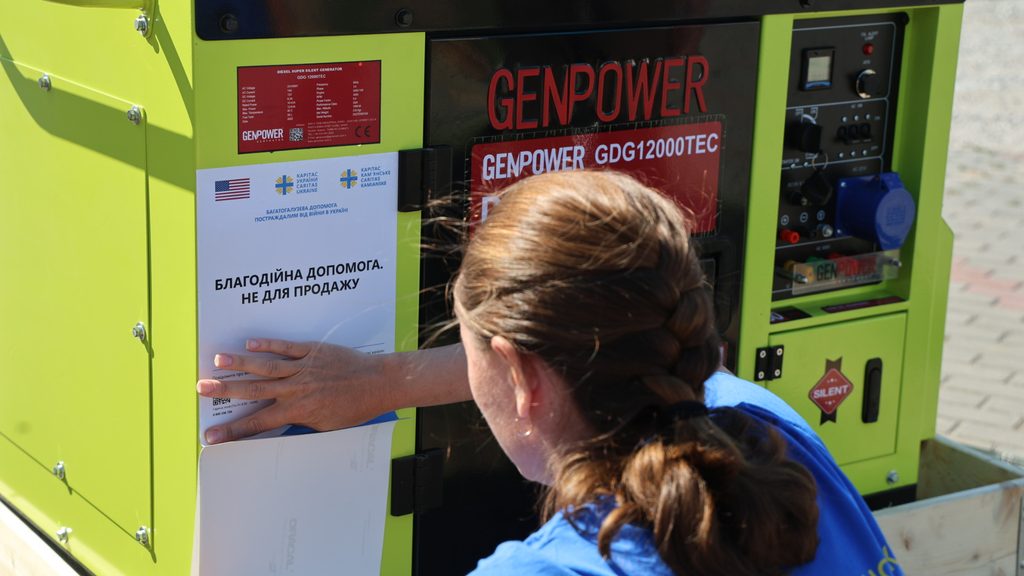
The municipal utility Tomakivske Water Supply and Sewerage Company of the Tomakivka Settlement Council received a generator to provide backup power for its water treatment plant. During scheduled or emergency power outages, it will help keep the equipment needed for water treatment operational.

For the Tomakivka community, this is particularly important following the destruction of the Kakhovka Dam, which significantly worsened water supply challenges for communities in southern Ukraine. Backup power helps reduce the risk of the treatment plant shutting down during electricity outages.

This example also illustrates how Caritas works with water utilities and communities. The community itself identifies the need. The Tomakivka community submitted a request for the necessary equipment, while Caritas Kamianske specialists assessed its eligibility under the project and supported the procurement and handover process.

“Communities identified their own needs and approached our organisation with requests for support that could strengthen their ability to operate under wartime conditions. This kind of joint work helps build communities’ capacity and supports their self-reliance,” said project coordinator Iryna Zaloha.

From a single facility to system-wide support for communities

In the Mykolaiv region, this work already covers six communities: Voskresenska, Novobuzka, Bashtanska, Voznesenska, Nechaiana and Kostiantynivska. Based on available data, the water supply systems in five of these communities serve at least 81,800 people.

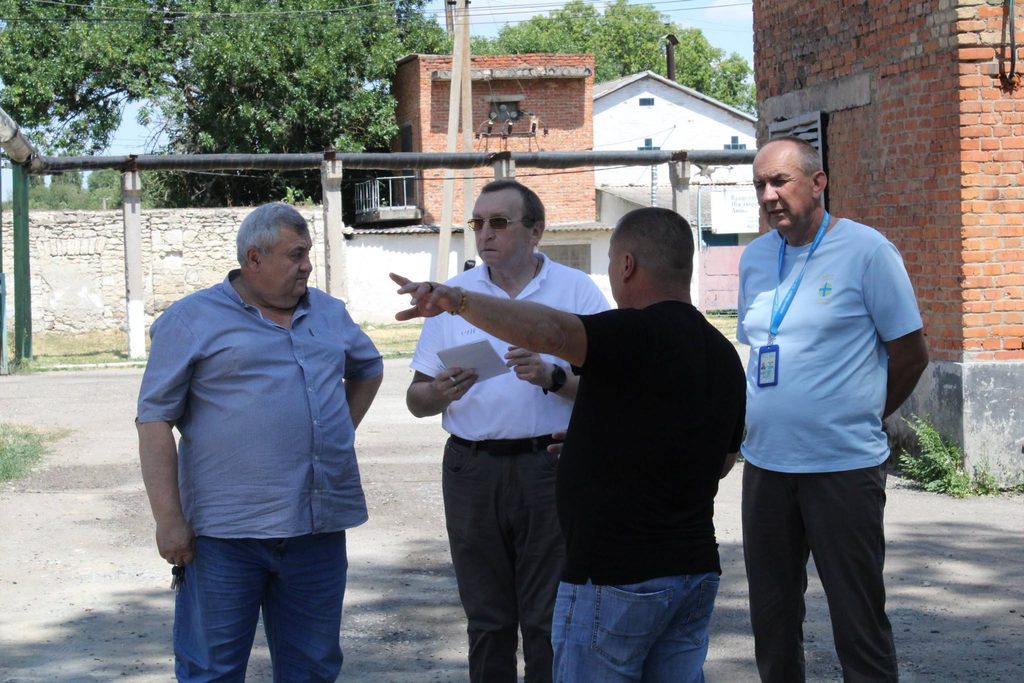
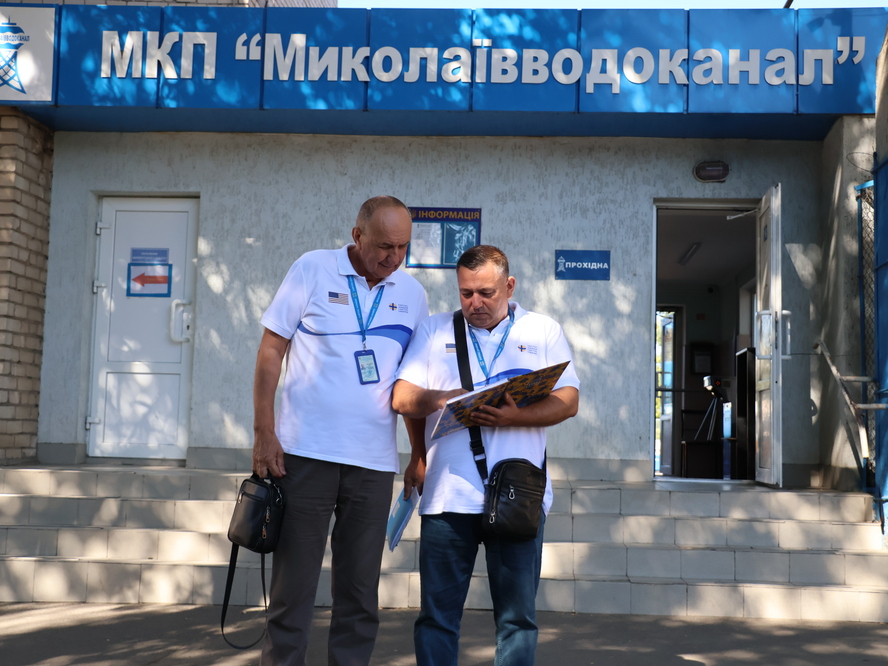
The Caritas team during an introductory meeting with representatives of Mykolaivvodokanal municipal water utility.


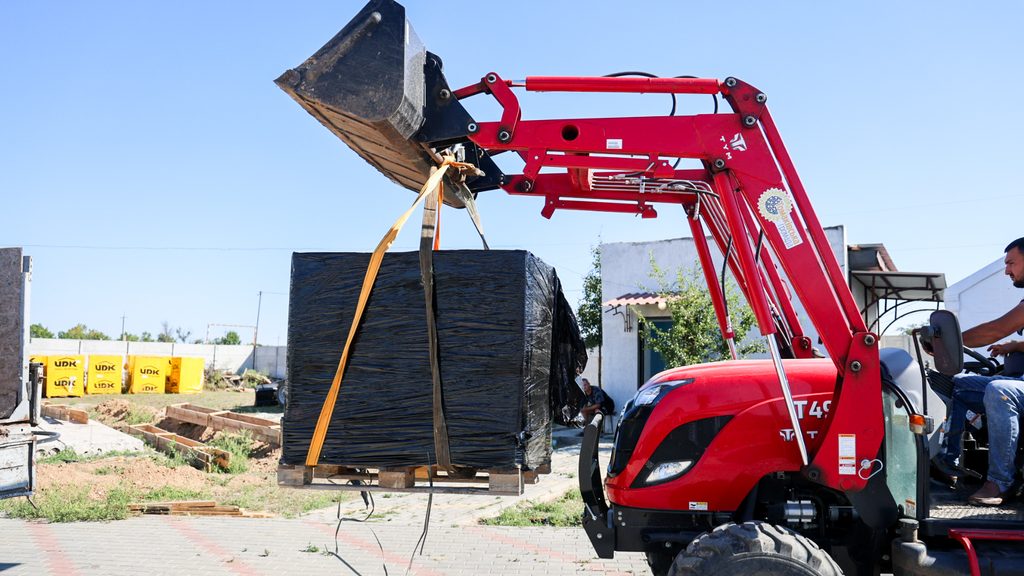
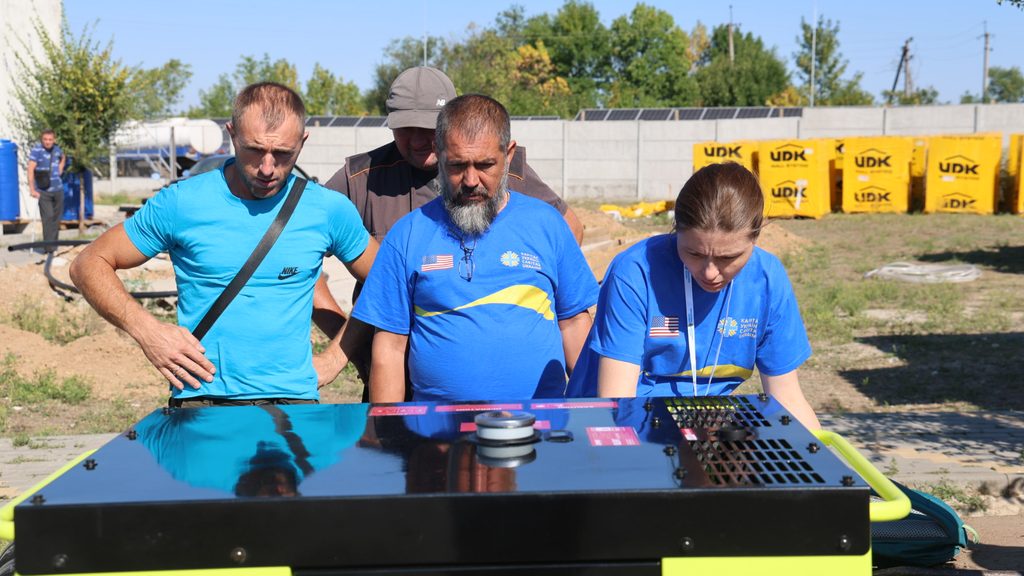
A comprehensive package of support for water supply systems is already under way in the Mykolaiv region. This includes five generators to help keep wells operating during power outages, reverse osmosis systems in four communities, two modular water treatment units, the rehabilitation of three wells, two specialised trailers for emergency repair teams, 640 tonnes of quartz sand for filtration and 40 tonnes of reagents for water treatment and disinfection.

The aim of this integrated approach is to make community water supply systems less vulnerable to emergencies and power outages.

“When we address not just one isolated problem but the system as a whole, water supply in a community becomes more reliable. Even during power outages or emergencies, there is less risk of the entire system coming to a halt. For communities, this means being better able to respond to problems using their own resources, keep local water utilities operating and reduce their dependence on external assistance,” said Ihor Kramarenko, Lead Expert for the complex WASH project.

The two modular water treatment units in Voznesensk alone are designed to serve around 7,000 people.

The true scale of this work is therefore measured in the tens of thousands of people for whom water needs to remain available even during power outages, emergencies and damage to critical infrastructure.

From the well to the tap, Caritas is working across the entire chain on which community water supply depends. In some places, equipment has already been delivered, as in the Tomakivka community; elsewhere, procurement, technical preparation and rehabilitation are still under way. But the result should ultimately be felt in the simplest part of everyday life — people turn on the tap, and the water flows.

Getting away from shelling is only the first step: How full-cycle evacuation works

A person may wait to leave until local services have stopped operating, public transportation has become unreliable or an older parent can no longer travel without help. Even after deciding to go, a family may have nowhere to stay. And for someone who has lived in the same home for decades, evacuation can mean deciding in hours what can come with them and what must remain behind.

In the Donetsk region, one woman recalled that emergency services had already stopped operating before her family fled under shelling. Other families describe streets emptying as attacks intensify. Still, people stay — because they have nowhere else to go, care for relatives who cannot easily travel or cannot yet imagine abandoning the life they built there.

The scale is easy to lose inside individual stories. According to the Ukraine Protection Cluster, a humanitarian coordination network, more than 89,000 people were evacuated from war-affected areas in eastern Ukraine in 2025. Forty percent of those evacuated were age 60 or older, and 7% were people with disabilities. That works out to more than 240 people every day — many of them people for whom a seat in a vehicle could never solve the whole problem. 

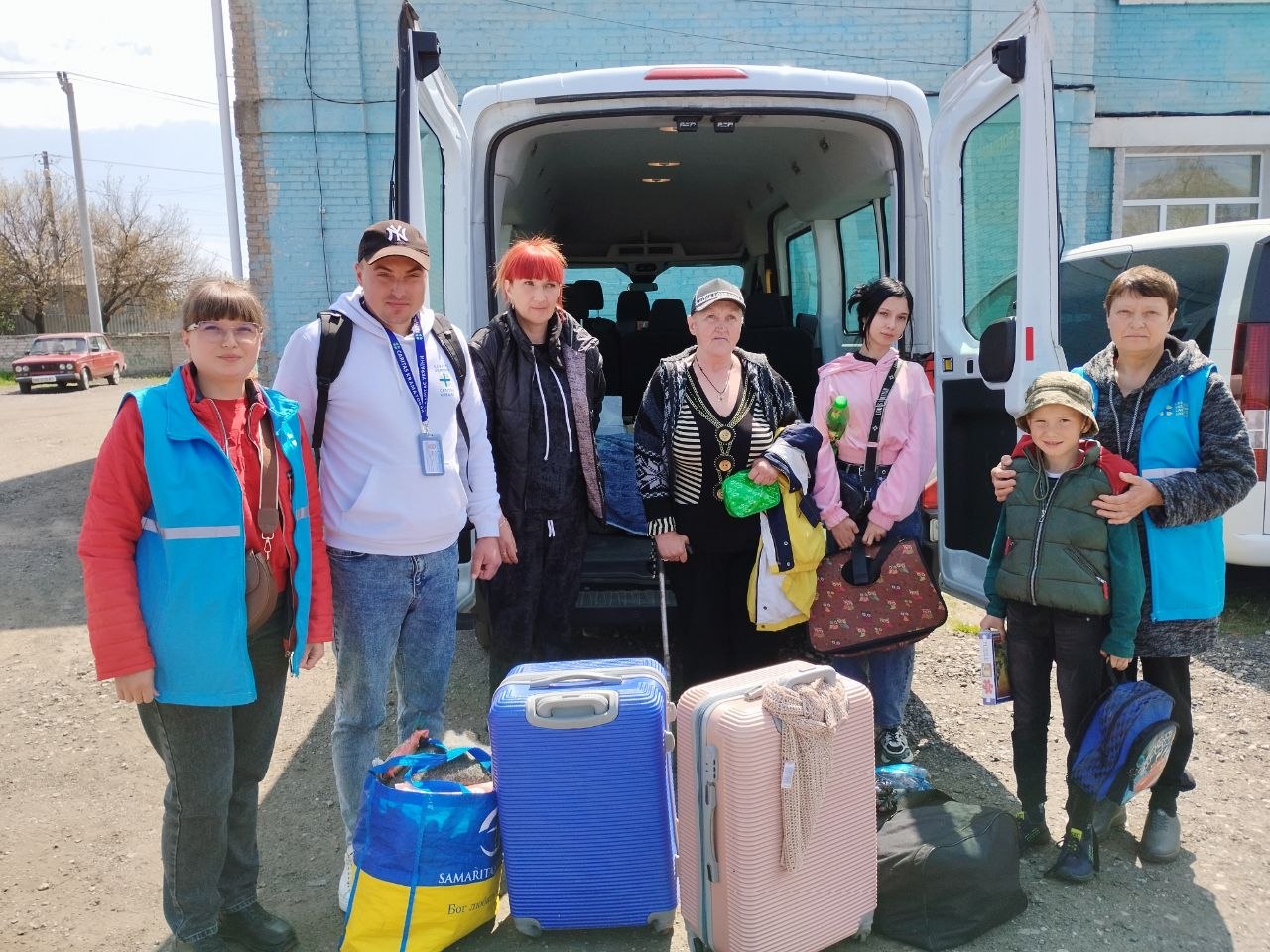
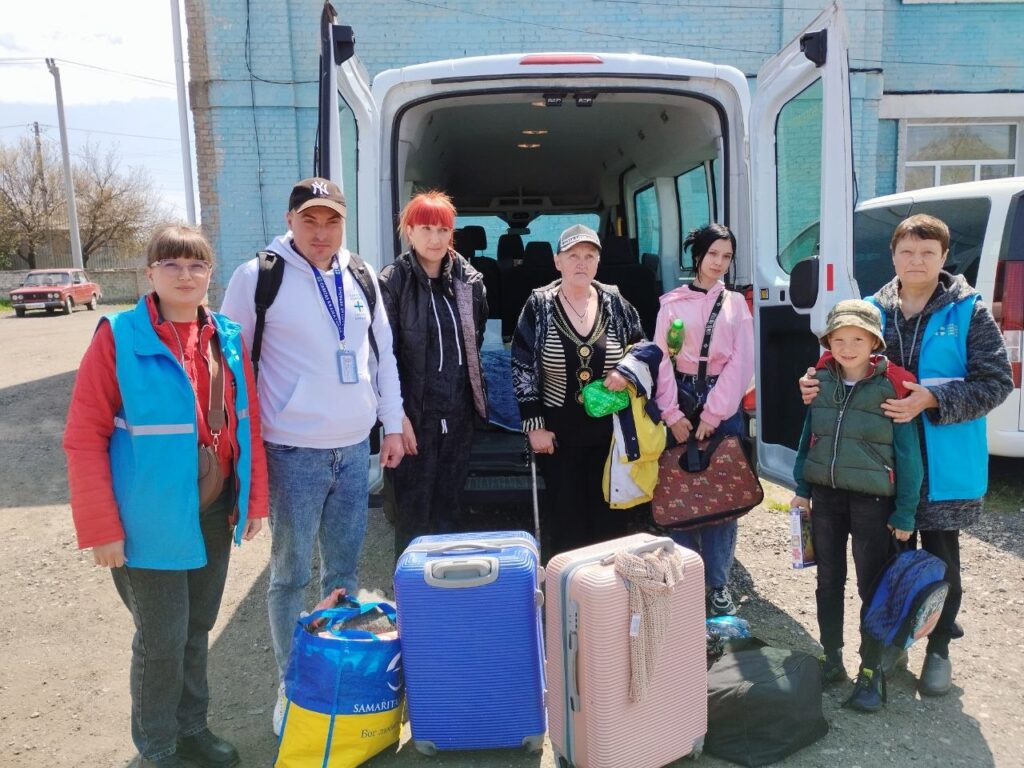
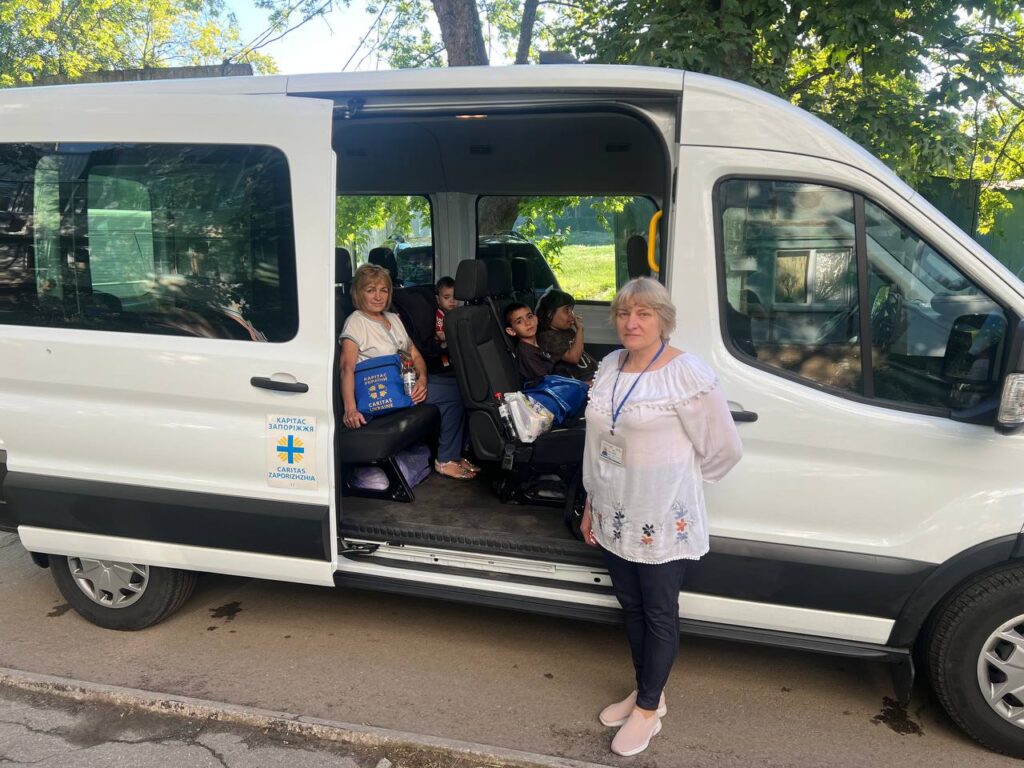
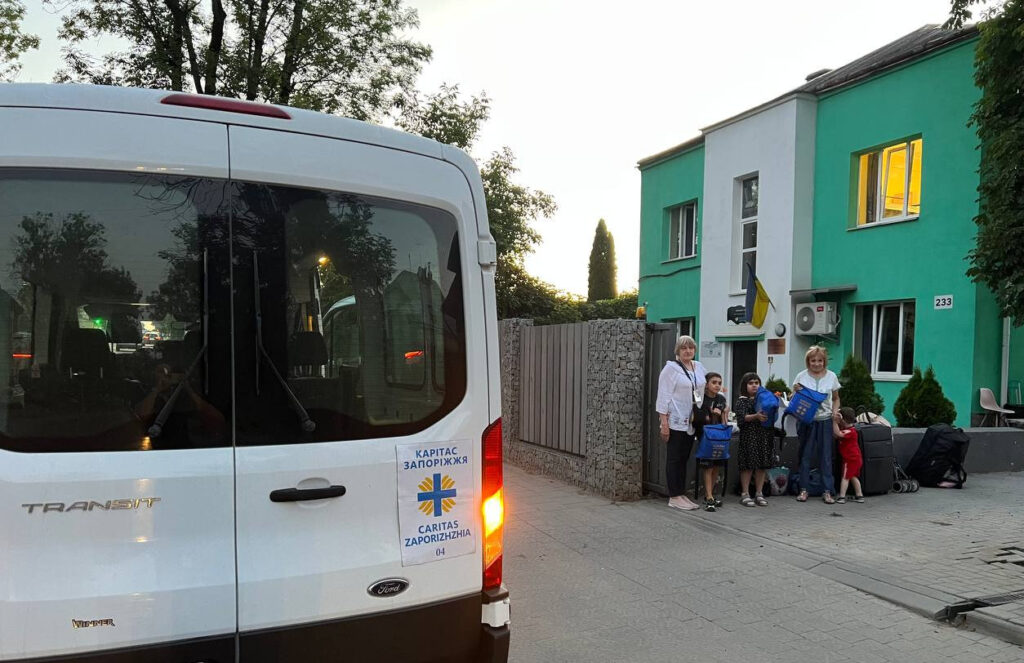
This is why Caritas Ukraine uses what it calls full-cycle evacuation: connecting a person’s departure from danger to a safe, workable place to go next. Transportation is one part of that process, alongside informed consent, case management, security planning, transit support, housing and follow-up after arrival.

The call that starts an evacuation

For Inna, this was the second time she had to leave home.

She had already evacuated from the Donetsk region with her mother and two children after Russia’s full-scale invasion began in 2022. The family later returned, hoping the situation would improve.

It did not.

“The children have everything at home … except peace,” Inna said as they prepared to leave again.

This time, four people from three generations needed not only a way out, but somewhere to go.

After dozens of communities said they had no space, Hanna Timchenko, a case manager with Caritas Kramatorsk, found a Facebook post from a community in the Khmelnytskyi region offering vacant homes to displaced families with children. New families could also help keep local schools open. Hanna spoke with the community leader, confirmed that the option worked for Inna’s family and began connecting the stages of the journey.

Inna’s family, whose evacuation from the Donetsk region was organized by Caritas Kramatorsk, which also helped them find new housing.

“People see the evacuation vehicle or the train, but they don’t see what happens in parallel,” Hanna said. “We search for housing, call communities, coordinate with several organizations, arrange transfers between transit centers — and at the same time stay in contact with a frightened family waiting for every update.”

Hanna’s job is to confirm the chain before a family leaves: where they will sleep, who will meet them, how they will move between stages and what help they will need along the way.

At the Pavlohrad transit center, another layer of that work becomes visible. In about three months, roughly 300 people received temporary care there, primarily older adults and people with limited mobility who could not manage basic daily tasks on their own after evacuation.

A Caritas care worker may help someone get to the restroom, prepare food, buy medicine or groceries, or wash clothes. Caritas introduced the service after repeated cases showed a gap: reaching a safer place did not necessarily mean an older person or someone with limited mobility could manage there alone. This kind of hands-on daily care is not a standard part of evacuation support, but for people arriving without a caregiver, it can determine whether they are actually able to manage after the journey. 

How one request becomes a route

Four local teams — Caritas Kramatorsk, Caritas Kharkiv, Caritas Poltava and Caritas Zaporizhzhia — carry out full-cycle evacuation for people leaving high-risk areas of the Donetsk, Kharkiv, Dnipropetrovsk and Zaporizhzhia regions. The work is part of the Multi-Sector Assistance to War-Affected People in Ukraine project, financed by the U.S. Department of State and implemented by Caritas Ukraine and local Caritas organizations in partnership with Catholic Relief Services.

Evacuation routes are often built in stages. In the most dangerous areas, the first leg may be carried out by a local volunteer or humanitarian team already operating closer to the front. Caritas can then pick up the route at a safer point, arranging transit support, onward transportation and accommodation so the person is not left to navigate the next steps alone.

Transit centers are where many of those stages connect. People can eat, wash, rest and register for available assistance while the next part of the journey is confirmed or arranged. Some continue to relatives, others by train or bus; some need temporary housing or a place where daily care is available.

Between April 2026, when the project’s full-cycle evacuation work began, and July 31, 584 people were evacuated.

Numbers become abstract quickly, so picture the same figure another way: place 584 people into 50-seat buses, and they would fill almost 12 of them.

But there were not 12 identical busloads.

There were 584 individual decisions to leave. Hundreds of different family situations, destinations and needs. Hundreds of cases in which somebody had to know who was traveling, where they could safely go and what might prevent them from completing the journey.

When the standard route does not fit

Sometimes people remain in danger because they cannot picture how life will work once they leave.

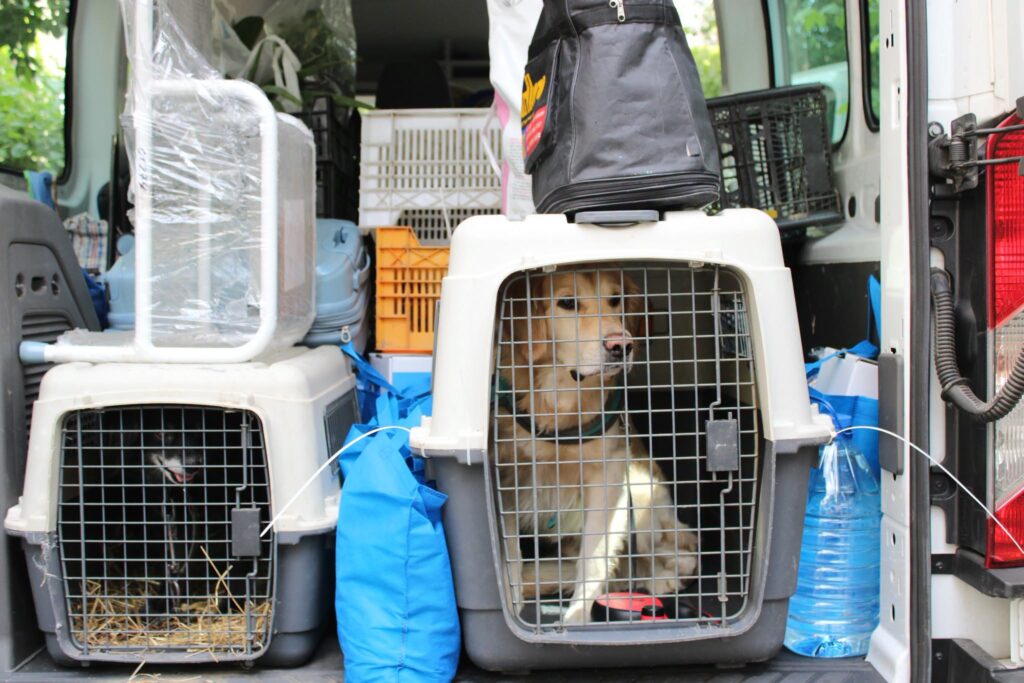
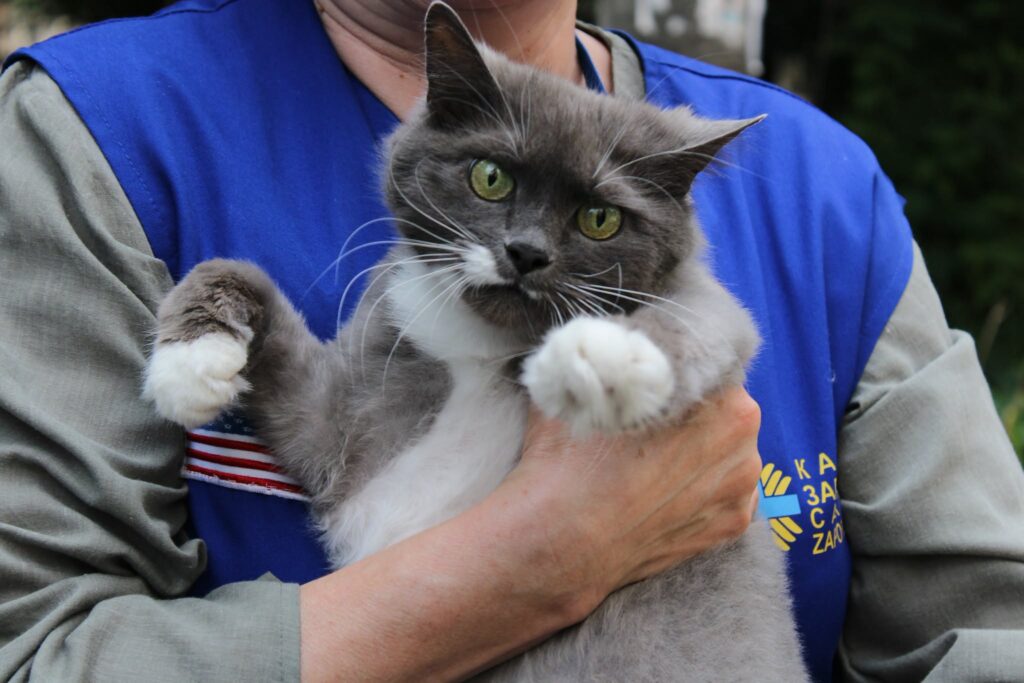
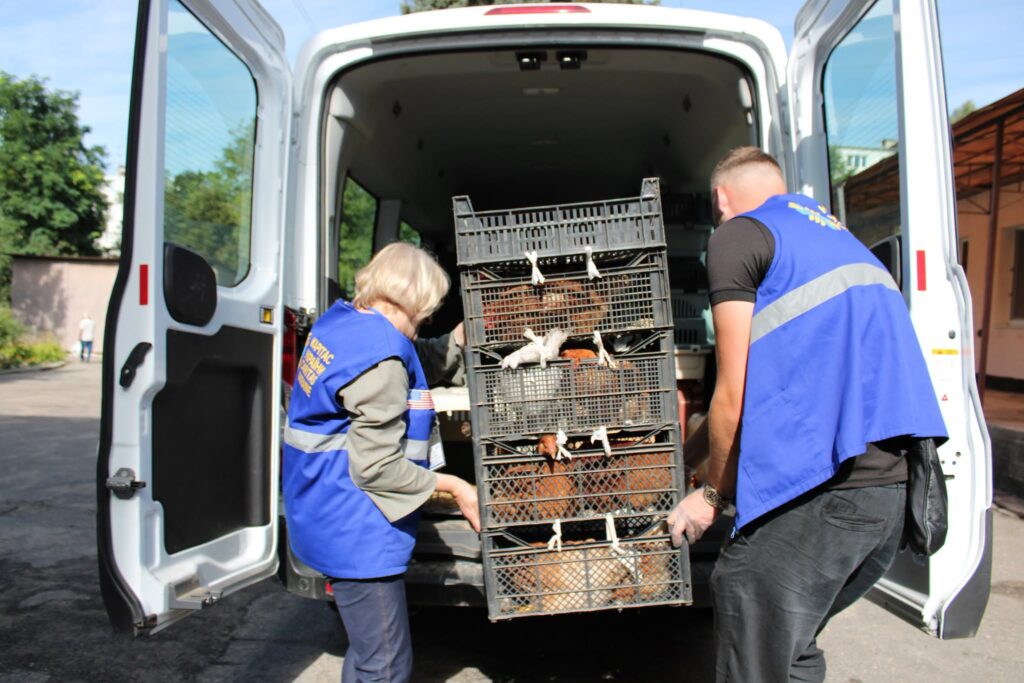
Olena was evacuating from the Zaporizhzhia region for the second time. A direct strike had already destroyed most of the home her family had built and furnished. Now she was leaving again — with her grandchildren, her elderly mother and the family’s animals.

“I also took the chickens, dogs and cats,” Olena said. “The chickens will lay eggs, so we won’t starve.”

For Father Lyubomyr Ivanochko, who leads Caritas Ukraine’s evacuation work, the chickens are not a side note. They point to a larger fear behind many decisions to stay: people may know they are in danger and still have no idea how they will support themselves somewhere else.

“People are afraid because they don’t know what life will look like afterward — where they will live, how they will earn money, what they will eat,” he said. “Those chickens mean that a person can still provide something for the family. You have to understand what gives someone something to hold on to.”

Olena faced another obstacle. An evacuation train would have been difficult for her elderly mother, and taking all of the animals that way would have been nearly impossible. Caritas Zaporizhzhia arranged transportation that allowed the family to travel together and took them to the rented home they had found in the Chernihiv region.

Olena’s mother during the family’s evacuation from the Zaporizhzhia region. 

Caritas teams have learned that trust grows when people know what to expect. Before departure, they explain the housing options, living conditions, available support and who will meet the family at the other end. Photos or videos can help turn an unfamiliar destination into something a person can actually consider — and decide on for themselves.

“We do not impose a solution,” Lyubomyr said. “We discuss the conditions with the person and agree on what will work for them. The decision remains theirs.”

That transparency matters when someone is being asked to trust people they may have only just met. A social worker may travel with evacuees, answer questions and stay beside someone who is frightened or disoriented. The next step is explained before it happens, and the support does not disappear halfway through the journey. After arrival, Caritas checks whether the arrangement is working; if it is not, the team and the person look for another option.

A case manager works on an evacuation request.

Caritas can remove barriers and build a workable route. It can make a choice possible without making that choice for the person. 

What happens after arrival

The road can end before the case does.

Caritas Zaporizhzhia supported a mother traveling with three children, including a child with a disability, who needed to continue to Austria. Before they left, Olena Bugel, a case manager with Caritas Zaporizhzhia, re-established contact with an Austrian organization that had supported the family before, confirmed that support would be waiting and coordinated the next stages of the journey.

After one night in temporary accommodation in western Ukraine, the family continued to Austria. By the time they arrived, the next stage was already in place: a local support team was expecting them, transportation had been arranged and housing was ready.

The family during their evacuation to Austria, supported by Caritas Zaporizhzhia.

For Olena, that was not the end of the case.

She kept calling after the family arrived — first to confirm that they were safe, then to find out whether the arrangements made before departure were working in real life. Was the housing suitable? Was the child with a disability receiving medical care? Were the children being enrolled in school?

“For me, the fact that a family has left does not yet mean that they are truly safe or getting the help they need,” Bugel said. “I need to know that they reached their destination, have somewhere to live, that the children can access medical care and education, and that the family has not been left alone with new problems.”

In later calls, the family reported that those arrangements were taking hold. They had moved into an apartment; the children were being connected to schools, including specialized education for the child with a disability; and a local social worker was helping with medical appointments, documents and social services.

For a case manager, the plan made before departure has to work after arrival. The case does not end because the last vehicle has stopped; it ends when the support promised at the other end is actually there.

From a distance, evacuation can be counted in vehicles, passengers and miles traveled. Up close, it is measured one person at a time. 

One journey may depend on a volunteer team reaching the edge of a dangerous area, a case manager finding housing hundreds of miles away, a care worker helping at a transit center, another team waiting at the destination — and a phone call days later to make sure the plan actually held.

That is what the 584 evacuations in this project represent: hundreds of individual lives requiring hundreds of different solutions, connected across teams, regions and sometimes borders.

For Caritas, getting someone away from shelling is where the responsibility begins. The work is to make sure there is still someone beside that person when the road ahead becomes unfamiliar — and somewhere real for that road to lead.

How to request evacuation support

Full-cycle evacuation is provided only with the person’s voluntary consent. The team can offer options, explain the conditions and help organize the relocation, but it does not decide where a person should go on their behalf. This is one of the fundamental principles of the evacuation process.

  1. Call Caritas. Let the team know right away that you are seeking evacuation assistance. Tell them where you are currently located and how many people need to leave.
  2. Explain the needs of everyone who will be traveling. It is important to mention from the outset if anyone has a disability, is an older adult or has limited mobility, if children are traveling, or if anyone needs regular medication, a wheelchair, transportation for animals or essential belongings. These needs determine what type of transportation is required and how the route is planned.
  3. Tell the team whether you already have somewhere to go. If you can stay with relatives or friends, or have already found accommodation, the team will take this into account when planning the journey. If you have nowhere to go, a case manager can help look for available accommodation options.
  4. Review the proposed option and make your own decision. The team will explain the conditions, the route and the assistance available. You have the right to accept or decline the option, or to change your decision.
  5. Once you agree, the team organizes the route. Depending on the security situation, the journey may involve several stages, different teams, a transit center, a train or other transportation. When needed, a social worker may accompany the person during the journey.
  6. At a transit center, you can receive basic assistance and prepare for the next stage of the journey. People can rest, eat, use hygiene facilities and receive information about their onward route and accommodation.
  7. Support does not end after arrival. The team checks that the person has reached the agreed destination and that the arrangements are working. If a problem arises, the team can help look for another solution or connect the person with appropriate assistance.

Who to Call

Caritas Kramatorsk: +380 55 942 20 12, Monday–Friday, 9:00 a.m.–5:00 p.m.

Caritas Kharkiv: +380 67 33 604 55, Monday–Friday, 9:00 a.m.–5:00 p.m.

Caritas Zaporizhzhia: +380 75 173 27 91, Monday–Friday, 9:00 a.m.–5:00 p.m.

Caritas Poltava: +380 95 288 87 07, Monday–Friday, 9:00 a.m.–5:00 p.m.

Caritas Ukraine hotline: 0 800 336 734, available Monday through Friday, 9:30 a.m. – 4:00 p.m.

From Koliadka to Vesnianka and Into Summer: How Singing Helps Nastia at Caritas Odesa Inclusive Centre

The winter holidays were approaching, and the specialists invited everyone to learn a poem for the upcoming celebration.

They soon noticed that Nastia found it difficult to memorize things. But things changed when she started learning Christmas songs. Day by day, she sang the lyrics more confidently, danced along and smiled. Eventually, she learned and sang her first song: “The old year is passing, the new one is coming. The new one is coming.”

“This is actually the first piece she has ever learned by heart,” says Nastia’s mother, Oksana, with joy.

Later, the Inclusive Centre began preparing for the spring celebrations.

“We learned vesnianky and songs for Mother’s Day, and Nastia showed that she remembered almost all the songs we had learned,” continues Elina Pluzhnykova, a social worker at Caritas Odesa. “During our activities and movement sessions, we sing, and the girl transforms from someone who is shy into a very confident person.”

Music can be an effective tool for specialists working in Caritas Inclusive Centres. Rhythm, melody and recurring musical patterns can act as “cues” for the brain, creating additional associations for people who experience difficulties with memorisation. This approach is not universal, and its effectiveness always depends on an individual’s characteristics and preferences. But Nastia’s story is an inspiring example of how music can help make something possible that is difficult without it.

Singing has also had an impact on Nastia’s speech. Her breathing has become deeper, and the pace of her speech has become more dynamic. Speech therapist Olena Kabluka explains:

“Combining words with movement is a real challenge for the brain. Together, they work as a powerful mechanism for developing memory, and we practise this mechanism every day. It is through this persistent work that stories like Nastia’s become possible.”

After seeing her progress at the Inclusive Space, Nastia began individual music lessons to develop the talent that the specialists had noticed in her. Today, she continues her music classes, learning how to breathe correctly and memorising short songs. Her pronunciation is steadily improving, and her progress motivates her to keep learning with even greater enthusiasm.

This material has been prepared by Caritas Ukraine within the National PULSE Consortium, coordinated by Right to Protection. UK Government support to this project in Ukraine is provided through the SHARP element of its Humanitarian Assistance, Recovery and Protection Programme. However, the views expressed do not necessarily reflect the UK government`s official policies.