Through the PROSTIR housing initiative (meaning “living space” in Ukrainian), Caritas Ukraine and Catholic Relief Services (CRS), with the support of Caritas Poltava and the Housing Institute, work together to help displaced and conflict-affected families access safe, dignified and affordable housing while strengthening local housing systems in Ukraine.
The initiative provides rental assistance, supports repair-to-rent activities and promotes energy efficiency measures to address immediate housing and energy needs.
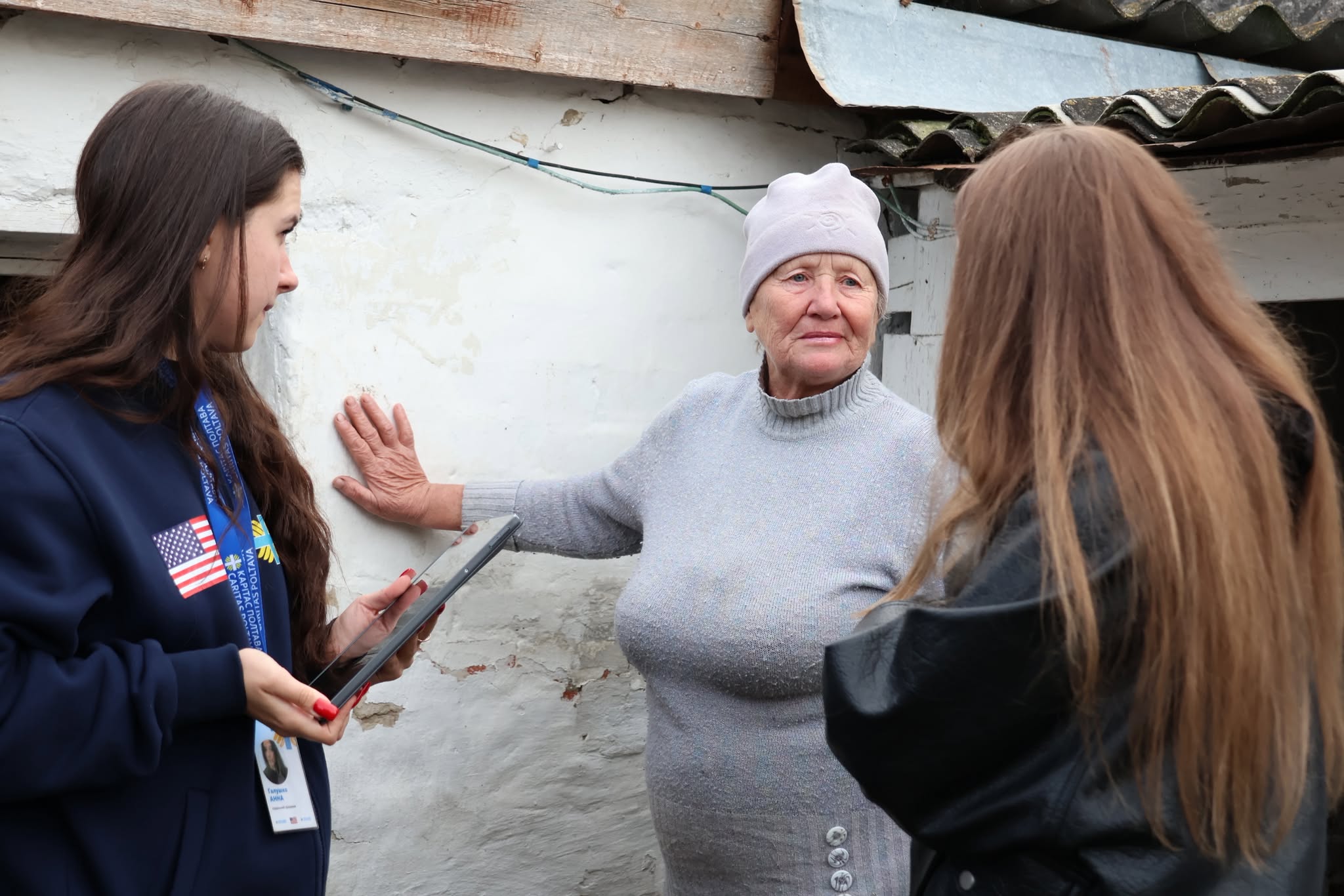
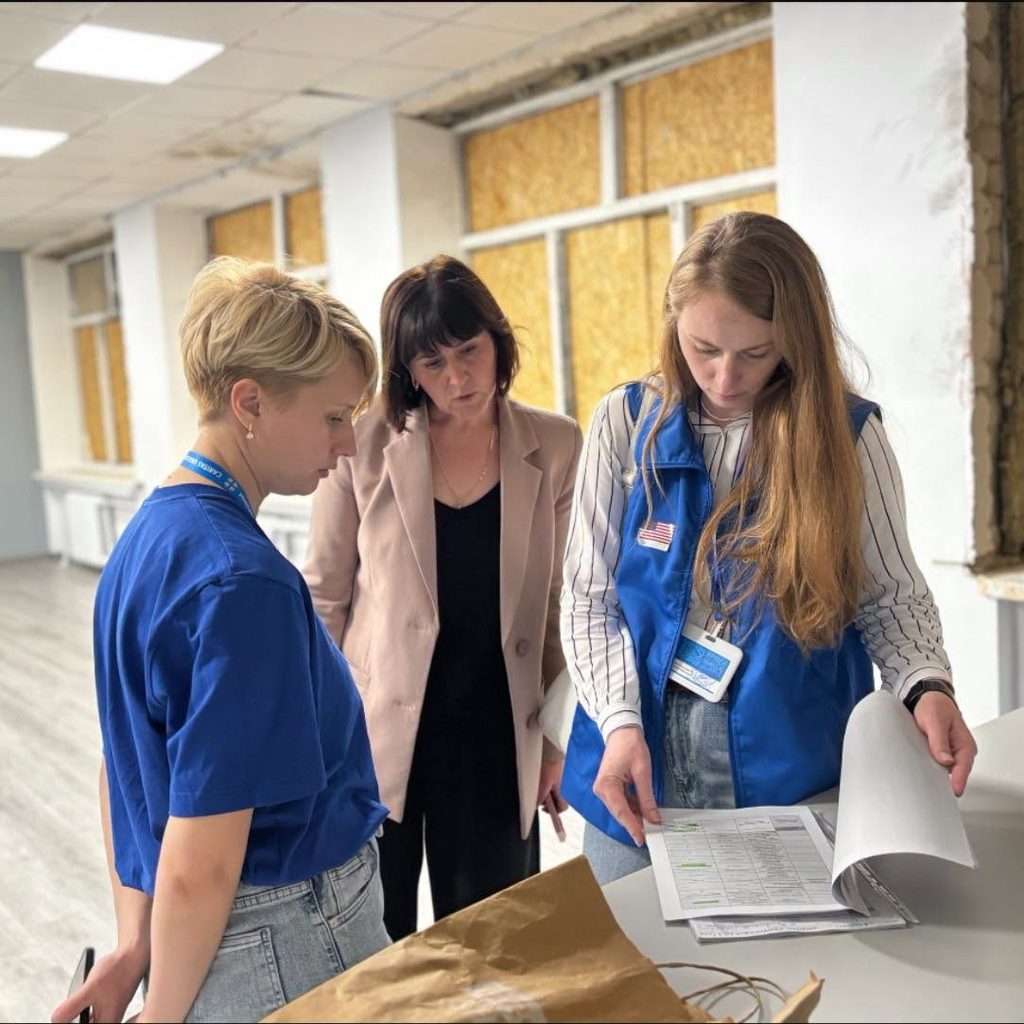
At the same time, Caritas Ukraine and its partners are strengthening municipal capacity to assess local housing needs and identify available options. This includes establishing housing information systems, support hubs and committees, conducting housing stock inventories, developing investment-ready plans for priority sites, and preparing local housing strategies. These efforts aim to expand long-term housing options, including social housing.
The approach also takes into account international experience with CRS
The initiative also draws on international experience. As part of an exchange organized through PROSTIR, Ukrainian stakeholders visited Bosnia and Herzegovina to learn from its post-war housing recovery experience. The country faced large-scale displacement and extensive housing destruction during the war and subsequently developed longer-term approaches to social housing.
Bosnia and Herzegovina’s experience highlights the importance of developing housing systems that help people rebuild their lives. This includes connecting housing solutions with livelihoods, social services and community integration, while strengthening the institutions responsible for their long-term implementation.
Work on these solutions can begin even as the war continues. Watch the video to learn how Caritas Ukraine and its partners are already working with Ukrainian communities to develop sustainable housing solutions.
Ukraine does not need to wait for the war to end to begin building these solutions. Watch the video to see how Caritas Ukraine and its partners are already putting these solutions into practice.
LVIV, Ukraine / Australia — Caritas Ukraine has launched BRIDGE, a vital project that brings rehabilitation out of hospitals and directly into people’s homes across two key regions: Poltava in the east and Ivano-Frankivsk in the west.
The project is funded by the Ukraine Crisis Appeal (Australia) (UCA), who are powered by Rotary Australia World Community Service (RAWCS) and supported by the Australian Federation of Ukrainian Organisations (AFUO), with donations from the Ukrainian diaspora and the wider Australian community. Mobile multidisciplinary teams based at the Caritas Poltava and Caritas Ivano-Frankivsk medical centres visit veterans, civilians affected by the war, children of all ages, and older people and people with disabilities who cannot leave home.
Closing the Rural and Regional Healthcare Divide
BRIDGE is meant for the moment a patient leaves the hospital. Ukraine’s rehabilitation reform now allows care at home, but in practice many municipalities have no mobile rehabilitation teams, and family doctors lack the time and tools to coordinate follow-up. People discharged from a hospital or rehabilitation centre often go back to damaged homes, crowded host communities, or villages with no structured support. Veterans and civilians with war injuries lose the progress they made, and older people stay housebound with preventable contractures, pressure sores, and chronic pain.
Khrystyna Semegen-Bodak, head of the health program at Caritas Ukraine, adds that the problem is also one of geography. Large medical centres are in cities with more than a million residents, she explains, while most people who need rehabilitation live elsewhere, many in rural areas. Home visits also cost less than treatment in municipal hospitals or private clinics, and the people Caritas serves cannot pay for private care. “A huge number of people need rehabilitation services at home,” she said.
Each BRIDGE team combines physical therapy, elements of occupational and speech therapy, psychological support, and social counselling in one coordinated package. A course lasts about eight weeks, with two one-hour sessions a week, adjusted to clinical needs. Family members and caregivers learn to move and position patients safely, prevent pressure sores, contractures, and falls, and look after their own emotional health, with counselling for caregivers integrated into every plan.
The service provides care across four vital groups:
Veterans and service members on long-term treatment leave, many with amputations, brain or spinal injuries, or burns, who cannot easily travel to clinics.
Civilians registered at Caritas medical centres, including displaced people and residents of host communities who survived blast injuries and other war trauma.
Children of all ages suffering from conflict-related injuries, developmental delays, or trauma who require dedicated, family-centred therapeutic support at home.
Homebound older people and people with disabilities requiring specialised in-home care to maintain mobility and prevent complications.
The two regions were chosen deliberately. One is in the east and the other in the west, so Caritas can test its assumptions in different conditions and compare the results. Poltava region hosts many people displaced from Kharkiv, Sumy, Donetsk, and Luhansk regions, as well as many older people and people with chronic illnesses. Ivano-Frankivsk region is relatively safer and receives displaced people and veterans, including those who move there after treatment at national centres. Both regions bring challenges. Air-raid alerts complicate home visits in Poltava, so staff are being prepared to work safely in these conditions; the security situation near Ivano-Frankivsk is better, but risks remain across Ukraine.
BRIDGE builds on services Caritas Ukraine already runs. Its medical centres are licensed and contracted by the Ukrainian government, and its network includes the Nazareth Rehabilitation Centre in Lviv region, which works with veterans. Mobile teams have provided care at home in Kharkiv, Kamianske, Poltava, Kryvyi Rih, and Mykolaiv, and on 1 January 2026 the first dedicated mobile rehabilitation team started work in Khmelnytskyi under the M.O.V.E. project, funded by Cordaid of the Netherlands. BRIDGE applies these lessons in Poltava and Ivano-Frankivsk.
Khrystyna Semegen-Bodak explains the idea: “I think that with this project we should provide this little bridge, close that gap, so that patients who received rehabilitation care have a continuation of this rehabilitation, so that there is no regression, so that people feel needed. Bridges are expensive constructions, but they are crucial.”
A Strategic Alliance for Enduring Healthcare Resilience
The BRIDGE initiative marks a major evolution in the long-standing humanitarian partnership between Caritas Ukraine and the Ukraine Crisis Appeal (Australia). UCA has served as an essential pillar of Caritas Ukraine’s nationwide relief network, providing sustained funding across multiple high-priority sectors. Beyond mobile rehabilitation, UCA’s comprehensive funding portfolio for Caritas includes underwriting national Caritas Emergency Appeals to provide rapid food, clean water, and hygiene relief; sustaining vital Caritas Winterisation Appeals with generators, emergency fuel reserves, solid-fuel stoves, and heating repairs during critical blackout periods; supporting trauma and addiction recovery at the Nazareth Rehabilitation Centre; providing safe sanctuary through the Drohobych Safe Home for war-affected victims; funding the Berdychiv Child-Friendly Space for war-affected young victims; and deploying Mobile Social and Psychological Support teams across the Kherson region.
Diahanna (Darka) Senko, Chair of the Ukraine Crisis Appeal (Australia) and Director of Humanitarian and Medical Aid for the Australian Federation of Ukrainian Organisations (AFUO), stated:
“The BRIDGE project represents one of the most vital strategic commitments the Ukraine Crisis Appeal (Australia) has undertaken. While world-class surgical facilities and clinical centres like UNBROKEN and Nazareth deliver extraordinary acute care, true healing cannot end at hospital doors.
Having spent time on the ground visiting our partner centres across Ukraine, I have seen first-hand that recovery is an arduous marathon. In regional Ukraine, when a patient—whether a wounded defender, an injured child of any age, or an elderly resident—is discharged, they often return to damaged homes and isolated villages where specialised medical follow-up simply does not exist. Without structured community care, hard-won physical recovery can unravel in a matter of weeks. BRIDGE directly resolves this geographical inequity by taking multidisciplinary care out of centralised institutions and delivering it straight to people’s doorsteps.
Every time a mobile team knocks on a family’s door in a remote village, it delivers so much more than vital clinical therapy—it brings a warm, human embrace across the miles, letting them feel that they are never forgotten, never alone, and that Australia stands with Ukraine with every ounce of our hearts and with real action in hope of changing and improving their lives.
Since 2015, the Ukraine Crisis Appeal (Australia) has stood firmly beside Caritas Ukraine across acute relief, winterisation energy supplies, safe shelters, child trauma spaces, and specialised clinical recovery. BRIDGE is the natural and essential evolution of our mission: moving from immediate acute survival to building a durable, community-anchored continuum of care. Proving the success of this mobile model in Poltava and Ivano-Frankivsk is pivotal to securing its long-term future, demonstrating that compassionate, expert clinical care can and must reach every corner of Ukraine.”
Building a Sustainable National Blueprint
The project is designed to last. By gathering clinical feedback and outcome data from patients and their families across Poltava and Ivano-Frankivsk, Caritas refines the model and builds the evidence that the government and local authorities need to co-finance home-based rehabilitation in future, so that it no longer depends on humanitarian funding alone.
About the Ukraine Crisis Appeal (Australia)
The Ukraine Crisis Appeal (Australia) is Australia’s largest community-led, tax-deductible humanitarian fundraising initiative for Ukraine. It is powered by Rotary Australia World Community Service (RAWCS): providing institutional governance, compliance, transparency, and tax deductibility; and supported by the Australian Federation of Ukrainian Organisations (AFUO): the peak body representing Ukrainian Australian community organisations nationwide.
Run 100% by volunteers with minimal administrative overheads, the Ukraine Crisis Appeal (Australia) collaborates with accredited, audited delivery partners in Ukraine—including Caritas Ukraine, the UNBROKEN National Rehabilitation Centre, the Nazareth Rehabilitation Centre, Rotary, and Tabletochki. UCA’s funding footprint spans emergency frontline evacuations, mobile medical clinics, winterisation energy and heating relief, trauma surgical devices, clean water filtration, paediatric healthcare, child-friendly trauma centres, safe shelters for displaced victims such as the Drohobych Safe Home, mobile psychosocial support in frontline regions, and community-based neuro-rehabilitation.
About Caritas Ukraine
Founded in 1994 and based in Lviv, Caritas Ukraine runs one of the largest non-governmental networks of community-based health and social services in the country. It cooperates closely with the Ministry of Health, the National Health Service of Ukraine, the Ministry of Veterans Affairs, and local authorities to deliver emergency relief and licensed medical care to millions of war-affected people across Ukraine.
For some Ukrainian families, preparing for winter begins with buying firewood. For others, it means replacing old windows. And for those who grow vegetables or raise poultry and livestock, it also means taking care of the household farm that helps provide food for the family.
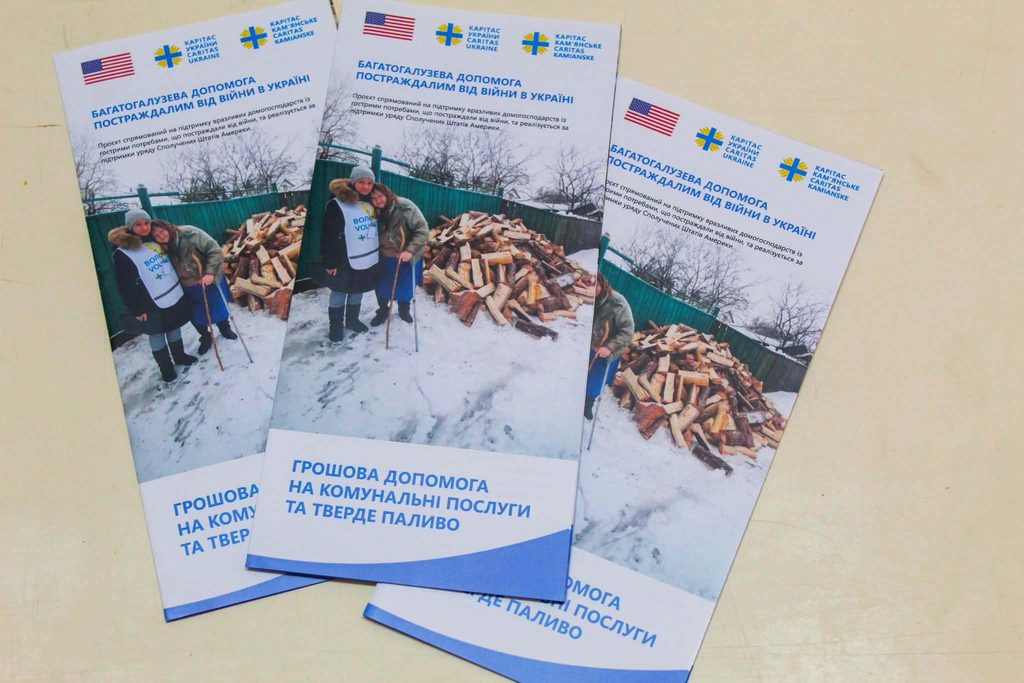
Through the Multi-Sectoral Assistance to People Affected by the War in Ukraine project, Caritas Ukraine helps families and communities prepare for the cold season. Winter assistance combines cash payments, home insulation and upgrades, grants for small rural households, and support for social institutions.
Heating Assistance: Families Decide What They Need Most
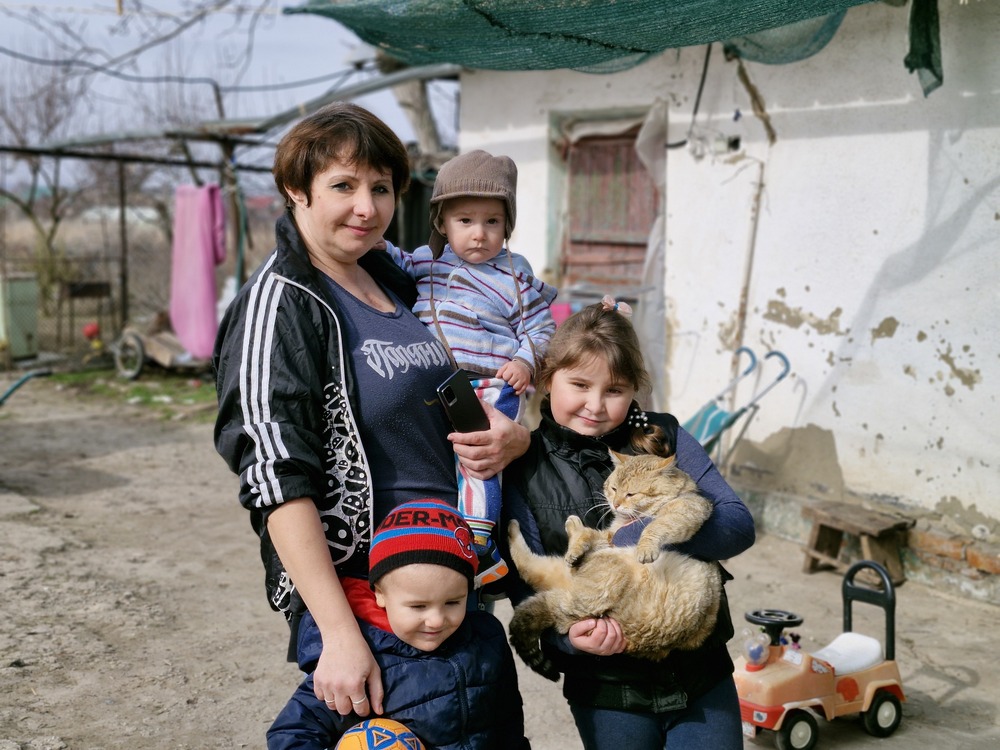
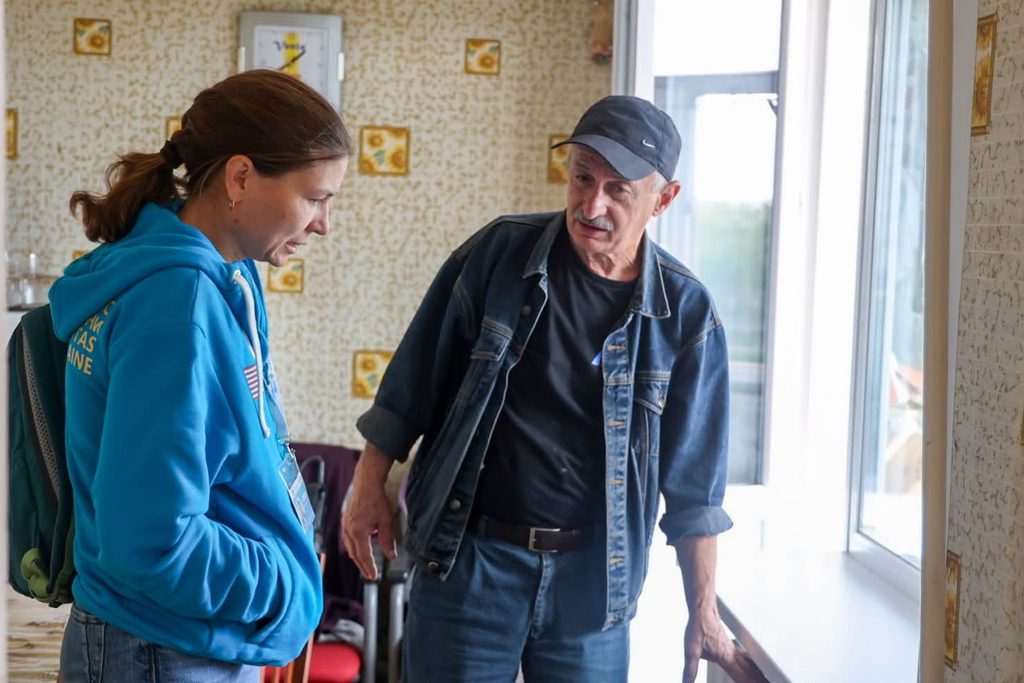
Ms. Aliona lives with her six children in the village of Kudashivka, Dnipropetrovsk Oblast. Four years ago, the family was forced to leave Toretsk in Donetsk Oblast. Their current home retains heat poorly: cold air comes through the windows, and the stove does not work. As a result, they have to rely on gas heating during winter.
“The lowest monthly bill I had was UAH 3,200, and over the entire heating season it comes to around UAH 30,000. And that’s with six young children in the house,” she said while registering for winter assistance through Caritas Kamianske.
Under the project, families affected by the war who meet the established vulnerability criteria can receive UAH 19,400 per household. The money can be used to pay utility bills or purchase solid fuel, depending on how the home is heated and what the family needs most.
The assistance primarily targets families who struggle to cover heating costs on their own, including large families, single parents, people with disabilities or serious medical conditions, and older people living alone. Specific eligibility requirements depend on the type of assistance and the area where the program operates.
Winter cash assistance is provided in seven regions of Ukraine: Poltava, Zaporizhzhia, Mykolaiv, Kharkiv, Chernihiv, Dnipropetrovsk, and Sumy oblasts.
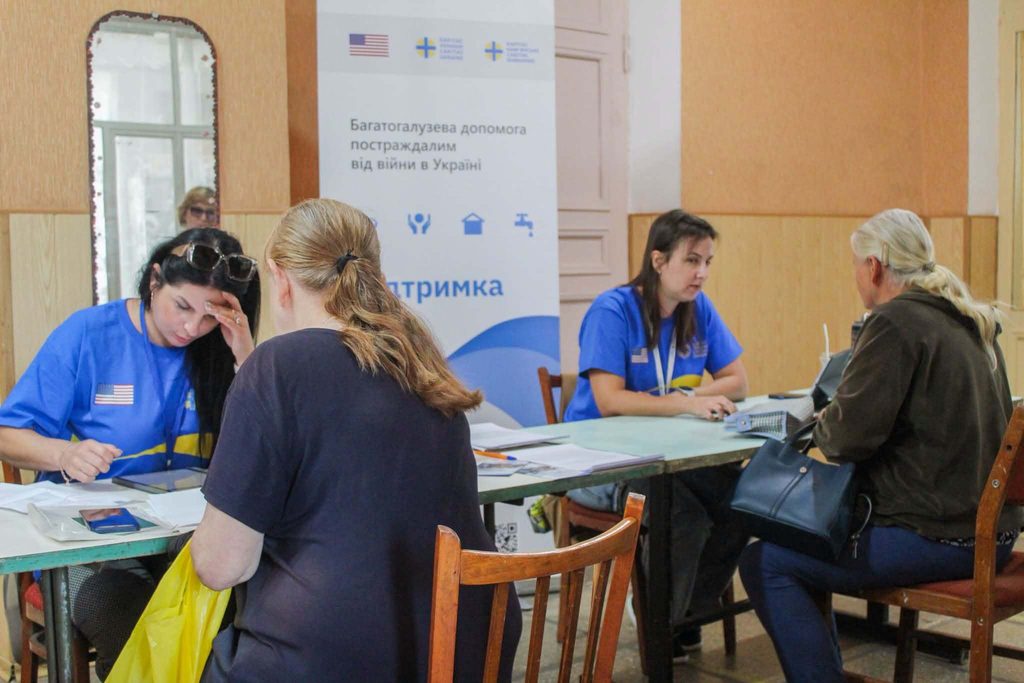
Payments can be made directly to a bank account, delivered to the recipient’s address by Ukrposhta (Ukraine’s national postal operator), or collected through a permanent or mobile post office. The process from registration to payment usually takes around two weeks.
An important feature of this assistance is that families can decide for themselves how best to use the money.
“We give families as much flexibility as possible. Someone might buy firewood and, for example, a saw to cut wood from trees on their own property. People themselves know best what they need to get through the winter,” says Yevheniia Pushkinska, Housing Expert at Caritas Ukraine.
As of November 15, 6,019 households had received winter cash assistance, out of a planned 7,951.
Home Insulation: Keeping the Warmth Inside
Ms. Olena fled Miluvatka in Luhansk Oblast with her three children and now rents a house in Kryvyi Rih. The old wooden windows failed to keep the heat in, while the electrical wiring was unsafe. With support from Caritas Kryvyi Rih, all the windows and electrical wiring in the house were replaced.
Ms. Halyna, originally from Osokorivka in Kherson Oblast, also rents a home in Kryvyi Rih. Her home received new windows and an entrance door.
As part of its winter assistance, Caritas Ukraine provides home insulation and repairs for internally displaced families who meet specific vulnerability criteria.
This assistance is not intended to repair homes damaged by the war. Instead, it focuses on improving living conditions in homes where displaced families have settled after leaving their original communities.
Priority is given to families who have purchased their own homes, as these are often inexpensive houses or apartments in poor condition. However, the program also covers rented accommodation. In such cases, the property owner must agree to allow the family to live there rent-free for at least 12 months.
All work under this component is carried out by contractors engaged by Caritas Ukraine. This may include replacing windows and doors, insulating roofs or floors, and, where necessary, making accessibility improvements such as installing handrails, adapting bathrooms, or widening doorways for people with disabilities.
Home insulation activities are implemented by six local Caritas organizations: Caritas Mykolaiv, Caritas Kamianske, Caritas Poltava, Caritas Sumy, Caritas Kryvyi Rih, and Caritas Kharkiv.
Repair work is currently underway in 245 households, while another 267 have completed verification and are awaiting the start of work
Winter Agricultural Grants: Protecting Harvests and Livelihoods
Preparing for winter is not limited to insulating homes. For many families living in rural areas, it is equally important to repair outbuildings, prepare shelters for poultry and livestock, or create suitable spaces to store harvested crops.
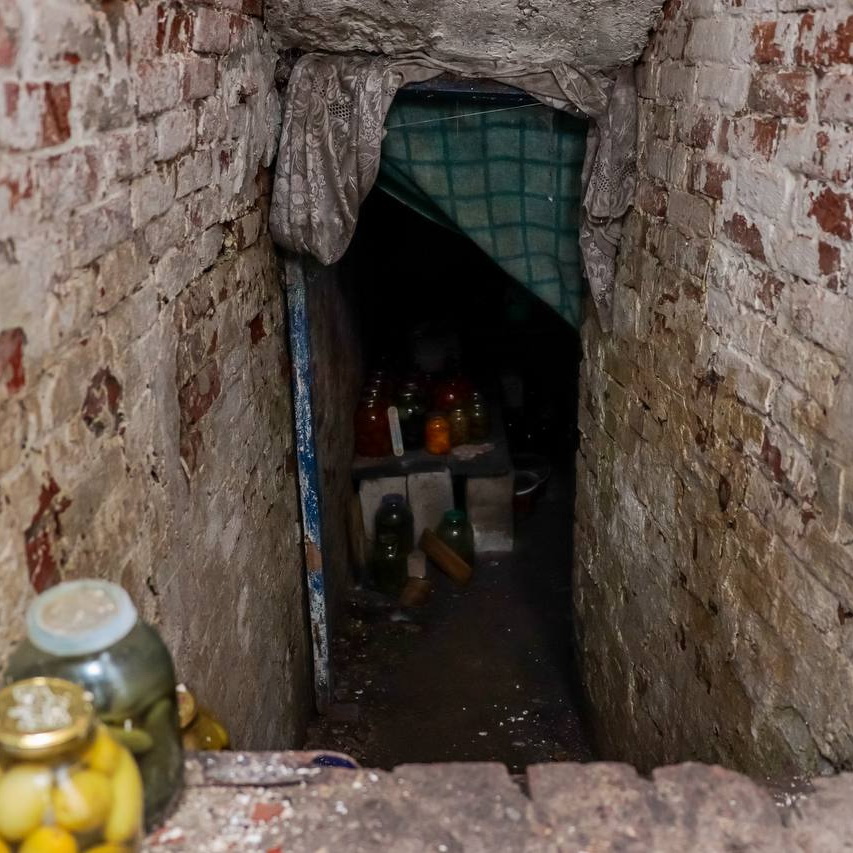
Ms. Tetiana and her husband fled an occupied settlement near Kupiansk in Kharkiv Oblast. In their new home, they grow vegetables for their own consumption and preserve food for winter. However, the cellar where they store their harvest needs repairs: water seeps inside through damaged structures, and the roof needs reinforcement.
Thanks to a winter agricultural grant from Caritas, the couple plans to repair and insulate the cellar to create suitable conditions for storing vegetables and homemade preserves.
Ms. Tetiana plans to use a Caritas agricultural grant to insulate her cellar.
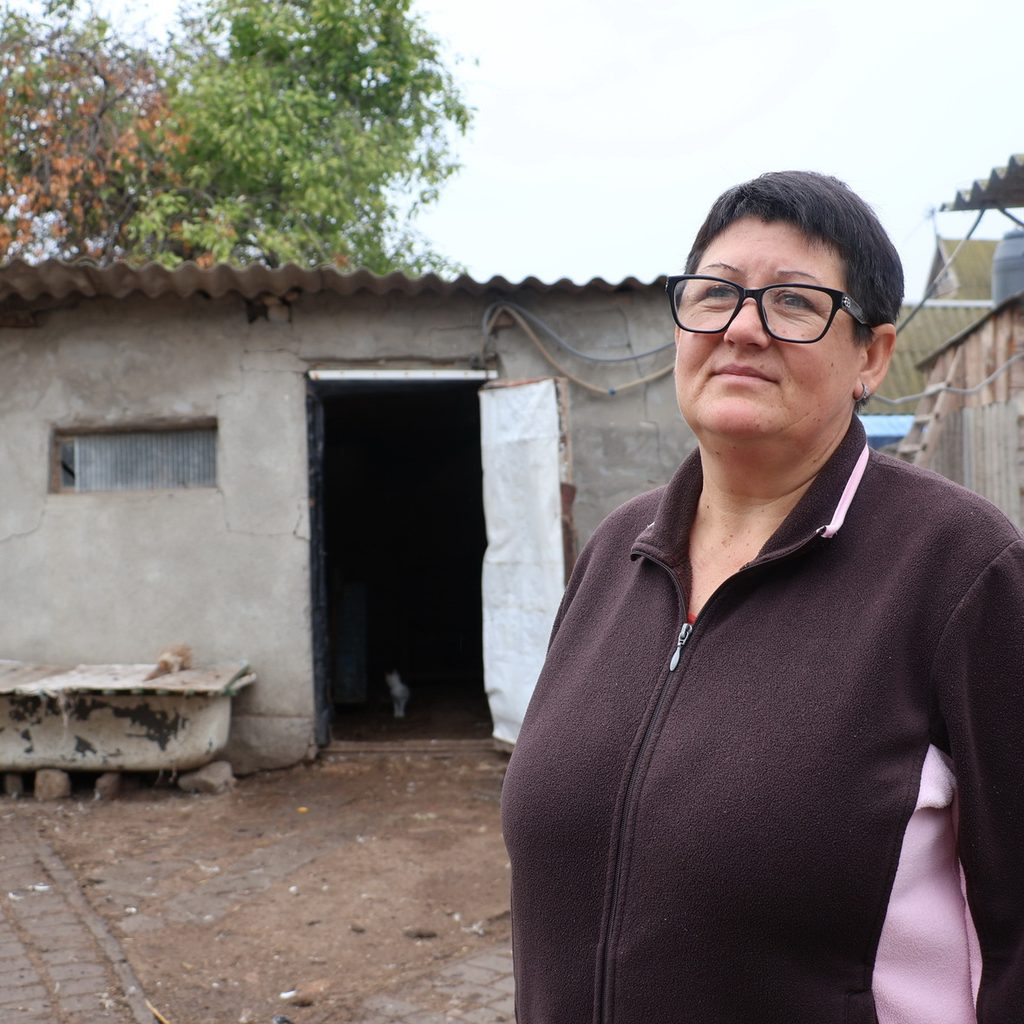
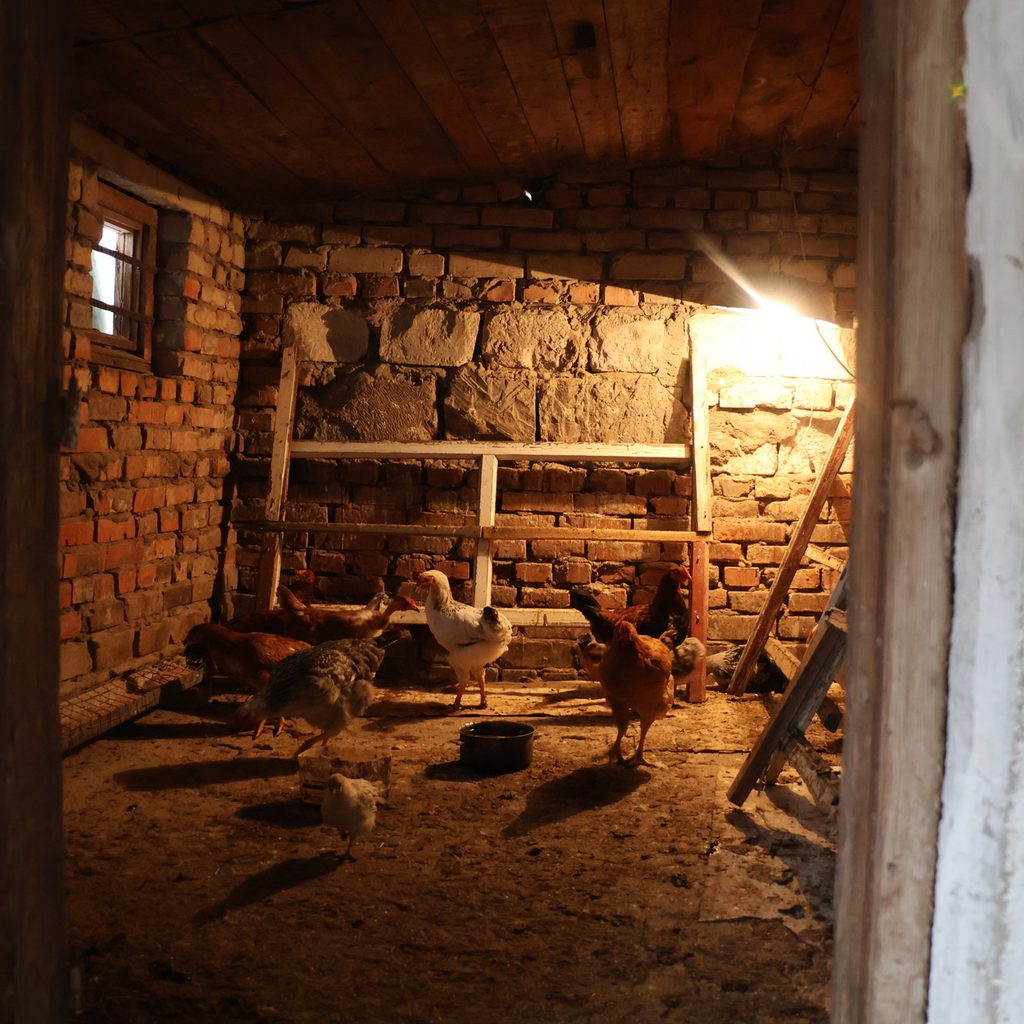
Ms. Mariia, from the village of Bereznehuvate in Mykolaiv Oblast, keeps around 50 chickens and 30 Muscovy-mallard hybrid ducks. To prepare her household farm for the cold season, she plans to improve the shelter for her poultry.
“I want to build a proper shed, buy insulation and boards, concrete the floor, and prepare the walls so the chickens will be warm in winter,” Ms. Mariia explains.
Ms. Mariia will use the funds she has received to insulate her poultry shed
Winter agricultural grants are a new form of assistance under the Livelihoods component, complementing the existing program supporting small rural households. Families can receive up to UAH 15,000 to prepare for the cold season by insulating sheds or chicken coops, repairing livestock shelters, improving crop storage facilities, or purchasing feed for poultry and livestock.
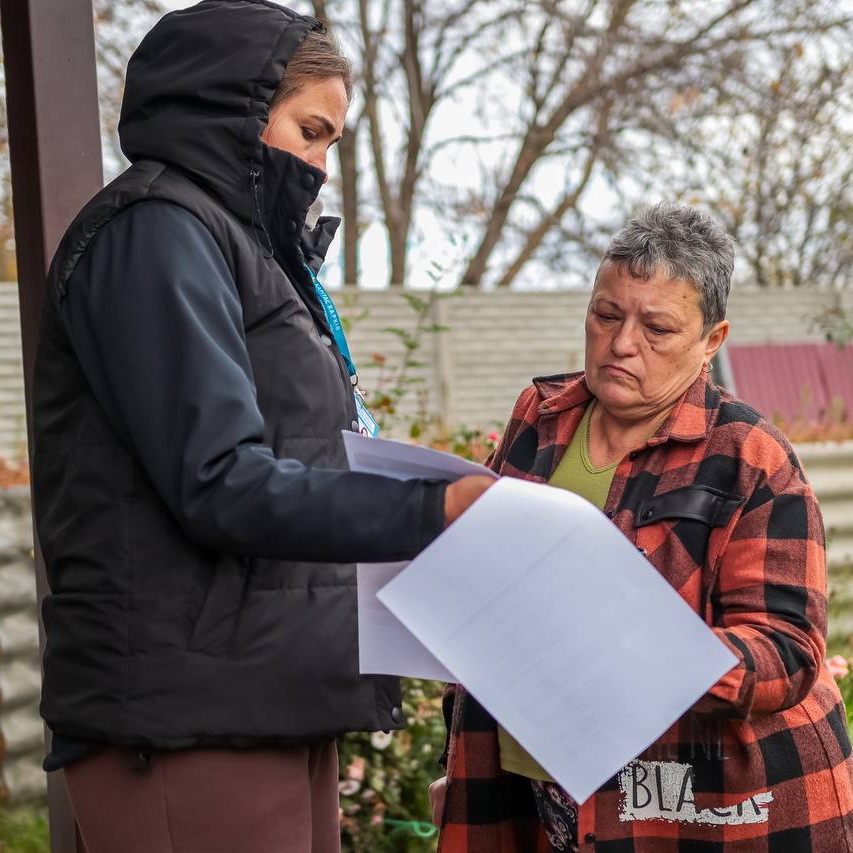
Unlike heating cash assistance, these grants are earmarked for specific purposes. Families agree in advance on how the funds will be spent and must subsequently provide documents confirming their expenses.
The winter agricultural grant program is implemented by six local Caritas organizations: Caritas Chernihiv, Caritas Poltava, Caritas Kharkiv, Caritas Kryvyi Rih, Caritas Kamianske, and Caritas Mykolaiv.
A total of 600 grants are planned, and as of November 15, more than half had already been disbursed.
Winter agricultural grants are available to rural households affected by the war that meet the established vulnerability criteria. These include families with three or more children under 18, single parents or guardians, households with members who have disabilities or serious or chronic illnesses, pregnant women, and families with children under three. The assistance is also available to households with people aged 60 and over, as well as unemployed people aged 50 and over.
“For many people, especially older people, this support means much more than being able to buy or repair something. People who have lost their homes and familiar way of life because of the war can once again work the land, grow vegetables, and care for poultry or livestock. It gives them a sense of security and stability, and the ability to plan for the future,” says Kateryna Liudvik, Livelihoods Manager.
Keeping Social Institutions Warm
Winter assistance extends beyond private homes to institutions that are essential to everyday life in communities, including hospitals, outpatient clinics, schools, residential care facilities, and temporary accommodation centers. Caritas Ukraine helps these institutions prepare their premises for the cold season.
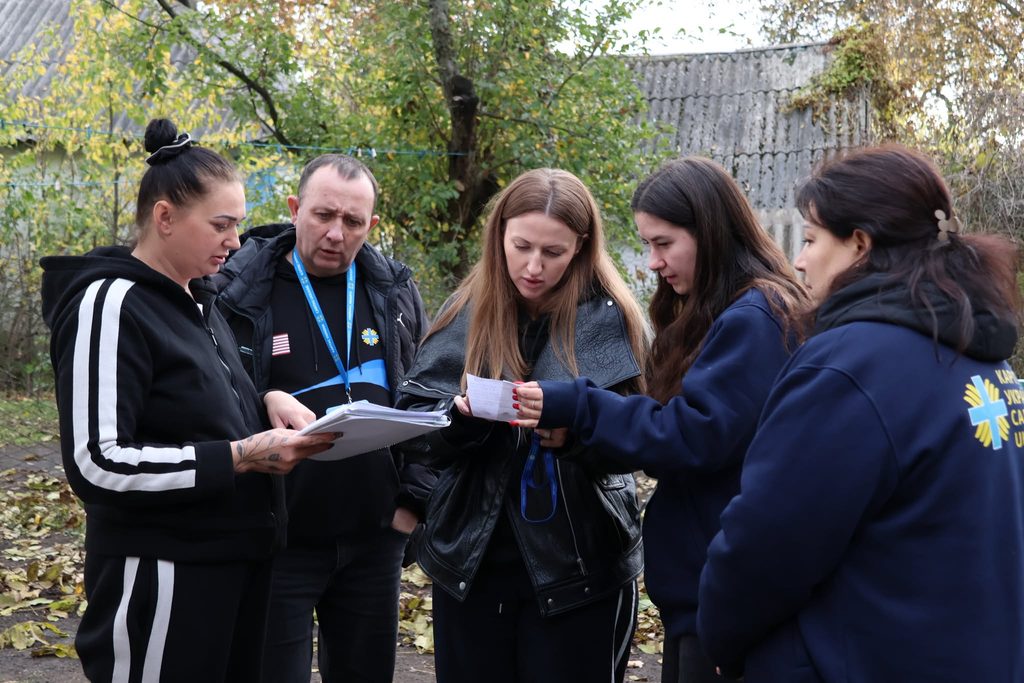
“It was important for us to support institutions that communities depend on. That is why we worked with local authorities and conducted monitoring visits to identify where our assistance would be needed most,” explains Yevheniia Pushkinska.
For example, damaged windows are being replaced at a polyclinic in Kharkiv to restore the building’s thermal envelope and reduce heat loss.
In other communities, support includes supplying coal briquettes to social institutions for heating. In Chernihiv Oblast, fuel has already been delivered to a residential care unit in the village of Nekhaivka and to institutions in the Berezna community.
In Dnipropetrovsk Oblast, repair and rehabilitation work is underway at healthcare facilities in Zhovti Vody and Lykhivka.
Beyond preparations for the heating season, Caritas Ukraine also helps communities keep essential facilities operating during power outages.
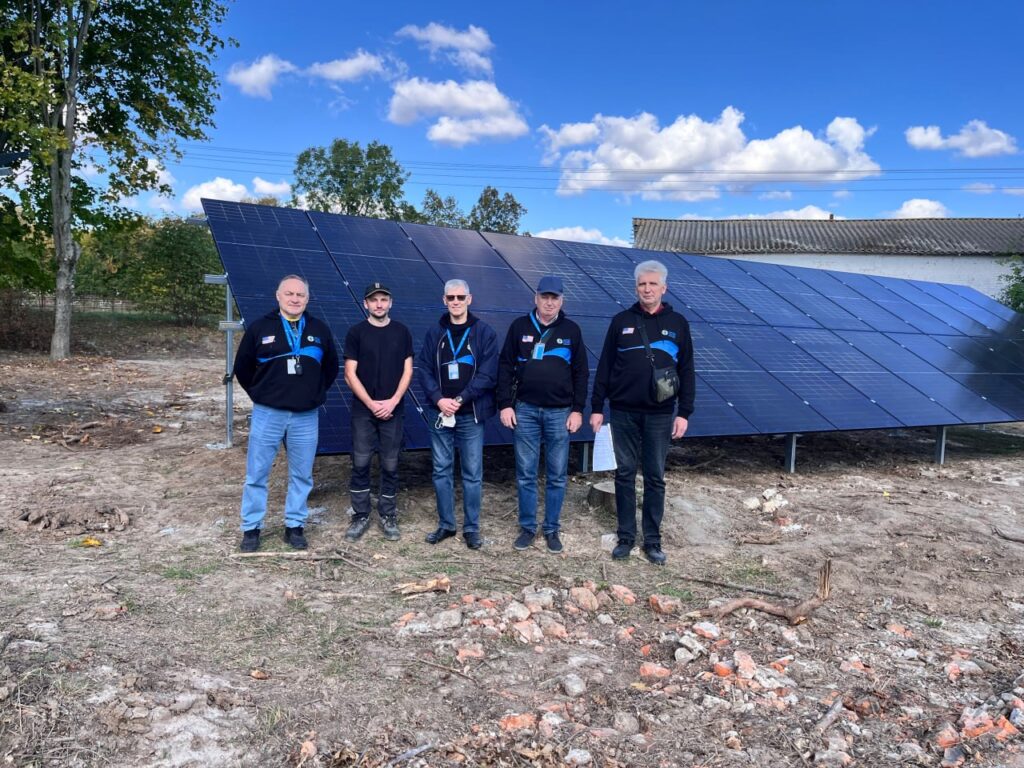
Under the project’s Water, Sanitation and Hygiene (WASH) component, generators are provided to medical and social institutions, as well as water supply and wastewater facilities in frontline communities. In Kyiv Oblast, solar power plants installed with project support are already operating and supplying electricity to water infrastructure facilities.
This winter, warmth for Ukrainian families means more than the temperature inside their homes. It means being able to stay at home with their children, preserve the food they have grown, and access essential services at hospitals and social institutions.
Behind this support is solidarity that reaches across thousands of kilometers, yet can be felt close to home — in a warm house, a protected household farm, and the ability to face another winter of war with greater confidence.
The Multi-Sectoral Assistance to People Affected by the War in Ukraine project is implemented by Caritas Ukraine thanks to the generous support of the American people through the United States Government. The content of this publication is the sole responsibility of Caritas Ukraine and does not necessarily reflect the views of the United States Government.
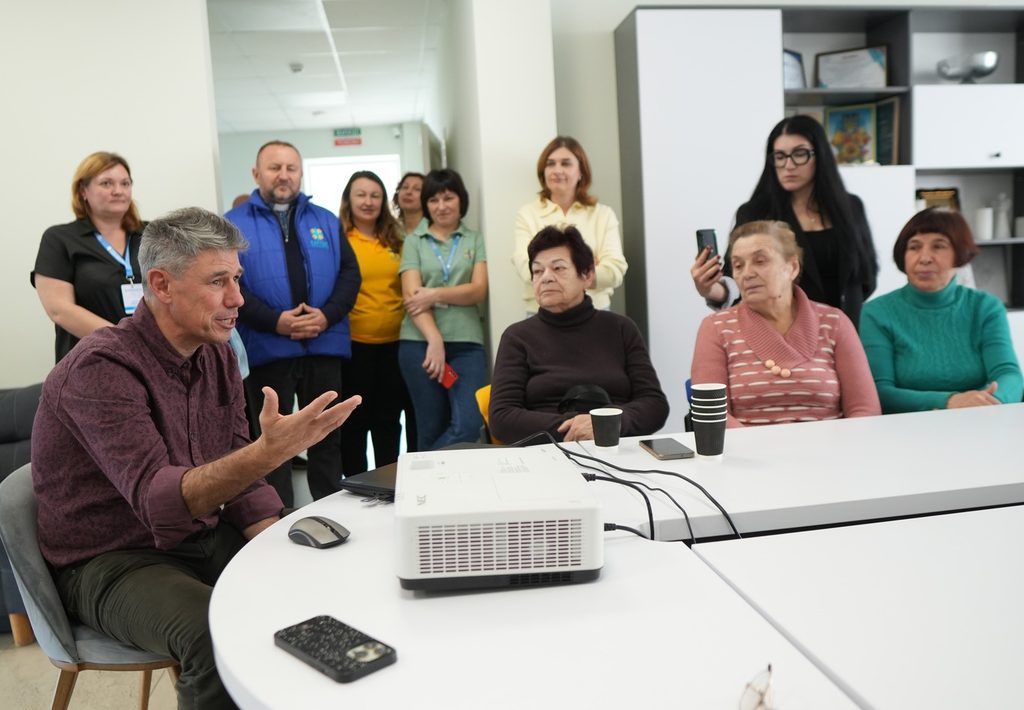
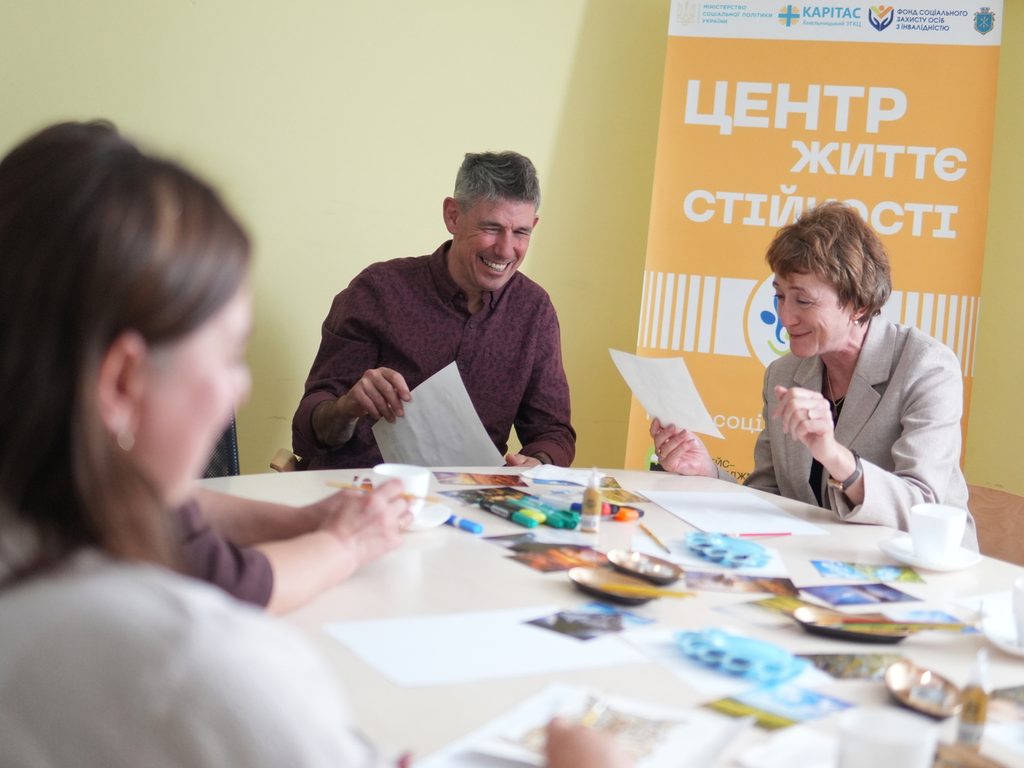
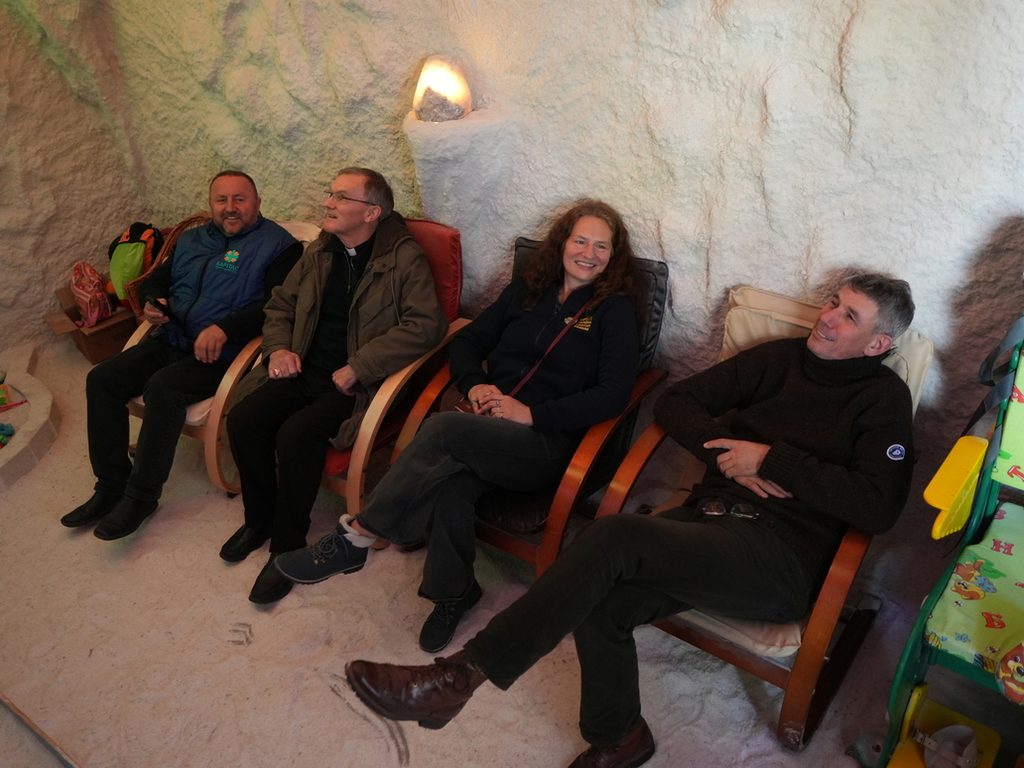
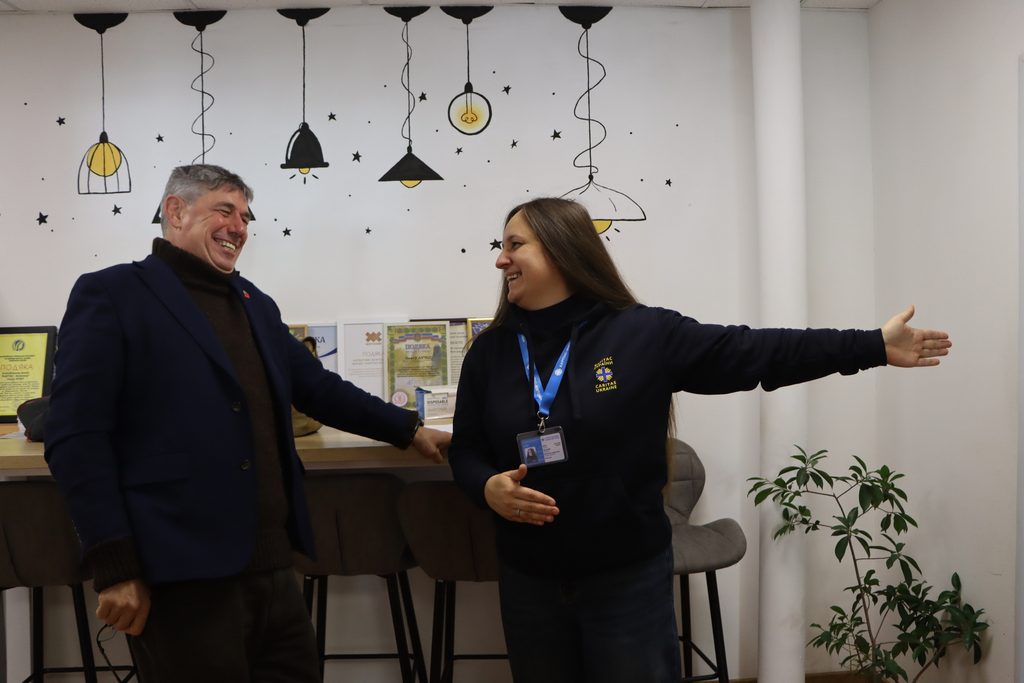
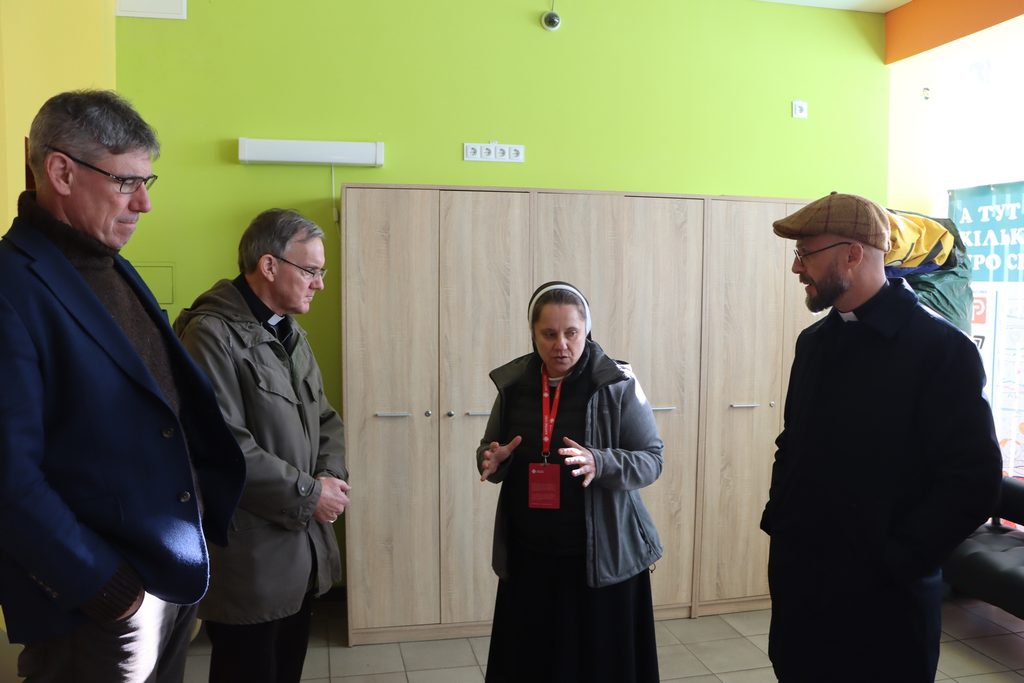
They met with the teams of Caritas Ukraine and Caritas-Spes Ukraine, visited humanitarian and social projects in Khmelnytskyi, Letychiv, Zhytomyr and Vinnytsia, and spoke with people receiving assistance. They also met with representatives of the Ukrainian government, diplomatic missions and international organizations.
For Bishop John, who will become President of Caritas Europa in May, this was his first visit to Ukraine. Alistair Dutton had visited the country previously, in 2023. During their four-day visit, they had an opportunity to learn more about the humanitarian situation and the work of local Caritas teams, and to hear directly from people how the full-scale war has affected their lives and what kind of support they need today.
“At its core, Caritas is about encounter, and that is where our strength lies,” said Tetiana Stawnychy, President of Caritas Ukraine. “It was important for Alistair Dutton and Bishop John Arnold to come to Ukraine so that this encounter could take place. There is strength in solidarity: in coming to see, to listen, to talk with people and to understand what is really happening here. Their willingness to come and meet with us is a great gift. The meetings took place at many levels and focused on how local centers work, who comes through their doors, what people talk about, and how we are building our resilience and our future together. It is important for us to share the reality we live in and people’s stories, so that others can stand with us, understand our needs, and also see the light and the opportunities to do good that it reveals.”
The first stop, on 5 November, was Caritas Khmelnytskyi. The guests visited its medical center and a rehabilitation space for children, learned about the organization’s programs and projects, and met with local authorities who work closely with Caritas. They also took part in a media literacy class for participants in the Home Care project.
“When we met a large group of older people who had lost so much and had been forced to leave areas near the front line, they told us with great gratitude that they had found a new purpose in life,” Bishop John said. “People have been so kind and generous to them that they do not feel like a burden. Instead, they have become part of the good work being done here. For me, that was a shift away from any sense of despair toward genuine hope for the future and a sense of new possibilities.”
In Letychiv, the delegation visited the local resilience center, where people can receive psychological support, individual consultations and take part in group sessions and peer support groups.
On 6 November, the delegation visited Zhytomyr, where they saw projects run by both organizations. The day began with the Divine Liturgy at the Ukrainian Greek Catholic Church of St. Basil the Great, where the guests prayed together with the staff of the local Caritas. Bishop John, who concelebrated the Liturgy, addressed the Caritas team:
“Thank you for the very valuable work you do in healing the wounds of conflict. On the very first day of his papacy, Pope Leo gave us three very important priorities. His very first word was ‘peace’. He spoke about unity in diversity and about peacebuilding. This is something each and every one of us is called to work for every day. You are on the front line of building peace and fostering a sense of unity. Please never underestimate the value of your work and the healing you bring to so many people who are suffering.”
At the meeting that followed, the staff of Caritas Zhytomyr spoke about their work and what sustains and inspires them. They spoke openly about serious challenges and trauma, and shared how they understand their mission.
“We are on holy ground, not because we are in a church right now, but because of what we are talking about and the communion that exists among us,” Alistair Dutton said at the end of the meeting.
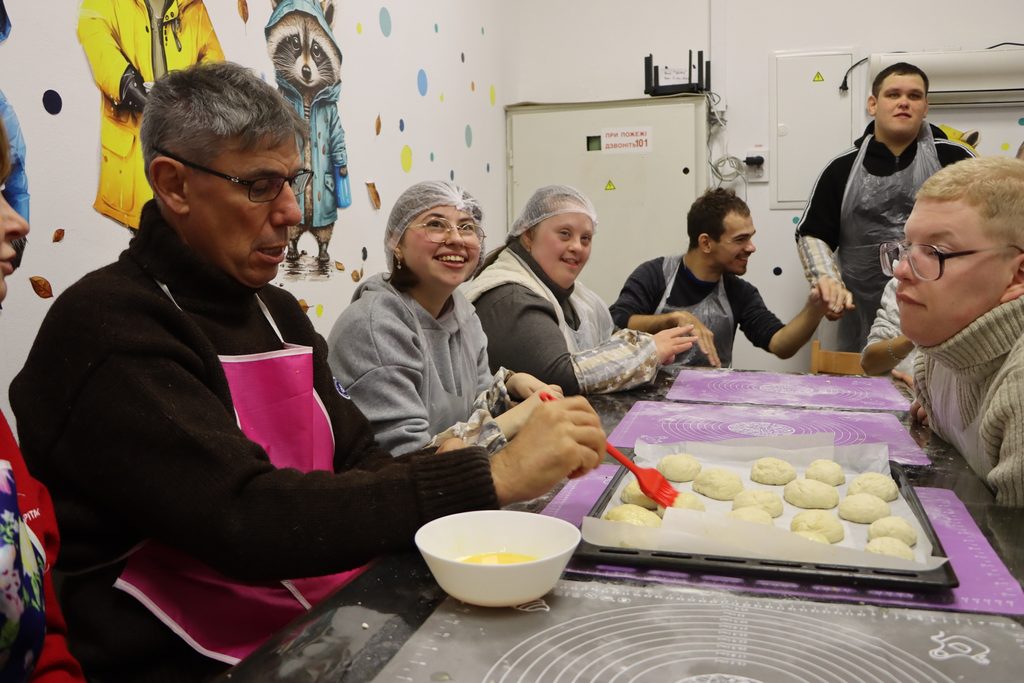
The guests then visited a day care center for young people with disabilities, who attend five days a week, from 10 a.m. to 6 p.m. This time, the kitchen had some unusual helpers: Alistair Dutton and Bishop John baked pampukhy, traditional Ukrainian doughnuts, together with the young people. The delegation also visited a family whose house had been destroyed by a drone. It is now being rebuilt with support from Caritas.
At the social kitchen of Caritas-Spes Zhytomyr, the guests met people facing difficult life circumstances who rely on daily support. The delegation was particularly moved by the story of a woman who had been forced to leave her hometown of Kramatorsk because of the war. Today, she is trying to rebuild her life in an unfamiliar city, relying on a minimum pension and assistance payments for internally displaced people. Later, the guests met with the team of the Caritas-Spes center of the Kyiv-Zhytomyr Diocese and learned about its day-to-day work.
“Visits like this bring hope,” said Fr. Vyacheslav Grynevych, Executive Director of Caritas-Spes Ukraine. “They show the solidarity of our partners and are a sign of unity among Caritas organizations, Catholics and the countries that provide help and support. Bishop John is visiting Ukraine for the first time. It takes courage to be with us at such a difficult time, to share our experience, see what we do and talk with the people we serve.”
In the afternoon, the delegation met with Olena Kondratiuk, Deputy Speaker of the Verkhovna Rada of Ukraine, at the parliament. They discussed the humanitarian situation in Ukraine, the scale of Russian attacks, the protection of children and civilians, prospects for peace, and the need to rethink approaches to humanitarian funding in a protracted war.
“During this extremely difficult period, Ukraine will need additional international humanitarian assistance. We deeply appreciate all the efforts of the Caritas network to help Ukrainians endure and, most importantly, preserve human dignity and give hope to those who have suffered most from the war,” Olena Kondratiuk wrote on Facebook.
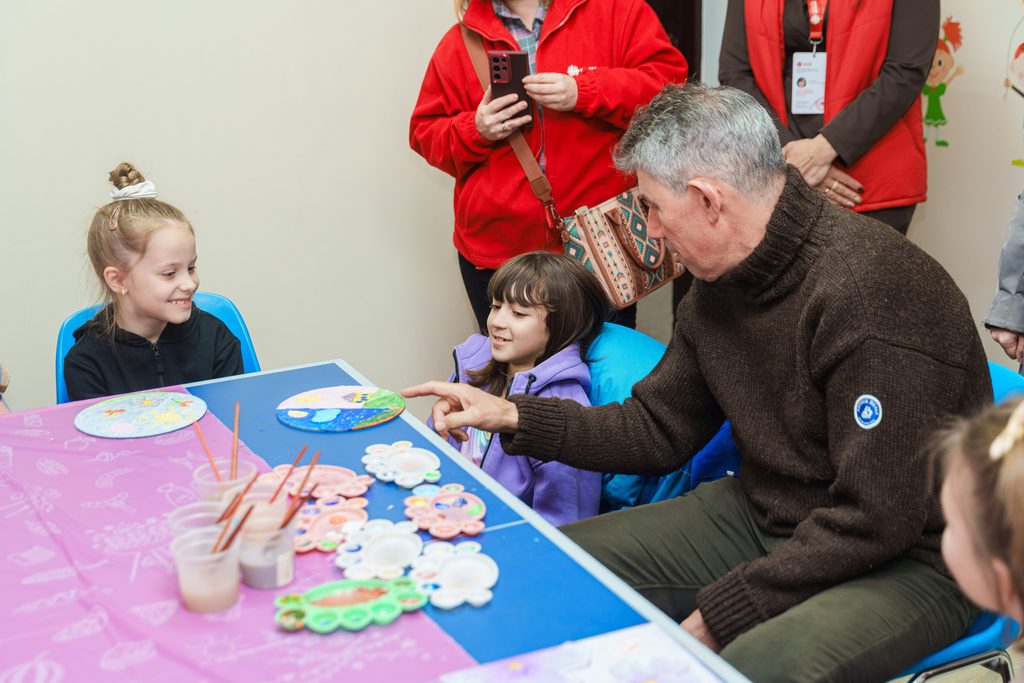
On 7 November, following official meetings with representatives of embassies and international organizations, the delegation travelled to Vinnytsia. At the Caritas-Spes Vinnytsia center, the guests visited a social laundry, a medical room and a child-friendly space. They also met with the wives of fallen Ukrainian soldiers and children with Down syndrome. The children who attend the child-friendly space had prepared a short musical performance for the guests. The delegation then visited the Caritas Vinnytsia center, where they learned about its activities and the support it provides to people in need.
“We act locally, but through our partners our voice is heard around the world,” noted Tetiana Stawnychy.
Reflecting on what he had seen compared with his previous visit, Alistair Dutton said that hostilities had intensified over the past year and the number of attacks had increased. “But at the same time, there has been a shift from immediate response to emergencies and urgent needs toward greater attention to the medium and long term: how to keep life going, how to rebuild and repair, and how to help people rebuild their lives and restore their livelihoods,” he said. “This time, I see hope and a determination to build a future rather than simply cope with the present.”
He also had a message for Caritas staff and volunteers in Ukraine: “I want our friends at Caritas Ukraine and Caritas-Spes to know that we are with you, in our hearts and in our solidarity. Thank you for everything you are doing, for being the eyes, ears and hands of Caritas on the ground, bringing its love and care to all the people you serve.”
Caritas Ukraine, together with its local member organisations, contributed to evacuation preparations, welcomed evacuees, and provided assistance to meet their most urgent needs.
A Humanitarian Catastrophe Years in the Making
Oleshky has been under Russian occupation since the first days of the full-scale invasion. Located near the front line, the city has gradually lost access to essential services.
Following the destruction of the Kakhovka Hydroelectric Power Plant on 6 June 2023, Oleshky experienced catastrophic flooding. Many residents lost their homes, belongings, and identity documents, while much of the city was left without reliable electricity, water, or heating.
In late December 2025, the situation deteriorated dramatically as the city came under an effective blockade. Mined roads, drone attacks, and restrictions on movement made deliveries of food and medicine virtually impossible. According to available reports, the last vehicle carrying food supplies managed to reach Oleshky on 7 January 2026.
Residents were forced to survive on dwindling food reserves and whatever they could grow themselves. Some travelled up to 20 kilometres along dangerous routes to purchase food. For older people and those with limited mobility, such journeys were virtually impossible.
The lack of medical care, drinking water, electricity, and communications further deepened the humanitarian crisis. There were reports of civilian deaths caused by hunger, cold, injuries, and the inability to access essential medical treatment.
Humanitarian Mission and Evacuation
The critical humanitarian situation in Oleshky attracted the attention of the international community and the Holy See.
On 16 October 2026, Pope Leo XIV held a telephone conversation with Vladimir Putin, during which he called for a humanitarian ceasefire to allow the delivery of food and medicine and ensure the voluntary and safe evacuation of civilians from Oleshky.
On 19 October, Pope Leo XIV discussed the situation with Ukrainian President Volodymyr Zelenskyy, emphasising the need for cooperation between the parties to protect civilians and ensure humanitarian access.
On 23 October 2026, following mediation by US First Lady Melania Trump, agreements on conducting a humanitarian mission and establishing a temporary ceasefire in Oleshky were officially confirmed.
A ceasefire came into effect on 27 October, and preparations for evacuation routes and humanitarian supplies began on 29 October. On 30 October, a Ukrainian delegation arrived in the city, delivered urgently needed food and medicines, and began evacuating civilians.
On 31 October, evacuated residents were brought to Kyiv. The ceasefire ended on 1 November.
The operation, organised with the involvement of the Office of the Ukrainian Parliament Commissioner for Human Rights, was carried out under extremely tight time constraints. The evacuation route passed through the Belarusian border in Chernihiv Oblast.
For security reasons, the exact number of evacuees has not been disclosed. Some residents remain in Oleshky, where the humanitarian situation continues to be critical.
How Caritas Ukraine Contributed to the Humanitarian Response
Caritas Ukraine worked in close coordination with the Ombudsman’s Office. The humanitarian response involved the Caritas Ukraine National Office, Caritas Chernihiv, and Caritas Kyiv.
Evacuation preparations. Caritas Ukraine staff received and processed requests from Oleshky residents and their relatives regarding possible evacuation. The team worked almost around the clock, as only a few days were available to organise the humanitarian mission.
Family reunification. Caritas Kyiv organised transportation for relatives of evacuees from Kyiv to the border and their return journey. For many families, this was their first reunion after a prolonged separation.
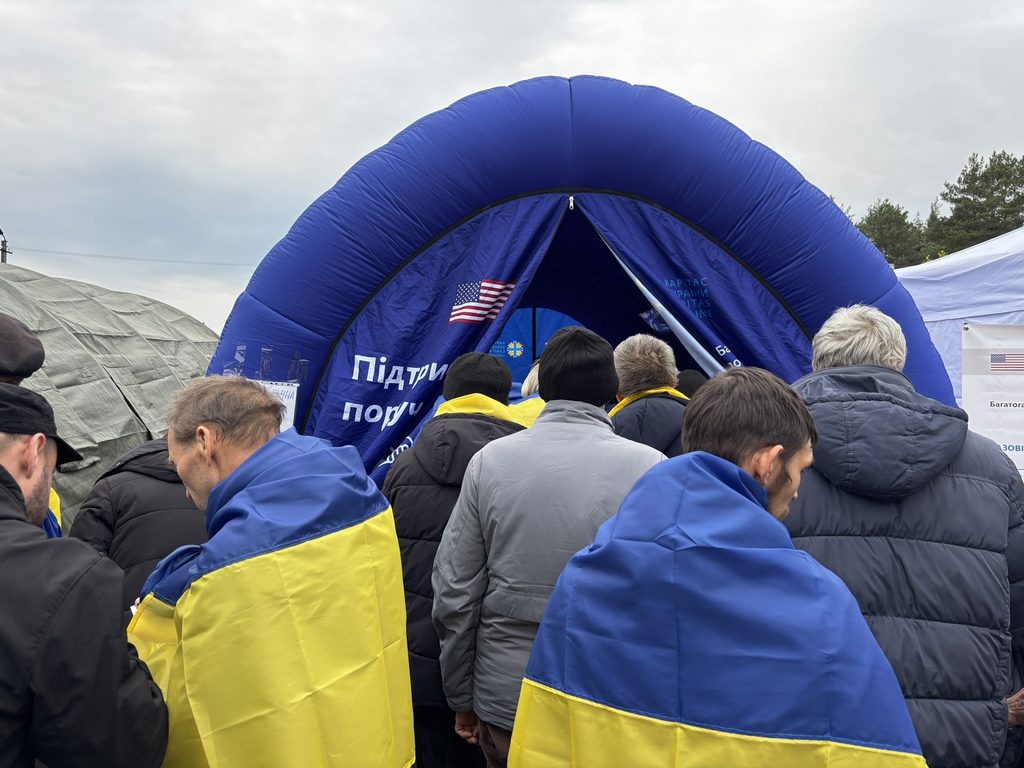
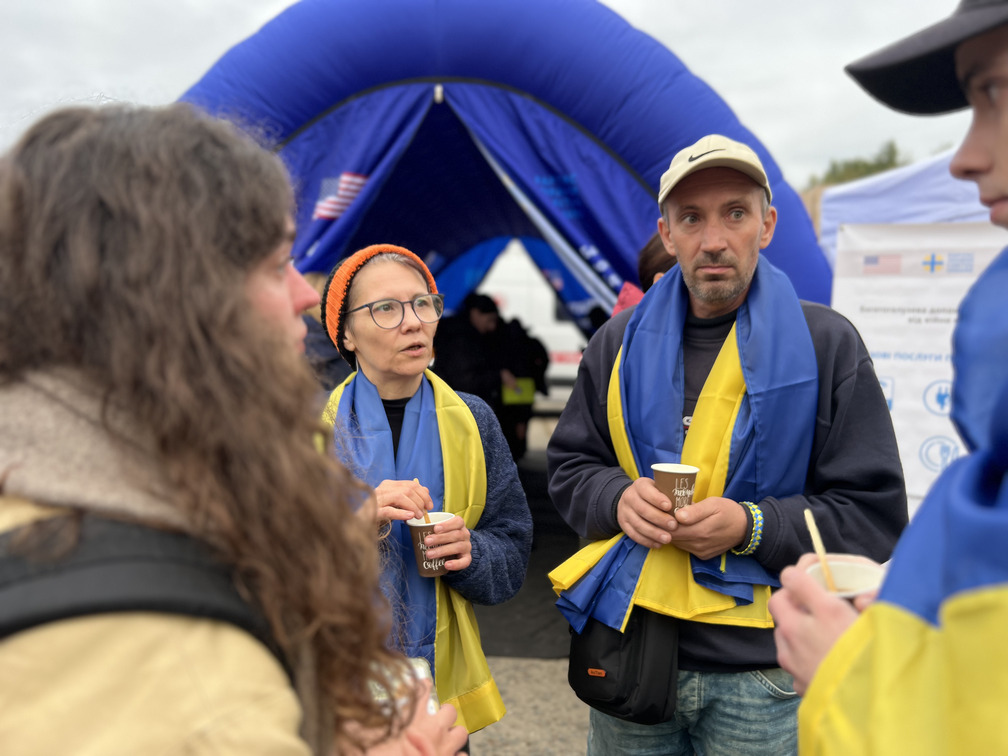
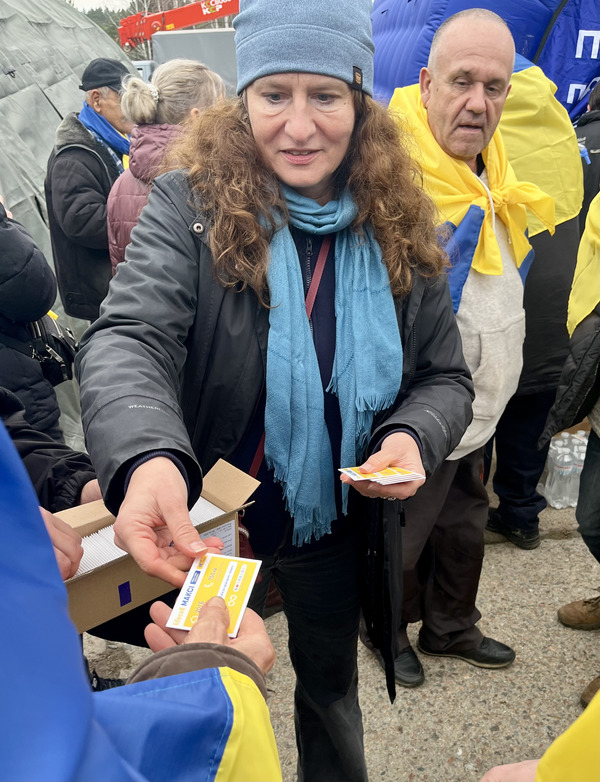
Assistance at the border. Caritas Chernihiv set up a heated tent where people could warm up, enjoy hot drinks, have a snack, and access the internet. Psychological support was available, a children’s area was arranged, and Ukrainian mobile operator SIM starter packs were distributed.
“This was an unusual deployment for our team, as our mobile heated tents are normally set up directly at the sites of shelling, where we assist people immediately after attacks. For us, this was a deeply moving and important moment. These people had endured a difficult evacuation journey, leaving their homes behind, and we wanted them to have an opportunity, after everything they had been through, to warm up, drink some hot tea, have something to eat, and feel cared for and supported,” said Stanislav Fedorchuk, Project Manager of the Multi-Sectoral Assistance to War-Affected People in Ukraine project.
Through its partnership with mobile network operator lifecell, Caritas Ukraine received 500 SIM starter packs to support people returning from occupation.
Post-evacuation support. Many evacuees arrived exhausted, severely underweight, ill, or injured. Some used wheelchairs or crutches. After crossing the border, the evacuees were transferred to medical facilities.
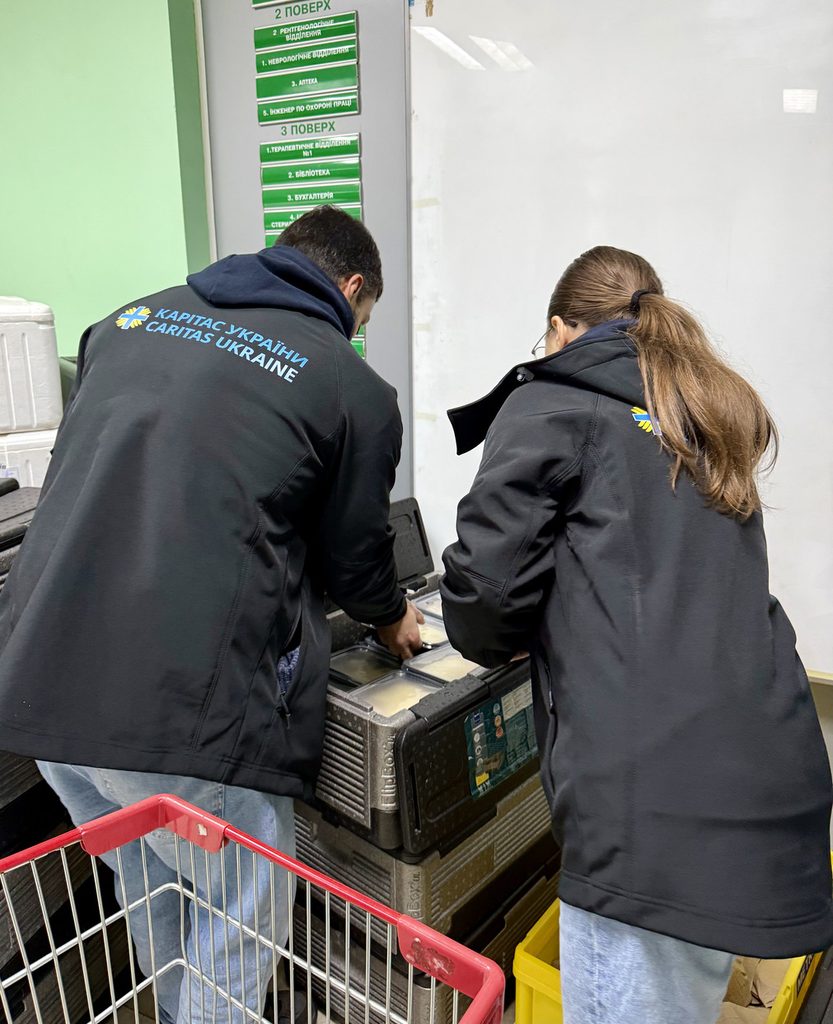
Caritas provided hygiene kits, pillows, bed linen, and hot meals. During their four-day hospital stay, evacuees received two hot meals a day, adapted to their health conditions in accordance with recommendations from Ukraine’s Ministry of Health.
As part of its assistance to evacuated residents of Oleshky, Caritas provided:
Approximately 600 sets of bed linen;
Approximately 1,300 hot meal portions;
Around 500 basic hygiene kits;
Around 2,000 specialised transit hygiene kits.
The humanitarian response is ongoing. Among the current priorities is access to safe drinking water, as attacks on energy infrastructure have disrupted the operation of water purification systems.
“For us, humanitarian assistance is not only about meeting basic needs. It is also about protecting human dignity, helping people reunite with their loved ones, and ensuring they do not feel alone in what they have experienced. This is how international solidarity translates into concrete action, helping people regain a sense of safety and stability,” said Ivanna Ulei, Project Manager of Humanitarian Assistance and Restoration of Essential Services 2026, Phase 2.
Supporting People After Their Return
Assistance to residents of Oleshky forms part of Caritas Ukraine’s broader efforts to support people returning from temporarily occupied territories.
Since February 2025, the project Emergency Humanitarian Support for Internally Displaced Persons and Ukrainians Affected by Military Aggression has been implemented in Volyn Oblast. Cooperation with the Office of the Ukrainian Parliament Commissioner for Human Rights is an important component of this work.
“Cooperation between Caritas Ukraine and the Ombudsman’s Office is an essential part of supporting Ukrainians returning from temporarily occupied territories. This partnership brings together the coordination capacities of a state institution and Caritas’ experience in delivering humanitarian assistance, ensuring a comprehensive approach to people’s needs at every stage of their return. Through close coordination, timely information sharing, and joint planning, we can organise assistance more effectively, respond promptly to evacuees’ needs, and provide continued support. Such cooperation is particularly important for people who have experienced prolonged isolation and need assistance in rebuilding their lives,” said Haik Stepanian, Project Manager.
Caritas Volyn assists people returning through the Domanove border crossing on the Ukrainian-Belarusian border. Support includes access to mobile communications, cash assistance, the purchase of tickets to onward destinations, transfers to the railway station, temporary accommodation in a shelter, hot meals, and support from crisis managers.
In this way, assistance does not end when people cross the border. It continues throughout the subsequent stages of their return to a safe and stable life.
International Partnerships and Support
Humanitarian assistance was provided through several projects implemented with the support of international partners:
The United States Government, through the US Department of State — Multi-Sectoral Assistance to War-Affected People in Ukraine.
Caritas Norge — Humanitarian Assistance and Restoration of Essential Services 2026, Phase 2.
Catholic Relief Services (CRS) — Emergency Humanitarian Support for Internally Displaced Persons and Ukrainians Affected by Military Aggression.
Caritas Österreich and the European Union — Ensuring Comprehensive Access to Protection and Hygiene for War-Affected Populations in Frontline Areas of Ukraine (ECHO4).
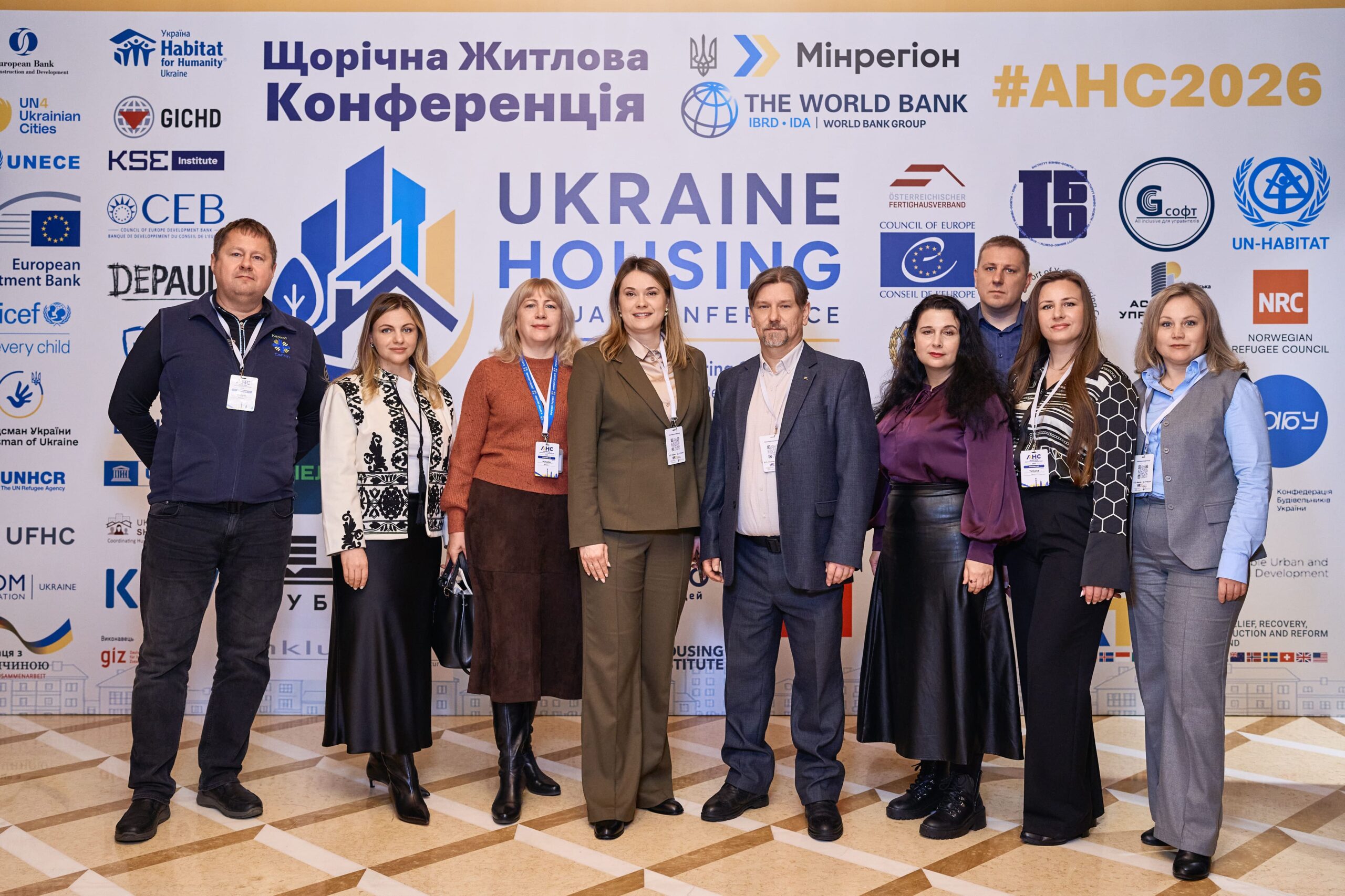
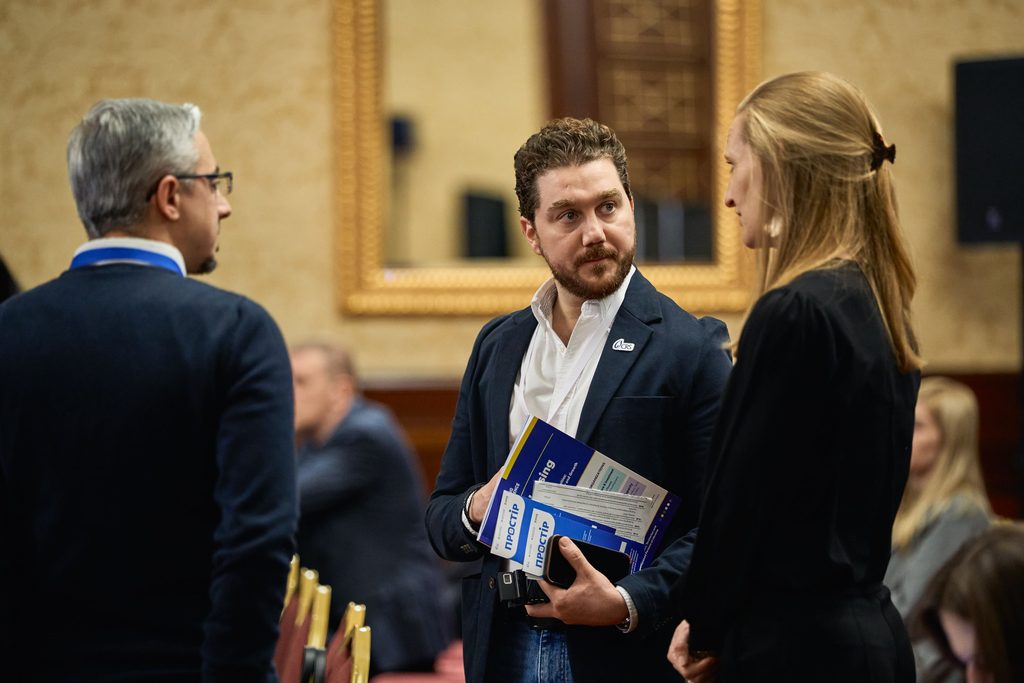
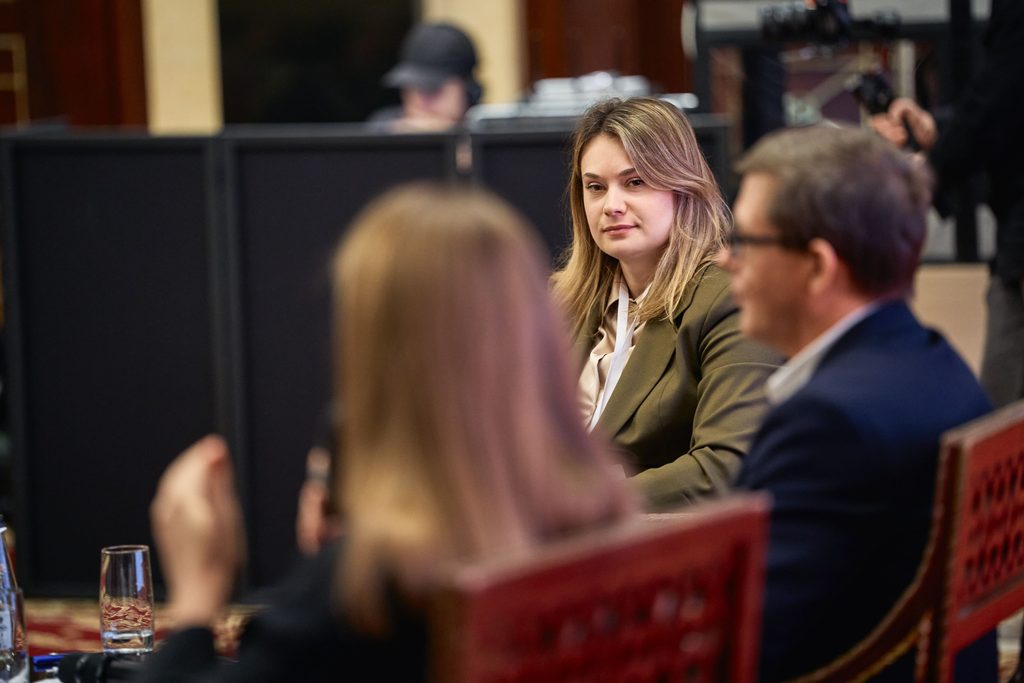
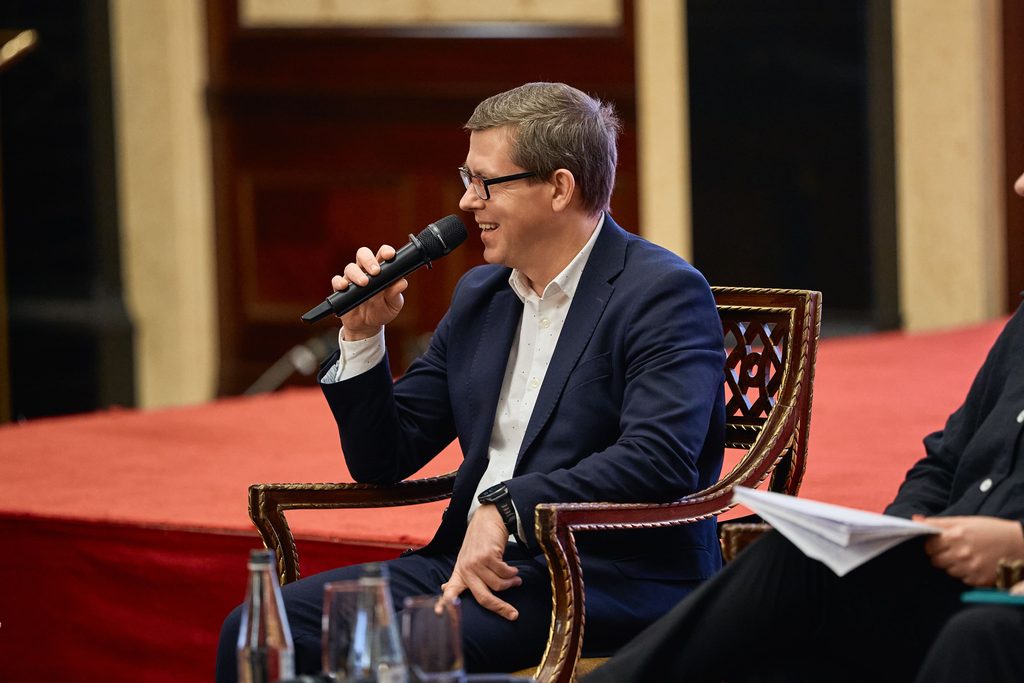
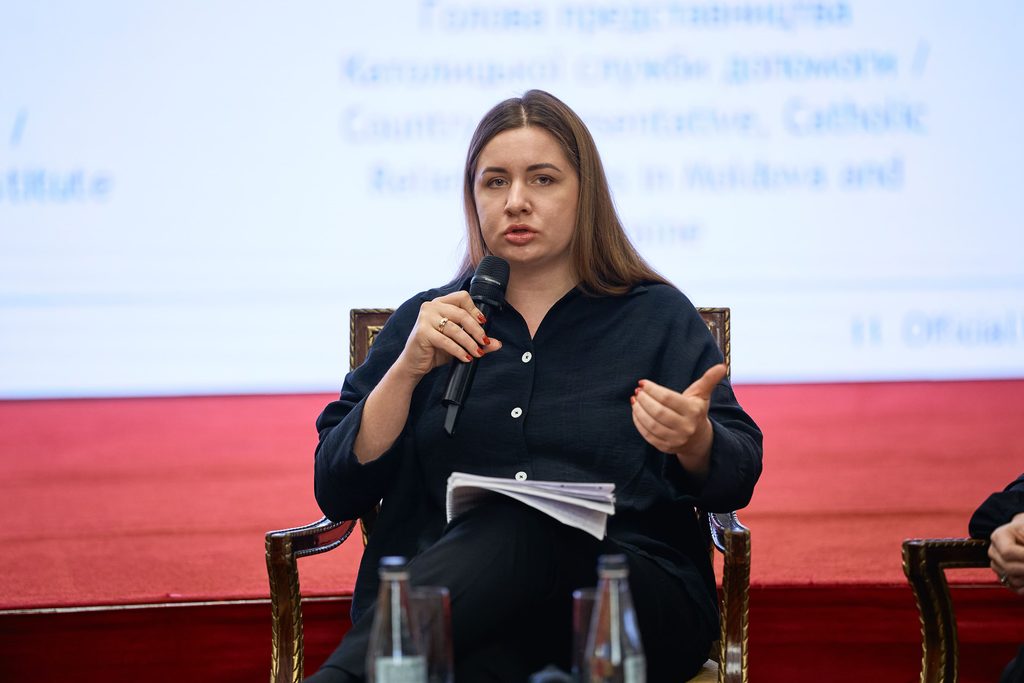
The event took place as part of the First Ukraine Annual Housing Conference (Annual Housing Conference 2026), which brought together representatives of government authorities, international organisations, donors, financial institutions and civil society.
How can Ukraine move from temporary housing assistance to systemic solutions? What do communities need to plan and manage their own housing recovery? And how can housing programmes remain sustainable after donor funding comes to an end? These questions were at the heart of the discussion.
The expert discussion brought together:
Iryna Noha — Moderator and Head of the Housing Solutions Programme at Caritas Ukraine;
Pavlo Frolov — Member of the Ukraineʼs Parliament;
Bronwen Moore — Country Representative of Catholic Relief Services (CRS) in Ukraine and Moldova;
Alina Moskalenko — Director of the Housing Institute NGO.
From Immediate Needs to Long-Term Solutions
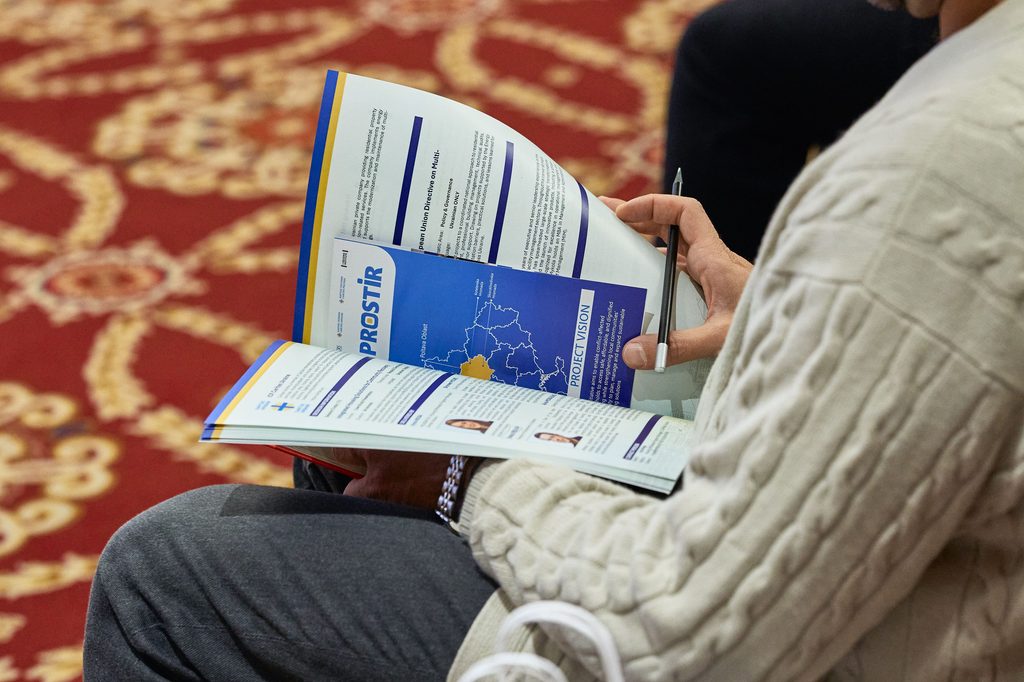
During the session, participants were introduced to the experience of the “Human-Centred Housing Solutions and Systems Strengthening for Sustainable Recovery” (PROSTIR) project, implemented by Caritas Ukraine in the Skorokhodove and Kotelеva communities of Poltava Oblast, in partnership with Catholic Relief Services (CRS), Caritas Poltava and the Housing Institute.
The project serves two communities with a combined population of approximately 22,000, providing direct housing assistance while strengthening local housing systems. Its activities include comprehensive assessments of residents’ housing needs, housing stock inventories, rental assistance, improvements in housing energy efficiency, the development of local housing strategies and the preparation of investment projects.
A preliminary housing needs assessment in the Skorokhodove community has highlighted the importance of developing solutions that take into account residents’ immediate housing needs, their financial circumstances and their ability to remain in the community over the long term.
“Providing someone with housing today does not necessarily mean that their housing needs have been addressed in the long term. We may be able to help a family pay their rent for several months, but what happens when that support ends? Will they be able to afford their accommodation independently? Will they have the opportunity to remain in the community? This is why we need to move beyond individual assistance measures towards integrated housing solutions that consider not only people’s needs, but also the resources and capacities available within the community itself,”emphasised Iryna Noha, Head of the Housing Solutions Programme at Caritas Ukraine.
Government, Communities and International Partners: Roles and Responsibilities
Pavlo Frolov, Member of the Ukrainian Parliament, contributed to the discussion on the role of national housing policy and the mechanisms needed to transform local housing initiatives into long-term programmes. The discussion focused on financing, the roles and responsibilities of local authorities, access to reliable data, and building institutional and management capacity.
“Territorial communities play an exceptionally important role in implementing housing policy, as it is at the local level that people’s needs are identified and where communities are best placed to respond to them. The role of the state is to establish a coherent strategic framework that enables communities to make effective use of available resources and implement systemic housing solutions. It is essential that every decision is based on reliable data, an assessment of actual needs and the transparent use of resources,” said Pavlo Frolov.
Alina Moskalenko, Director of the Housing Institute NGO, focused on the practical aspects of housing planning. The discussion explored how housing needs assessments, analysis of available housing resources and local strategies can provide a foundation for concrete projects aimed at delivering affordable and social housing.
“Effective housing policy begins with understanding the actual situation and the needs of people in each community. It is important not only to assess the existing housing stock, but also to identify who needs housing, what resources are available to the community and which solutions would be most effective. Such assessments should form the basis for developing local housing strategies, planning investments and implementing sustainable housing solutions that respond to residents’ real needs,” said Alina Moskalenko.
Bronwen Moore, Country Representative of Catholic Relief Services (CRS) in Ukraine and Moldova, highlighted the role of international partners in housing recovery. In particular, she addressed how humanitarian assistance can lay the foundations for long-term housing solutions while strengthening communities’ capacity to set their own priorities and manage housing resources.
“CRS greatly values its partnership with Caritas Ukraine. We have been working with Ukraine since 2017, and following the start of the full-scale invasion in 2022, we significantly expanded our support to respond to people’s urgent needs. At the same time, it is important for us not only to provide immediate assistance, but also to create the conditions for long-term recovery, including in the housing sector. We place particular emphasis on the sustainability of our initiatives, ensuring that their outcomes continue to benefit communities in the future,” said Bronwen Moore.
What Is Needed for Sustainable Housing Recovery?
The approach underpinning the PROSTIR project involves considering three interconnected elements when developing housing solutions: people’s actual needs, the housing and property resources available to communities, and their institutional capacity to manage and maintain housing.
This approach makes it possible to view housing recovery not simply as a collection of individual renovation projects or assistance programmes, but as an integral part of communities’ long-term development.
Implementing this approach requires coordinated efforts by the government, local communities, international partners and civil society organisations. This collaboration is essential to ensuring that housing solutions remain accessible, effective, and sustainable over time.
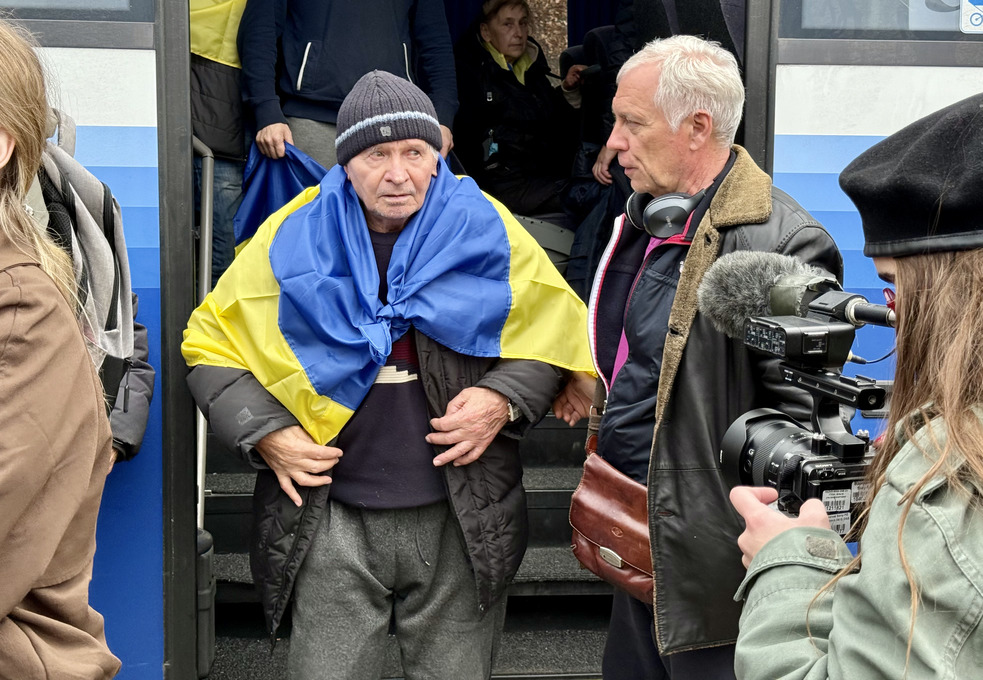
It was the first organized evacuation from the town. The evacuees had lived through years of occupation and months of near-total isolation, hunger and fear. Teams from Caritas Ukraine, Caritas Kyiv and Caritas Chernihiv, together with government representatives and other NGOs, met them on arrival with hot drinks, practical help and open arms.
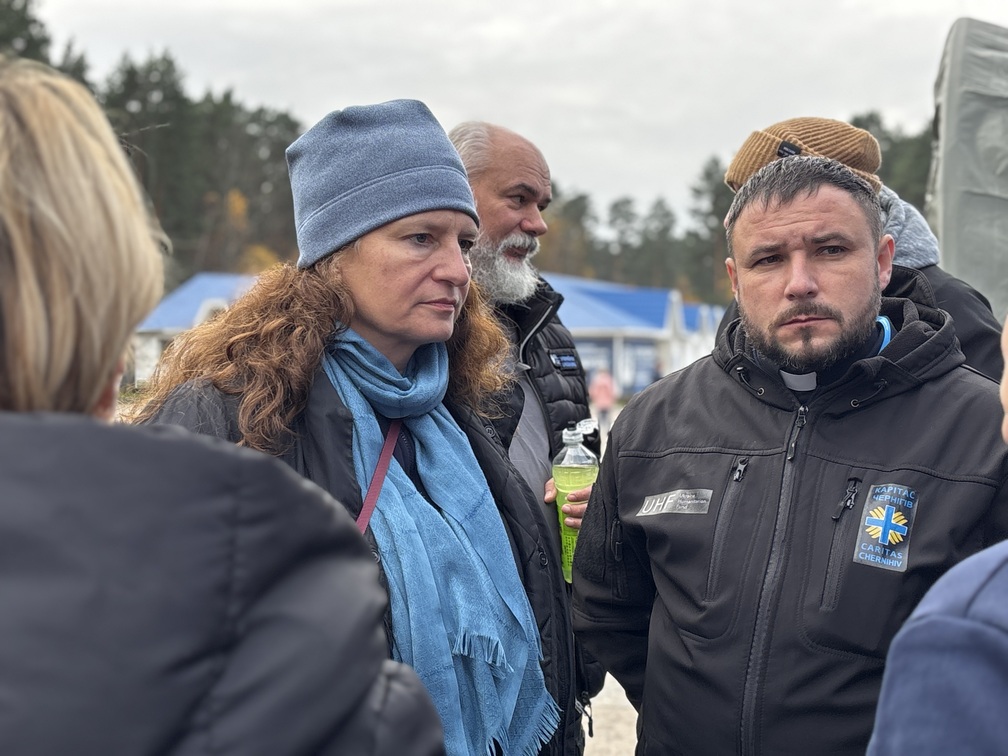
Caritas Ukraine President Tetiana Stawnychy was among those waiting at the meeting point.
“It was a day filled with very deep emotions — the kind that catch you unaware and simply roll over you.“
At the Caritas tent, the teams had coffee, hot tea, snacks and Wi-Fi ready for the arrivals and for those waiting. Caritas Kyiv arranged a small bus to bring relatives of some of the evacuees, so they could greet their loved ones the moment they stepped off.
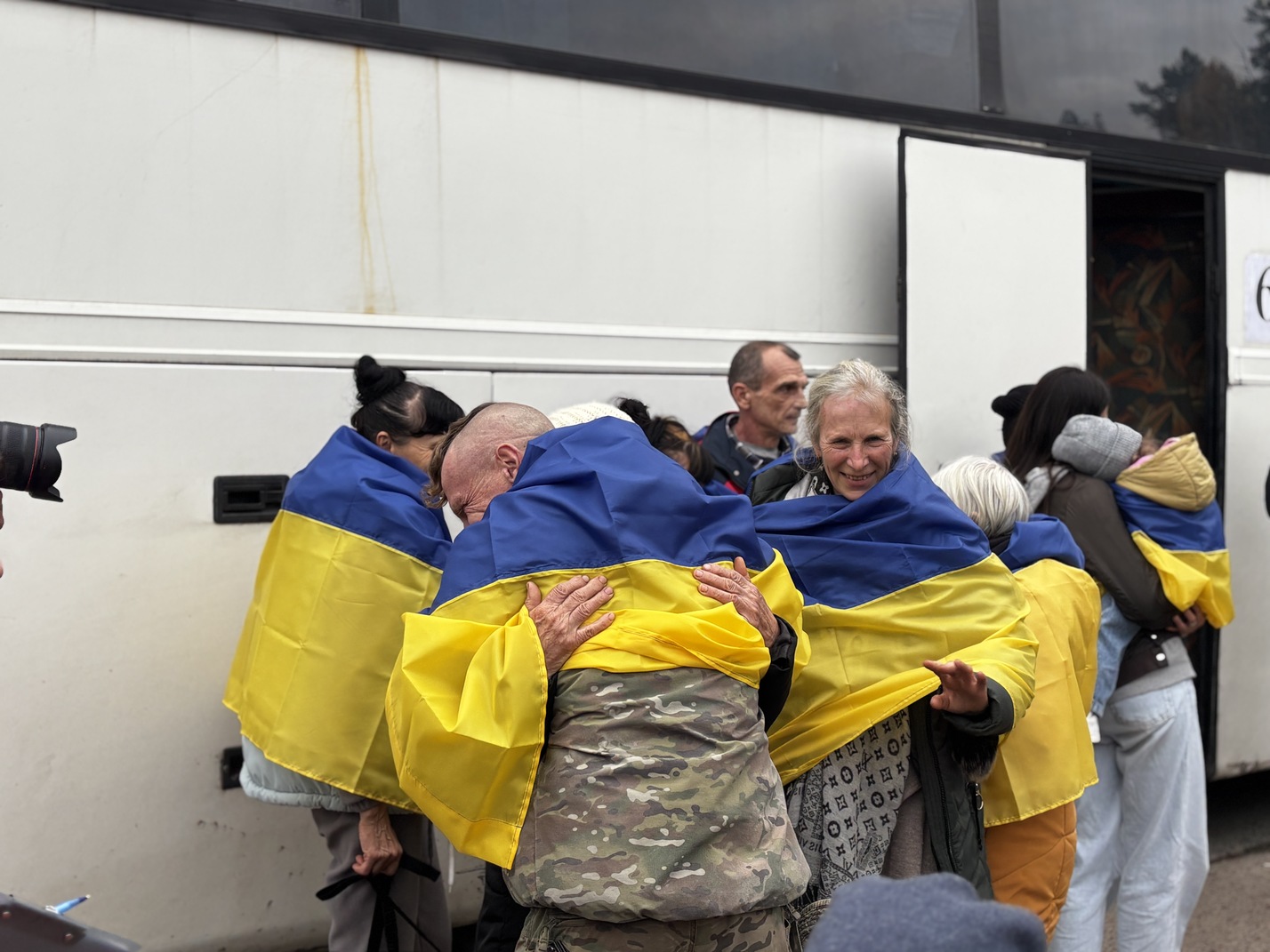
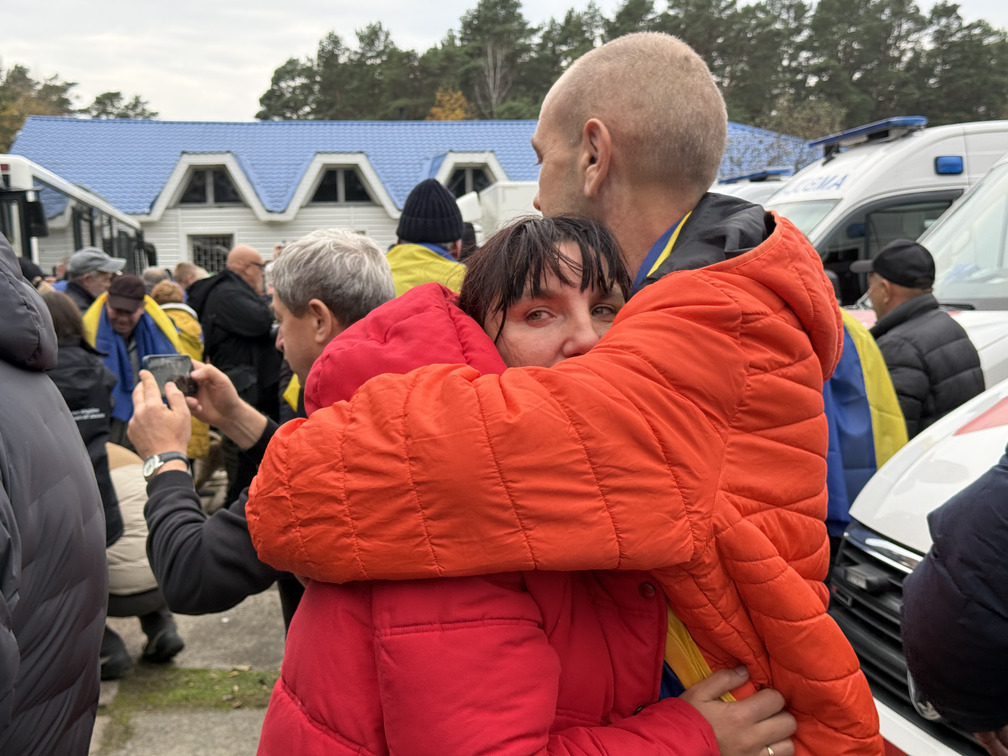
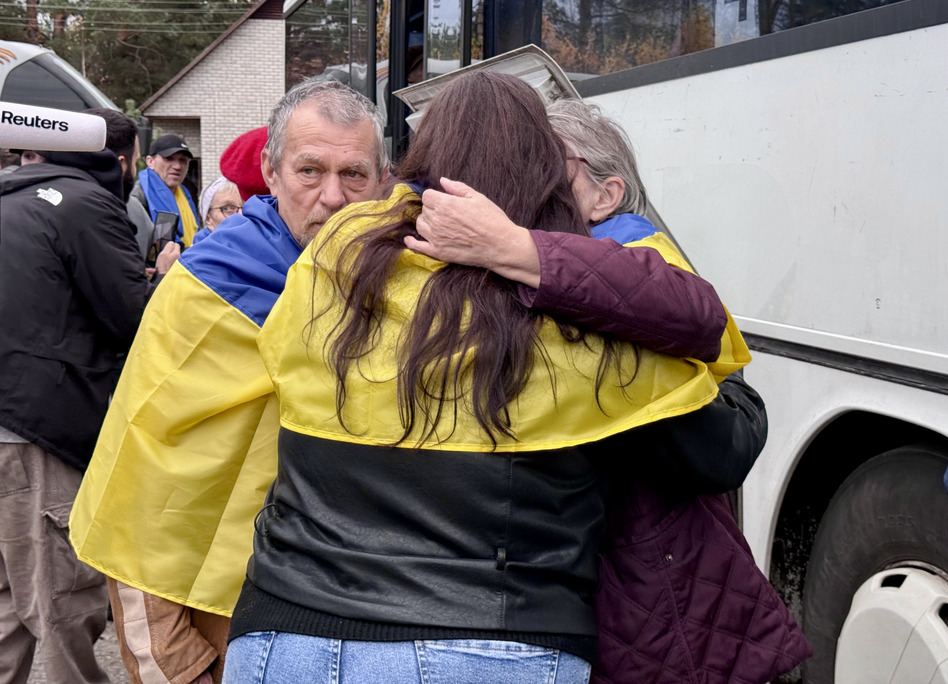
“One of the buses stopped near our tent. A man was waiting there; he had spotted his sister through the window and went straight to the door. As soon as it opened, she seemed to spill out of the bus and simply melted into his embrace. That scene repeated itself again and again, as families found one another.“
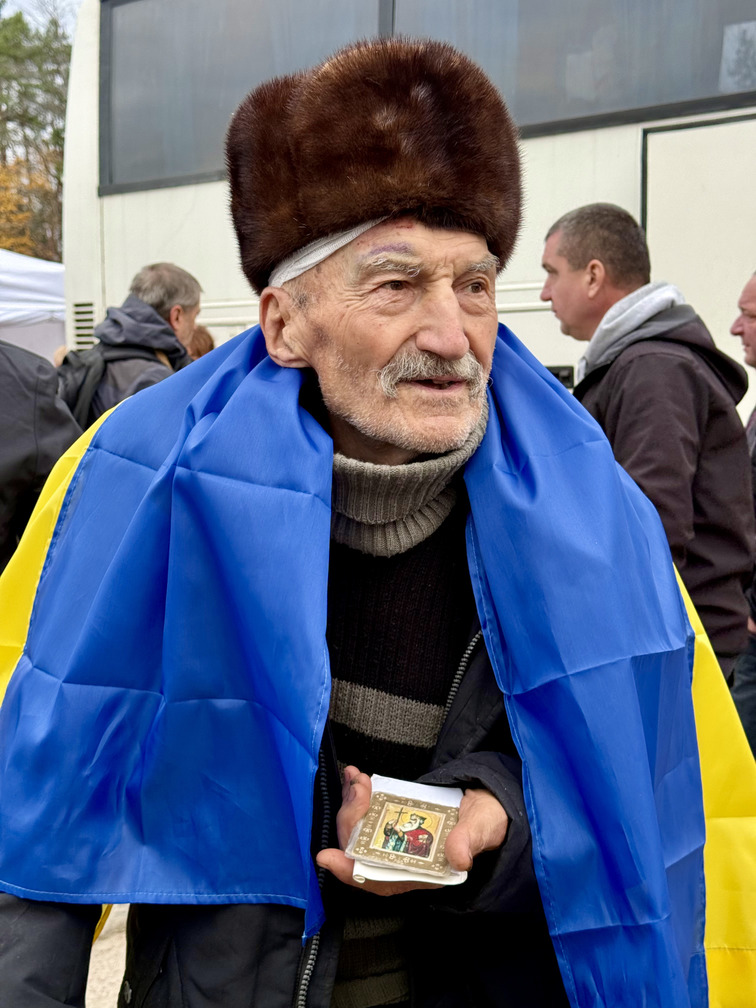
Many of the evacuees were elderly, and many had mobility issues. They were exhausted from the journey and from everything they had lived through, yet there was also a kind of elation among them.
Caritas staff handed out Ukrainian SIM cards to evacuees who did not have them. Stawnychy helped one man fit a card into his old Nokia phone, and they began to talk. When she asked what life in Oleshky had been like, the first thing he spoke about was the 2023 flood after the destruction of the Kakhovka dam, when he helped pull people from the water. Only later did he speak about his neighbor who had been killed, his destroyed house, the drones and the mines.
“That struck me deeply. I thought about how many traumas these people carry, one on top of another.“
He kept repeating that Oleshky had been a lovely little town, and that now nothing was left.
“In his words I heard how much he loved the place he came from, and how much he had lost.“
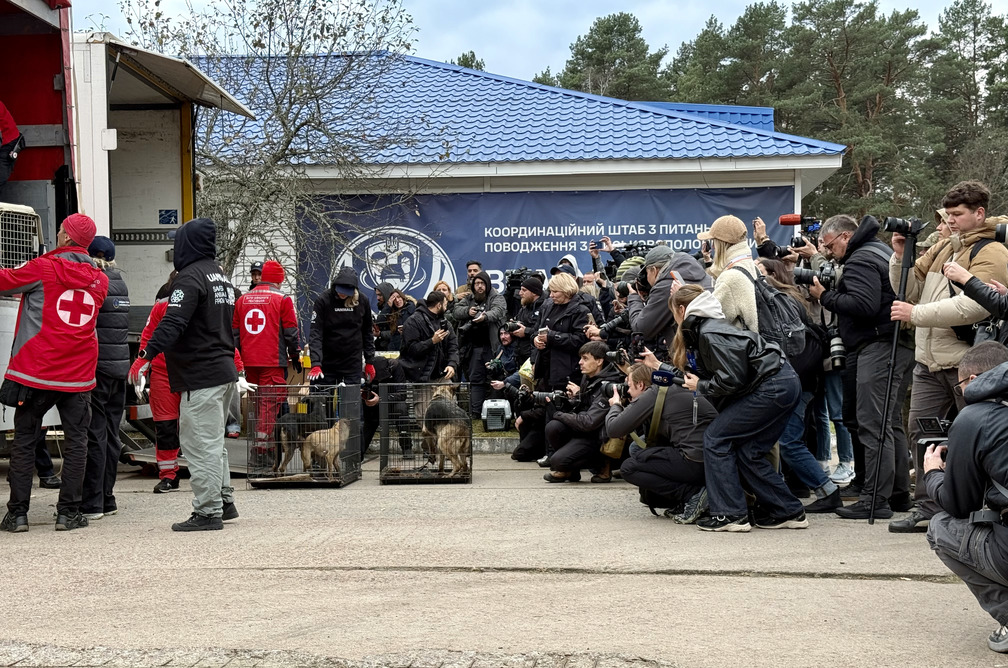
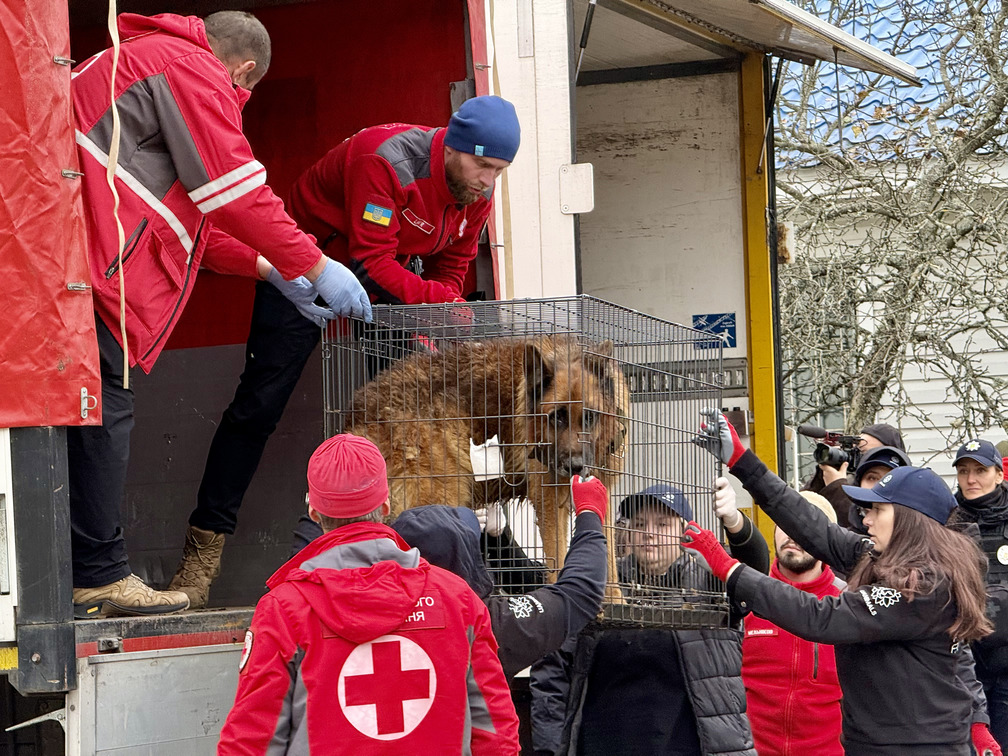
A truck carrying animals rescued from occupied Oleshky arrived as well, from kittens to large dogs, each in its own crate.
“For me, at least, it was overwhelming: the vulnerability of these animals, and the fact that their owners had refused to leave them behind.“
Throughout the day, people kept embracing one another.
“In Caritas we speak of the spirituality of encounter — or rather, as I like to call it, the mystery of encounter. There is a beauty that comes when we truly see one another — when we look at one another with the gaze of brotherly love. It is profound. And then there was their joy: they were finally back on free Ukrainian soil, where they could speak Ukrainian. All of it spilled out of people in so many different ways.”
As the Caritas team drove away, they saw that people from the villages along the road had come out with flags and signs to greet the evacuees.
“They had never met before, and most of them will never meet again. Yet there was this solidarity, this warmth, kindness and love. It was a very Ukrainian experience.”
Tetiana Stawnychy thanked the teams of Caritas Ukraine, Caritas Kyiv and Caritas Chernihiv, who worked side by side that day: “They carry our love into the hands of the people who need it, with attention and care. They do it with their whole hearts.“
“Our care does not end at the meeting point.”
Caritas has already provided bedding and hot meals for evacuees receiving treatment in a hospital in Kyiv. Case managers and psychologists are ready to work with those who need more support.
Caritas president hopes this will be the first mission of many. It showed that such an operation is possible, even under a limited ceasefire in a single region.
“One of the women told us, ‘We came from hell.’ That we were able to bring them out gives me great hope. It shows that the fire can be stopped; there simply has to be the will to stop it. And on the Ukrainian side, I believe, that will is there.”
“For me, the evacuation from Oleshky was one candle lit. But it is the first one, and my hope is that many more will follow. This is more than a sense of community: we are simply together.”