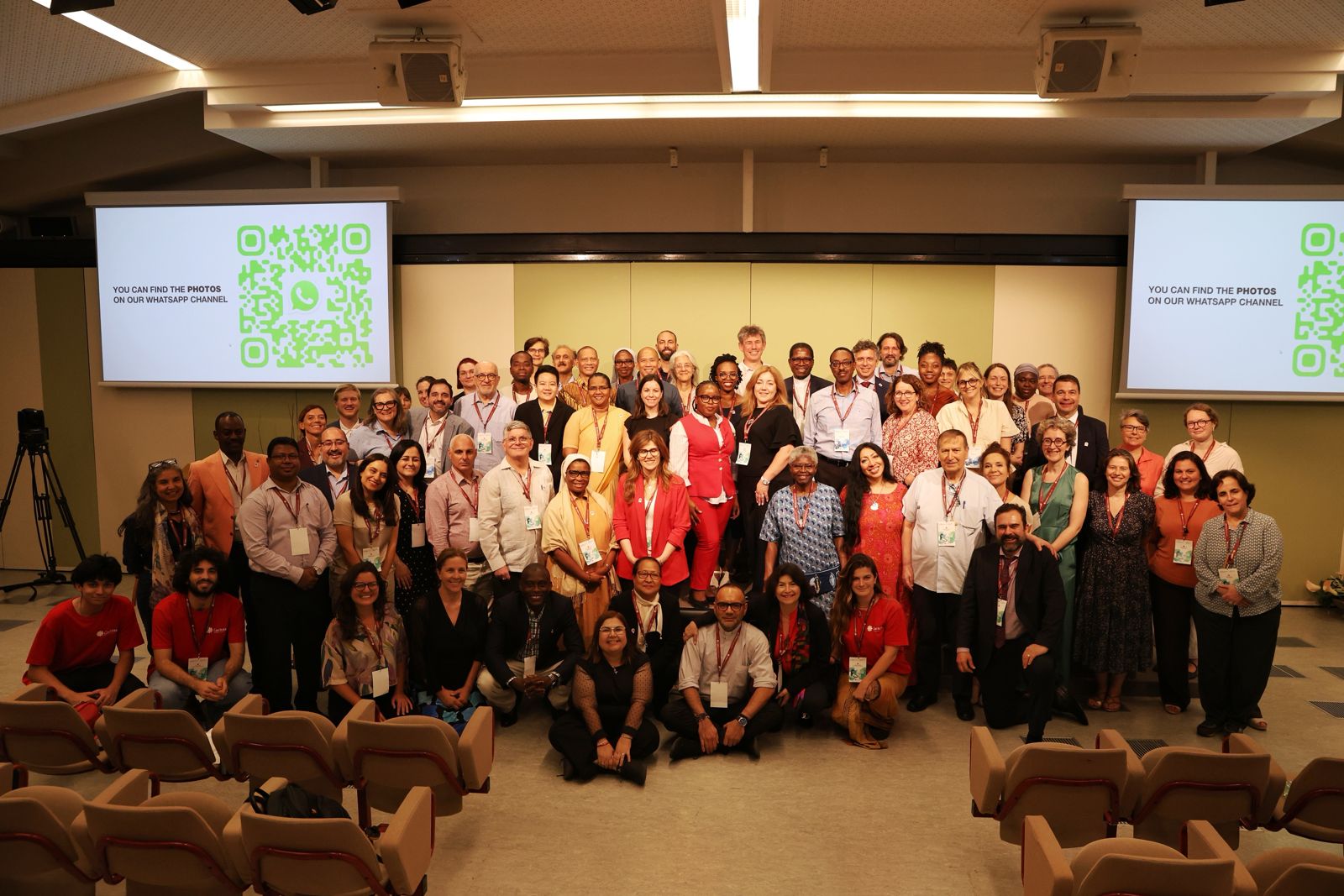
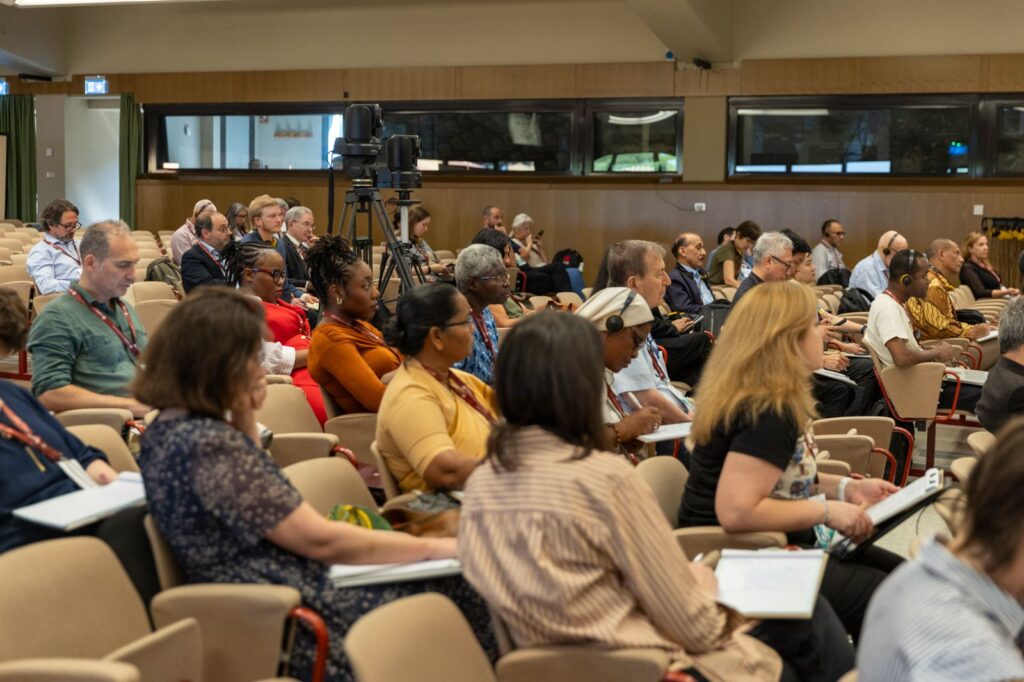
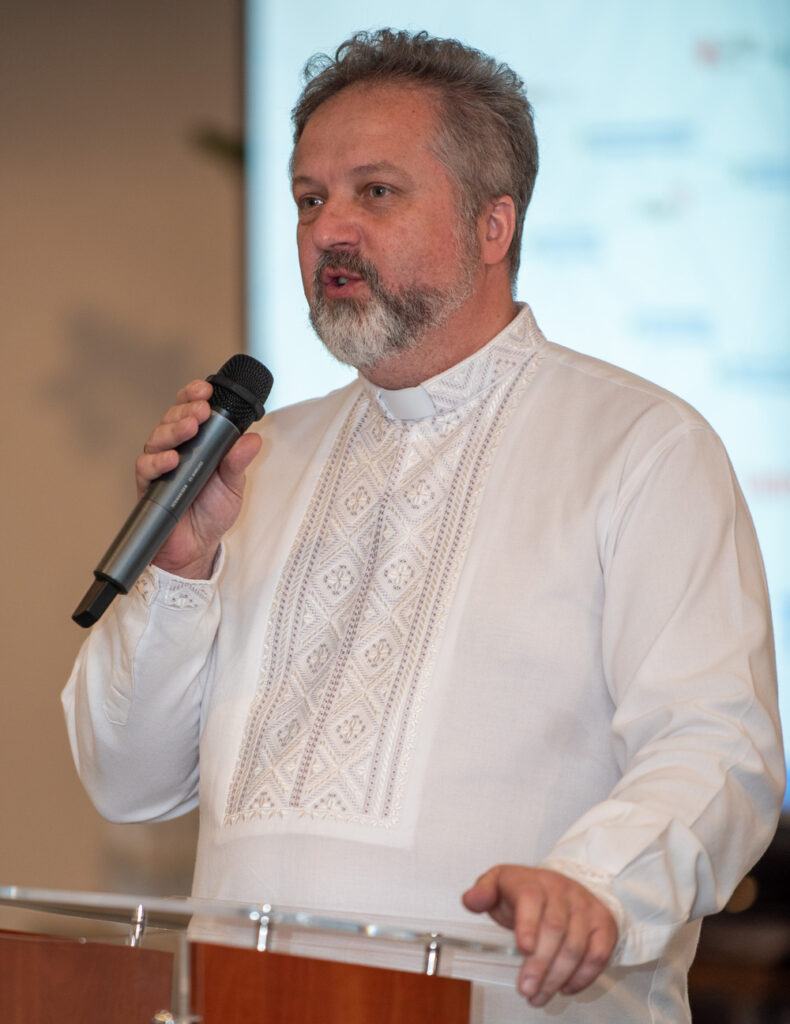
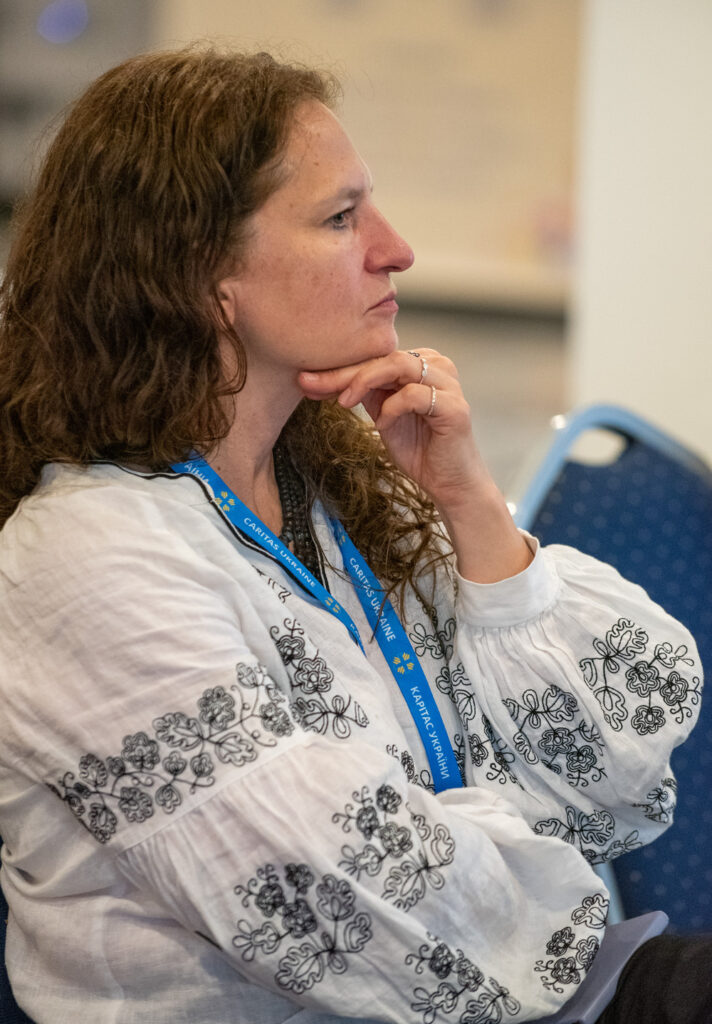
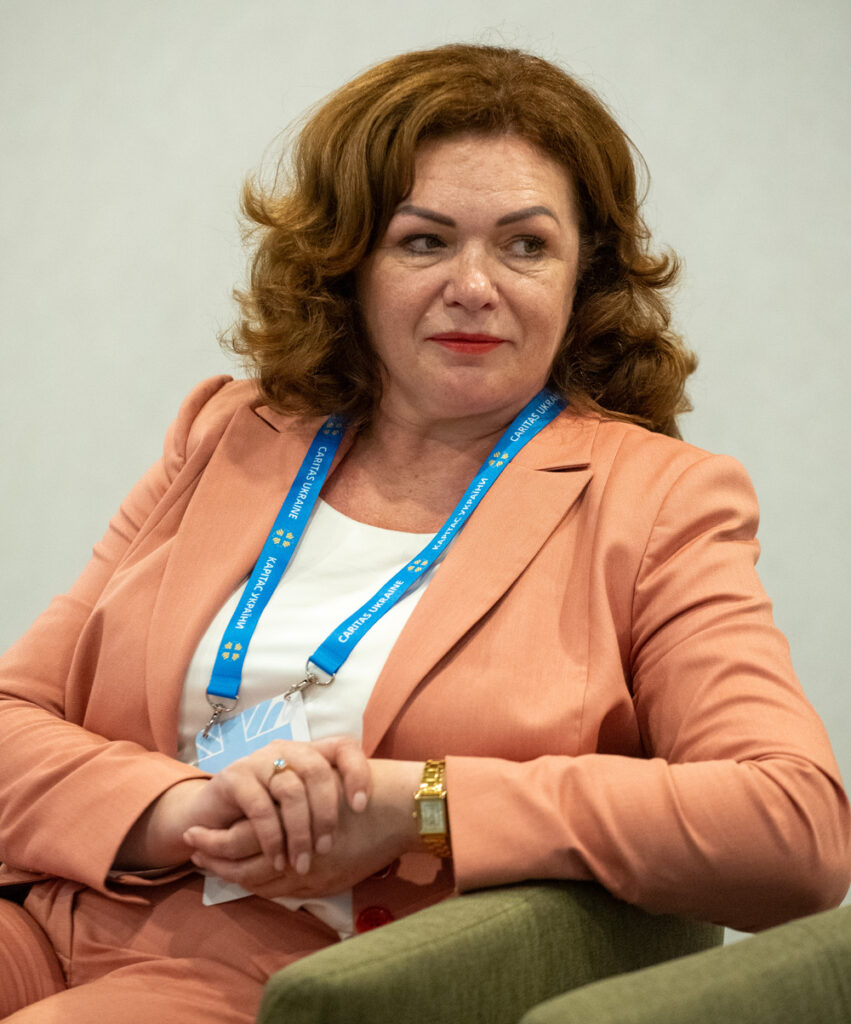
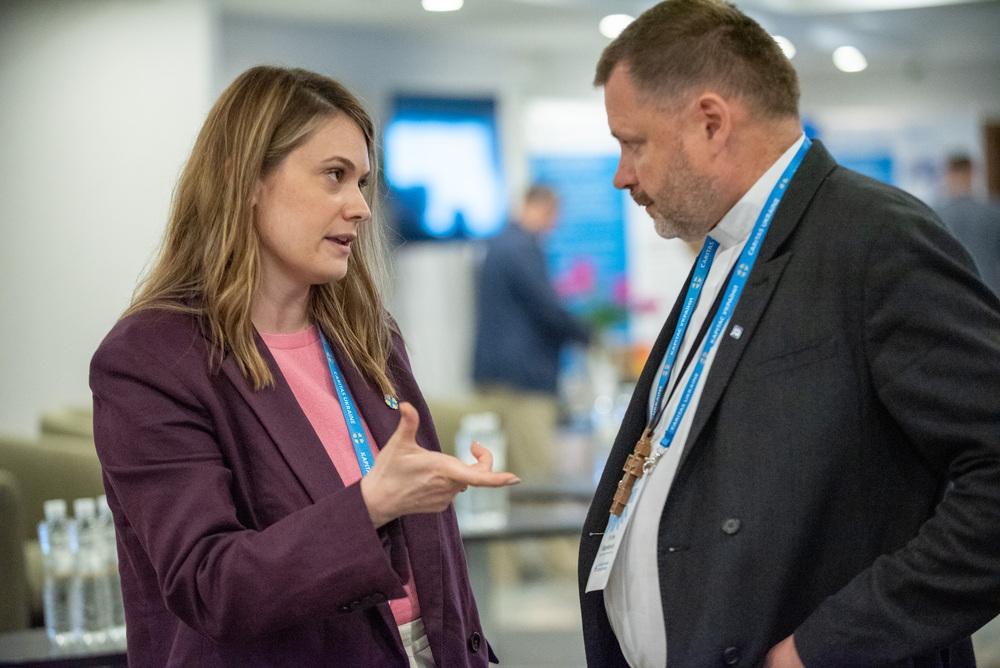
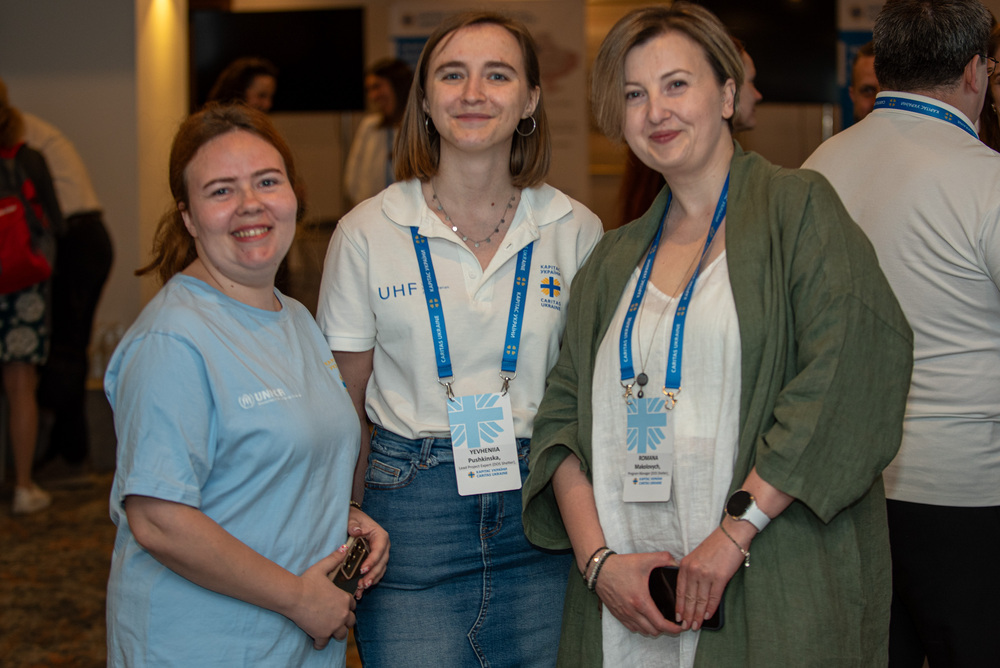
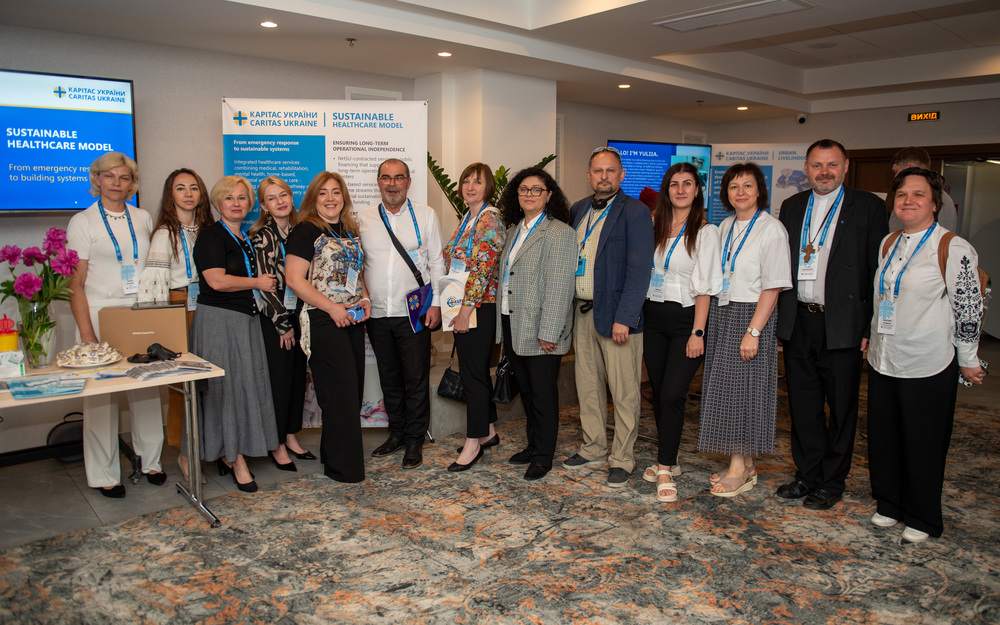
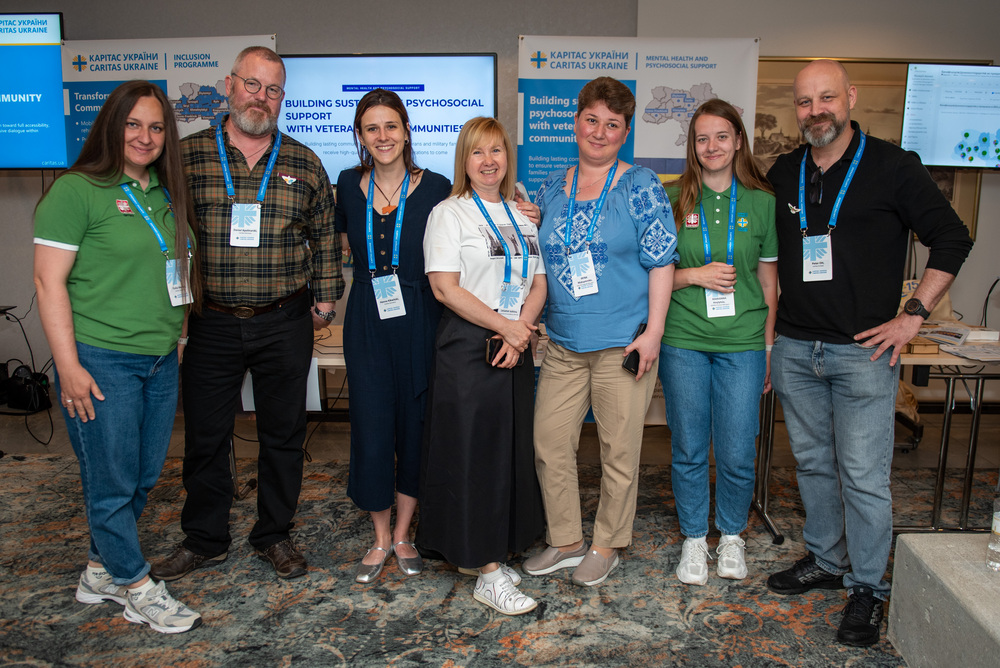
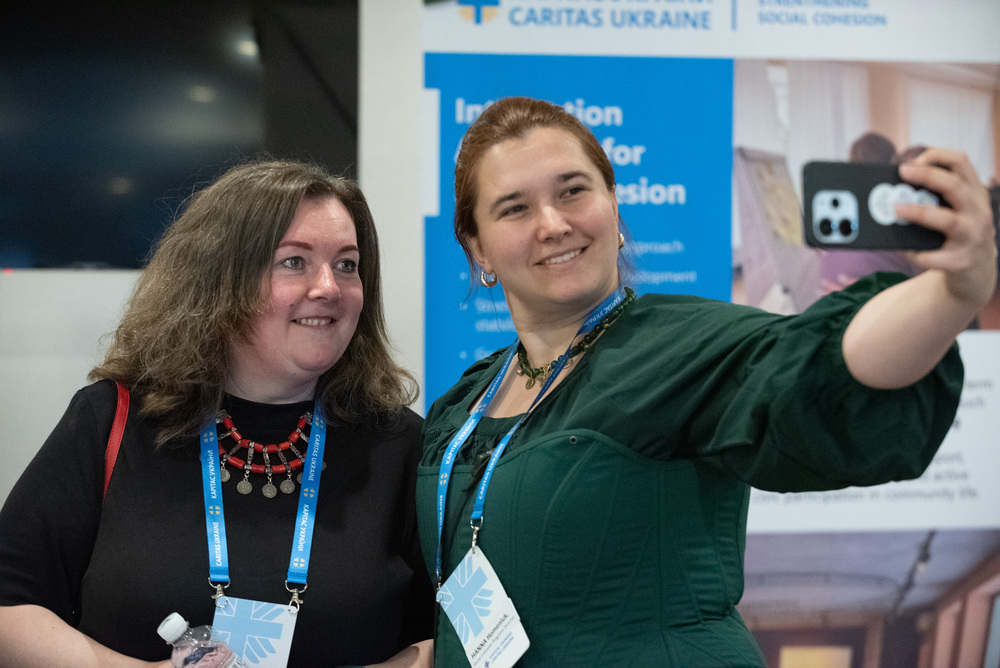
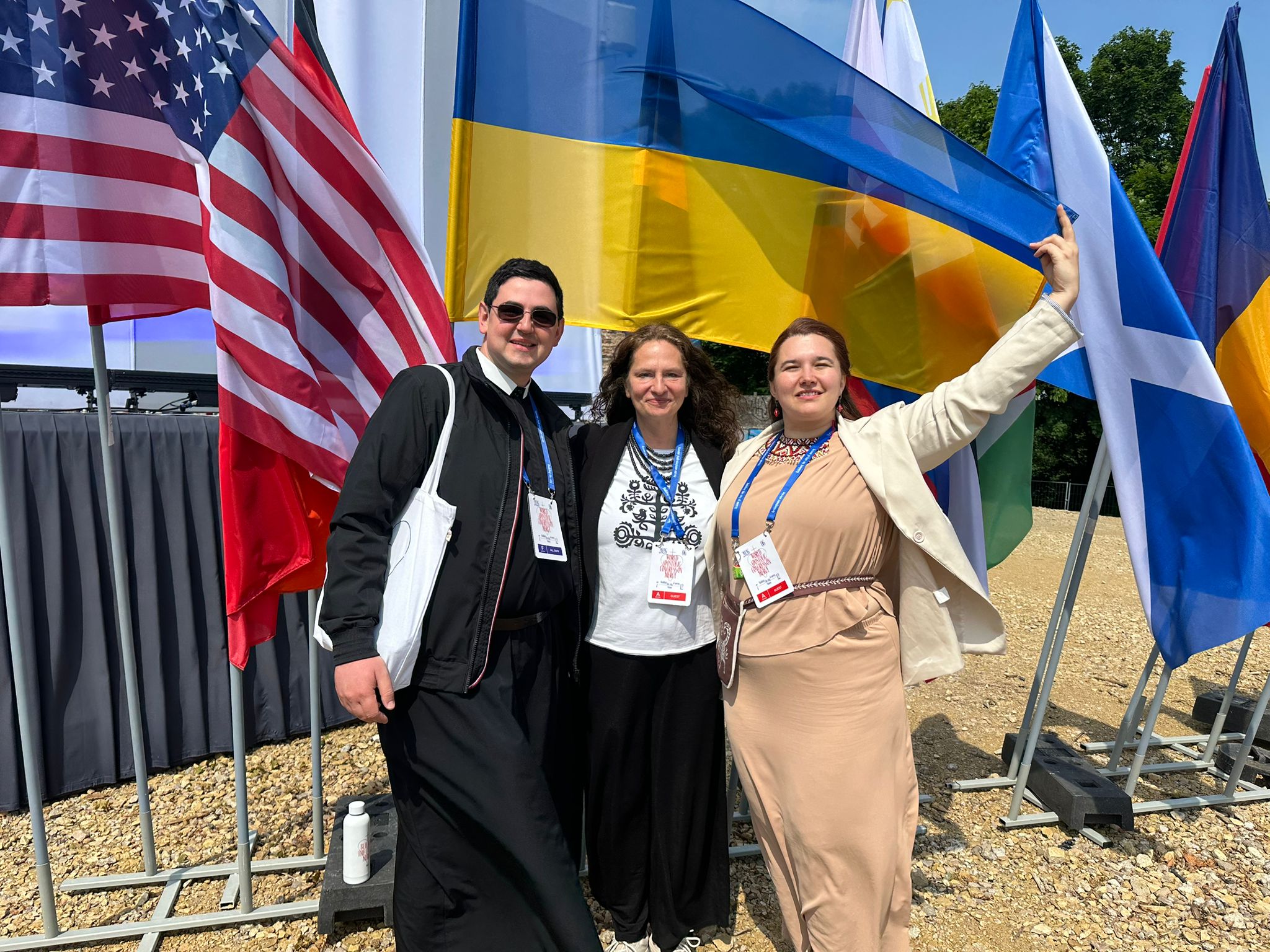
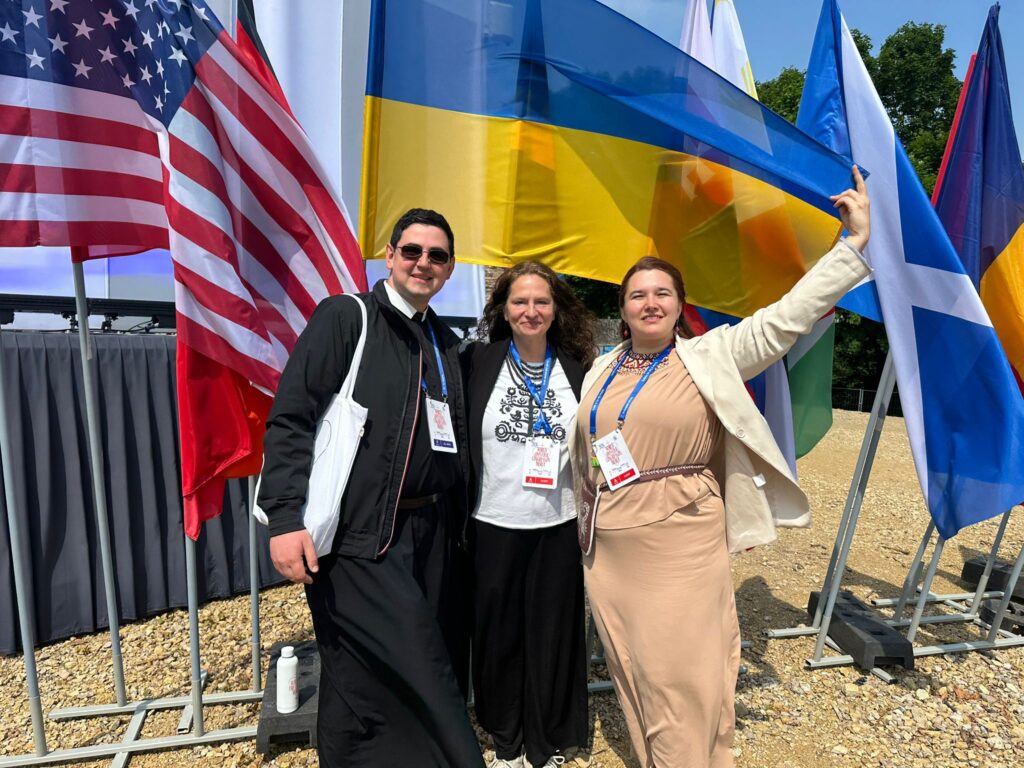
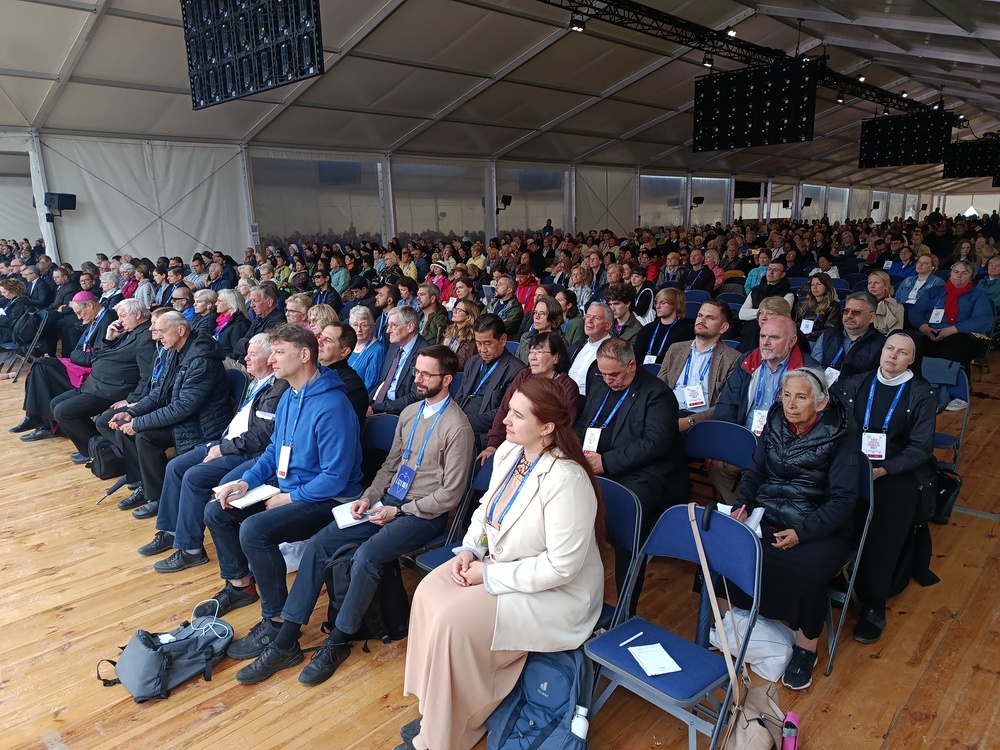
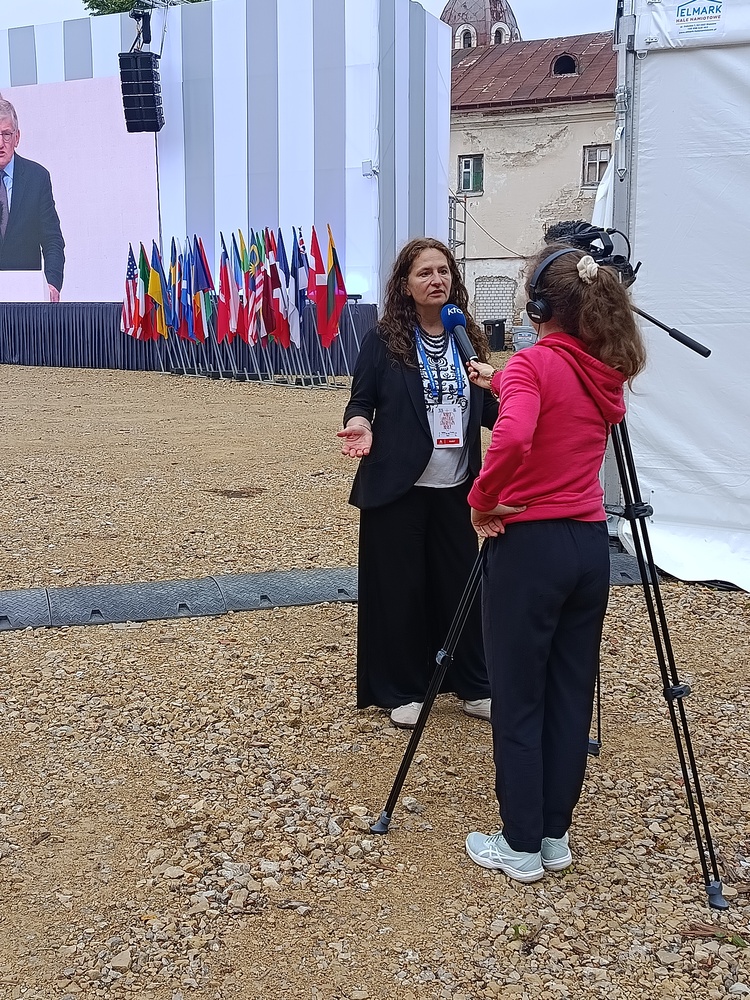
The gathering brought together representatives of Caritas member organizations, international institutions, and partner humanitarian organizations from 28 countries across Africa, Asia, the Middle East, and the Americas. Caritas Ukraine was represented by Khrystyna Semegen-Bodak, Head of the Healthcare Program.
The conference opened with a message from Pope Leo XIV, delivered by Cardinal Pietro Parolin, Vatican Secretary of State, in which the Holy Father encouraged participants to continue bringing God’s mercy to those who suffer.
Over three days, participants examined some of the most pressing challenges facing humanitarian healthcare today, including the ethical use of artificial intelligence, the impact of climate change on vulnerable communities, access to healthcare in conflict zones, and the growing importance of mental health as an integral part of humanitarian response. Discussions also addressed the Ebola outbreak, HIV among orphaned children, chronic malnutrition in Venezuela, and the consequences of healthcare funding cuts in many parts of the world. Strengthening partnerships with international organizations was another key focus.
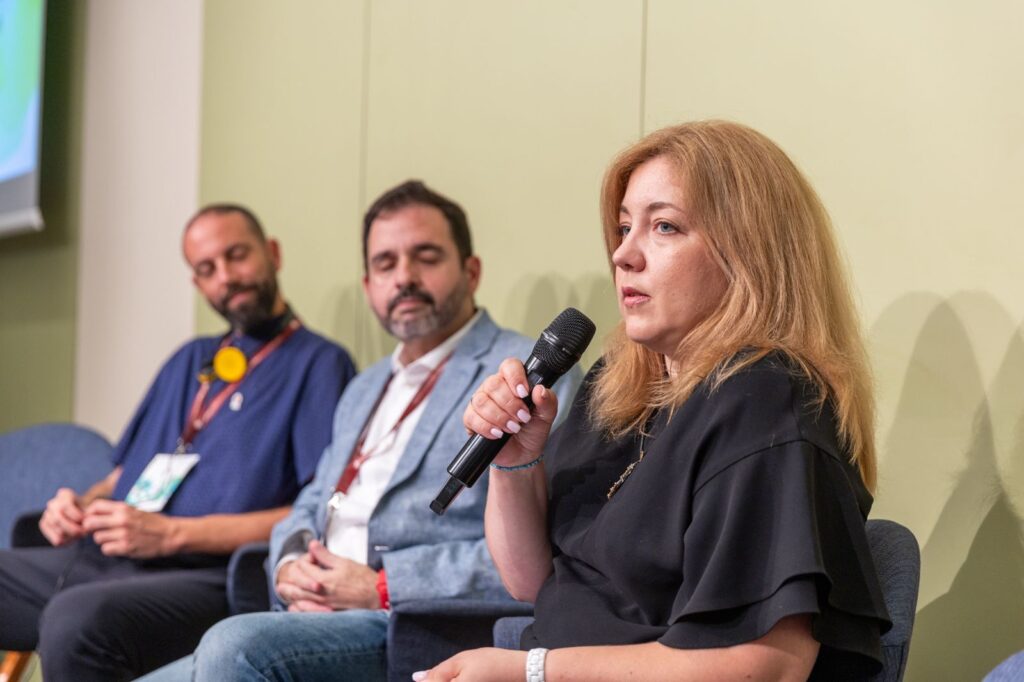
Speaking during a panel on healthcare in armed conflict, Khrystyna Semegen-Bodak presented Ukraine’s experience after more than four years of full-scale war, describing the daily reality of air raid alerts, continuous insecurity, and the immense strain placed on the country’s healthcare system.
Reflecting on the conference, she emphasized its multidisciplinary approach.
“In one room, health professionals from 28 countries came together, bringing medical, legal, economic, and political perspectives. Our shared goal was to shape the future of healthcare together“
She noted that one message echoed throughout the conference:
“The phrase repeated several times that best captured the spirit of the event was: ‘There is no health without mental health.’ This is not merely a slogan, but an approach embedded in the Caritas model of care that integrates medical, psychological, social, and spiritual support. For us at Caritas Ukraine, it was an important affirmation that the sustainable healthcare model we are building follows this same vision, recognizing health as everything a person needs to live a full life.“
Her remarks reflected the statistics she presented during the panel. After more than four years of war, approximately 70 percent of Ukrainians report experiencing mental health difficulties, yet only one in ten has access to the support they need. More than 2,600 medical facilities have been damaged or destroyed by Russian attacks, while over 300 healthcare workers have been killed since the beginning of the full-scale invasion.
In response, Caritas Ukraine has made mental health support a core component of all its healthcare programs. Today, specialized mental health services are available through 11 Caritas medical centers across the country.
Ukraine’s experience resonated strongly with representatives from other countries where Caritas serves communities affected by conflict, humanitarian crises, and fragile healthcare systems.
The conference is expected to conclude with the adoption of a Declaration and a Roadmap that will define the strategic direction of Caritas health programs worldwide. Caritas Ukraine’s active contribution to this process demonstrates that Ukraine’s experience is helping shape the international conversation on humanitarian healthcare.
The Ministry opened its doors to the public, offering a unique opportunity to go behind the scenes of German diplomacy: visitors could explore the Minister’s office, the Crisis Response Center, and learn about the protocol of official state visits.
Caritas Ukraine was represented at two venues of the event.
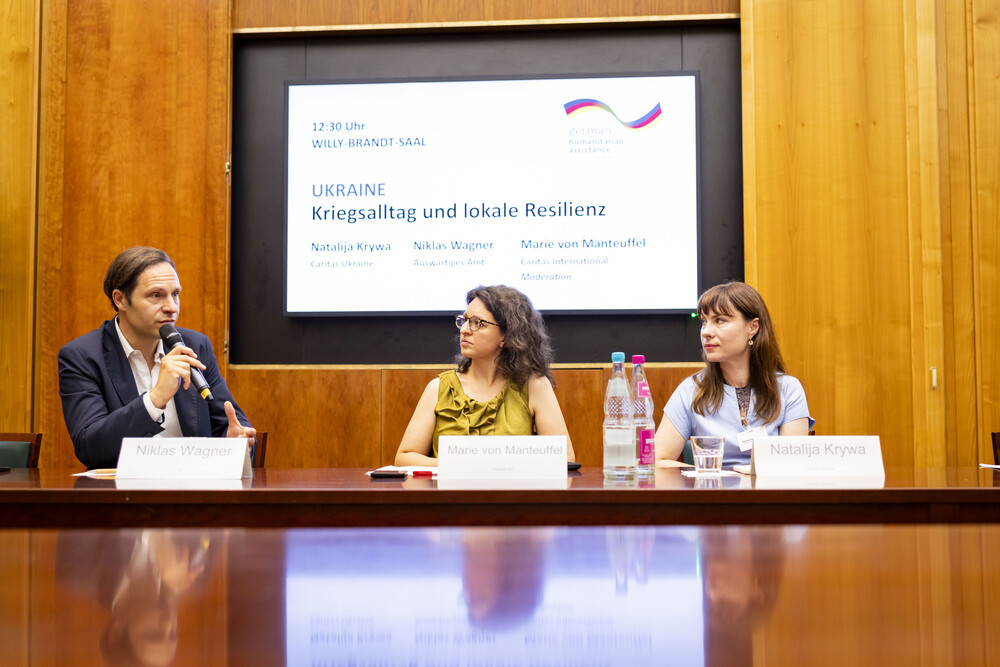
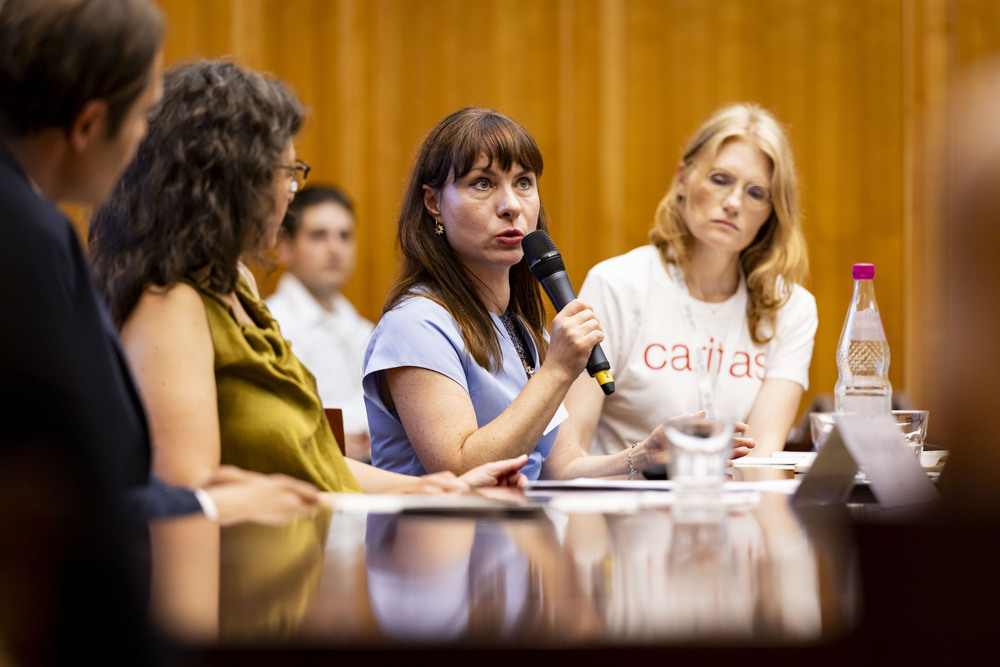
Natalia Kryva, Director of the Social Program Department at Caritas Ukraine, participated in the panel discussion “Everyday Life in War and Local Resilience” alongside Dr. Niklas Wagner, GFFO Commissioner for Eastern Europe, the Caucasus, and Central Asia, and shared the organization’s experience supporting communities under conditions of prolonged war.
“So how do we remain capable of acting? By staying honest about what is hard. By caring for our people, staff, and beneficiaries alike. By refusing to separate efficiency from humanity. And by understanding that local resilience is not spontaneous, it is built, day by day, by organizations and communities that choose to remain present,” said Natalia Kryva.
The international department of Caritas Germany presented a dedicated booth on work with children and youth in child-friendly spaces operating in Ukraine with the support of Caritas Ukraine.
Caritas Ukraine’s participation in this forum underscored the organization’s role as a reliable partner in humanitarian response and recovery, and as a voice of Ukrainian civil society on the international stage.
This year, the meeting’s cross-cutting theme was localization as a path to sustainable solutions. Participants discussed how local presence, experience of working in communities, and partnership with the state and the international community help move from emergency response to sustainable solutions for communities.
Local organization visits
The first two days were dedicated to visits to local Caritas organizations in different regions. Partners had the opportunity to see the work of local teams, speak with staff, and better understand the local context in which the network operates.
One of these visits was to Caritas Volyn. Representatives of CRS, Caritas Austria, and Caritas-Spes Ukraine learned more about the infrastructure supporting people leaving temporarily occupied territories via the humanitarian corridor.
The partners visited the Domanove checkpoint, where the Caritas Volyn team welcomes people, the shelter in the village of Kortelisy, where they can rest before continuing their journey, and the Caritas space at the railway station in Kovel, where people can wait for their train or bus.
“If since 2024 this work has primarily included an emergency response component — stabilizing people after an exhausting journey, creating dignified conditions for rest, and helping them move onward — today we are adding referrals within the Caritas network and support for full reintegration in host communities,” said Hayk Stepanyan, IDP Support Project Manager.
Main part of the meeting in Lviv
The main part of the Partnership Meeting took place in Lviv. The day began with a joint prayer and Divine Liturgy at St. George’s Archcathedral, a place that holds special importance in the history of the Church’s social ministry in Ukraine.
Welcoming participants on behalf of Metropolitan Ihor, Fr. Ivan Hobela of the Lviv Archeparchy stressed that Caritas is not only a charitable organization, but also an expression of the Church’s living service where people need support the most.
“Sustainable solutions are born where there is unity: in society, the state, the Church, and small local communities. They will be strong when they pulse from the very core of the word caritas — love,” he said.
Fr. Andrii Nahirniak, Director for Network and Identity at Caritas Ukraine, noted that the format of the Partnership Meeting is gradually changing.
“We wanted to transform partnership meetings into meetings of reflection, dialogue, discussion, and debate. This is a moment to pause and think, to develop a shared position and shared solutions not only within Caritas, but also together with a wider circle of partners,” said Fr. Andrii Nahirniak.
From humanitarian response to sustainable solutions
Opening the strategic part of the meeting, President of Caritas Ukraine Tetiana Stawnychy stressed that Caritas and its partners are moving together from emergency response to sustainable solutions for communities.
“Today it is important for us to move from humanitarian response to sustainable solutions without losing sight of the person, neither the person we serve nor the person who serves within the Caritas Ukraine network. That is why our principles remain unchanged: to seek the best way, to see the person, and to work together as one network, one community, one family,” said Tetiana Stawnychy.
According to her, resilience is not an abstract characteristic or a “superpower” but a long-term process grounded in values, systems, and flexibility in responding to people’s real needs.
Participants were also addressed by Khrystyna Zamula, Deputy Head of the Lviv Regional State Administration. She underlined that during the full-scale war, charitable and civil society organizations have become an important source of support for thousands of Ukrainian families.
“Through joint efforts, we are not only responding to today’s challenges, but also building sustainable mechanisms to support people and develop communities. This kind of cooperation is the basis of our society’s resilience,” she said.
Localization as a path to sustainable development
The discussion continued during a panel on localization as a path to sustainable development. The panel included David Das Neves, UN Senior Advisor on Recovery; Halyna Bordun, Head of the Coordination Center for Civilian Support at the Lviv Regional Military Administration; Fr. Vasyl Kolodchyn, Director of Caritas Odesa UGCC; and Daria Chekalova, Coordinator of the PULSE Consortium. Oksana Zashchykivska, PhD in Political Science, moderated the discussion.
The discussion focused on the role of local organizations that remain close to communities and understand the local context well.
David Das Neves stressed that sustainable solutions cannot simply be brought in from the outside.
“Sustainable solutions are local by nature. Ukrainian local organizations did not wait for international partners to come and start responding. They were here from the beginning and will remain here in the future. That is why the question is not only how to support local organizations, but also how the international system can learn from them,” he said.
According to him, real localization requires not only partnership language but also a willingness by international structures to change how decisions are made. At the same time, local organizations should not replace the state or compete with it. Their role is to complement the system, bring practical expertise into it, and help public decisions become closer to people.
Halyna Bordun noted that since 2022, Caritas has become an important source of support for the authorities in emergency response, and that this cooperation is now moving towards long-term solutions.
“Today, communities have many responsibilities, and this is what localization is about — when we help communities learn how to respond to challenges, build support systems, and preserve people,” she said.
She also stressed that sustainable solutions require honest dialogue, clear distribution of roles, and a willingness to assess not only successes, but also what did not work.
Trust between communities and local organizations was another important focus of the discussion. Fr. Vasyl Kolodchyn, Director of Caritas Odesa UGCC, stressed that the strength of Caritas lies not only in its organizational structure but, above all, in its rootedness in communities.
“We live alongside people, raise children in the same communities, and share responsibility for their future. International partners can bring financial support, knowledge, and experience. But they cannot bring community trust. Trust is built over years and decades of constant presence,” he said.
Sustainability in program solutions
During the program presentations, Caritas Ukraine teams showed how sustainability is being put into practice through concrete solutions.
Housing solutions
In the housing area, the discussion focused on the need to move from separate housing projects to integrated support models that account for a person’s path from temporary accommodation to permanent housing.
“Millions of Ukrainians who lost their homes also lost a point of stability. And the biggest mistake in such a situation is to address this problem in a fragmented way. A single project does not change the system. That is why Housing Pathways is not a set of isolated initiatives, but an integrated support architecture: from emergency accommodation through social support to long-term housing solutions embedded in community housing policy. We work where humanitarian assistance and systemic change meet, and we believe this is where our resilience becomes stronger,” said Iryna Noha, Head of the Housing Program at Caritas Ukraine.
Romana Makolovych, Head of the Housing Program at Caritas Ukraine, added that for many people, housing determines whether they can stay in a community, return to normal life, and plan for the future.
“That is why, alongside repairs and emergency response, solutions that can work for years are becoming increasingly important. For us, it is extremely valuable to discuss these challenges with partners. It is in this kind of dialogue that solutions are born — solutions that combine community resources, support from international donors, and the experience of civil society. Ultimately, they help people regain not only housing, but also a sense of safety, stability, and home,” she said.
Healthcare
The Healthcare Program presented the development of the Caritas medical center network as a model that helps local organizations become more capable and less dependent on short donor funding cycles.
“Building the Caritas medical center network is an investment in a sustainable healthcare model. It helps local organizations think strategically, plan their development, and become less dependent on donor funding. Investments, cooperation with the National Health Service of Ukraine at the local level, and paid services all have one goal — to reach as many vulnerable people as possible with support,” said Khrystyna Semehen-Bodak, Head of the Healthcare Program at Caritas Ukraine.
Psychosocial support
In the area of psychosocial support, the team stressed that work with veterans and families of service members requires time, sensitivity, and space for trust.
“For us, the challenge is to support people while the war is still ongoing and, at the same time, care for the staff of local organizations. But we already see that after projects end, services for veterans and service members’ families change and expand. Beneficiaries themselves also come together and bring support to their brothers and sisters in arms,” said Iryna Maksymenko, Head of the MHPSS Program.
The Social Protection and Rights Defence Programme presented its work with the Resilience Centres – an initiative of the Ministry of Social Policy of Ukraine as part of the All-Ukrainian mental health programme ‘How Are You?’, launched by First Lady Olena Zelenska.
“The partners viewed with great interest the sustainable solutions being implemented by the Caritas Ukraine network. In particular, the concept of Resilience Centres. The partners did not even expect that, of all the Resilience Centres in existence (of which there are 368), 82 are run by local Caritas organisations. That is as much as 22 per cent of all Resilience Centres across Ukraine,” says Anastasia Stetsenko, head of the “Social Protection and Human Rights” programme at Caritas Ukraine.
Safe return and reintegration
The Safe Migration and Counter-Trafficking Program presented its approach to the safe return of Ukrainians and support for their reintegration into communities.
“During the meeting, we were able to show partners how local Caritas organizations support Ukrainians who plan to return, and how this support can become part of a wider reintegration system,” said Iryna Maievska, Head of the Safe Migration and Counter-Trafficking Program.
Social cohesion, integration, and peacebuilding
Participants also focused on social cohesion, integration, and peacebuilding.
“This was an exchange between long-standing partners with whom we can speak openly. We spoke with Caritas Italiana and Renovabis about peacebuilding and the risks of conflict that may arise in any scenario for the end of the war. We also spoke a lot about the nexus — the connection between the humanitarian, development, and peacebuilding components of civil society work. Together with Caritas Kamianske, we shared not only our experience in integration activities. We also spoke about examples of organizations that experienced displacement themselves, but became agents of cohesion in their communities,” said Hanna Homeniuk, Director of the Social Cohesion Programs Department at Caritas Ukraine.
Caritas Ukraine’s experience through the eyes of international partners
International partners stressed that Caritas Ukraine’s experience is important not only for program implementation but also for a broader understanding of how sustainable solutions should work at the community level. Local practices that emerge close to people can strengthen international approaches and become a basis for public policy.
“The UN supports the work of local organizations, and during the meeting, it was clear how much of this work is already taking place in partnership with UN agencies. We want this cooperation to continue, but it is also important to change the system itself — so that local organizations not only receive support, but also influence how assistance is planned and delivered,” said David Das Neves.
Dr. Markus Ingenlath, Executive Director of Renovabis, stressed that for Western partners, Caritas Ukraine’s experience is an example of how, even during war, it is possible to preserve humanity, professionalism, and trust.
He also underlined the importance of parish social ministry as a model of decentralized responsibility.
“One of the most significant results of our cooperation is the development of parish social ministry. It has helped parishes take more responsibility for the most vulnerable people in their communities and become part of a wider support system. For us, this is an example of how sustainability begins where people start taking responsibility into their own hands,” he said.
Laura Stopponi, Project Manager at Caritas Italiana, noted that cooperation among Caritas organizations grows out of long-term relationships and that the meeting helped participants better understand not only the scale of assistance but also the human dimension of this work.
“What you are doing is not only a response to needs, but also human development, building the future, communities, and bridges between countries,” she said.
Looking for solutions for the future
The final day of the Partnership Meeting was dedicated to identifying solutions for 2027–2028. The meeting showed that sustainable solutions are not created through separate projects or short assistance cycles. They grow out of trust, local presence, team professionalism, partnership with the state and the international community, and a constant readiness to keep people at the center of every action.
This is how Caritas Ukraine continues to move from emergency assistance to recovery, from crisis response to solutions that help communities endure, recover, and plan for the future.
From working for communities to working with them. This is how Caritas Norway is rethinking humanitarian support for Ukraine.
Today, humanitarian response is no longer only about rapid emergency assistance. It also needs to consider early recovery elements and long-term solidarity support for communities that have spent years living under shelling, losing access to basic services, experiencing exhaustion, displacement, and constant uncertainty.
It is in this context that Caritas Norway presented its strategy for Ukraine and Moldova for 2026–2027.
At the core of the strategy locally led humanitarian response e , and where some important approaches include predictable partnership, flexible humanitarian programming, duty of care for teams, and strengthening the voices of communities and local partners.
For Caritas Ukraine, this approach is especially important because it recognizes that the experience of local teams and communities is not an addition to humanitarian response — it is its foundation.
One of the main frameworks of this work is the Nansen Programme. According to Melissa Søvik, Regional Representative for Ukraine and Moldova at Caritas Norway (Caritas Norge), the 3 year long programme provides a certain predictability for humanitarian response — in funding, programme duration, and the possibility to plan work beyond the short term.
At the same time, she emphasizes that even a pluriannual program with set objectivessupport must remain flexible. War creates highly volatile conditions: frontlines shift, people are forced to evacuate, and new humanitarian needs can emerge very rapidly. This is why humanitarian programmes must be able to adapt — from supporting newly arrived IDPs to assisting with evacuations from communities under threat of occupation or heavy shelling.
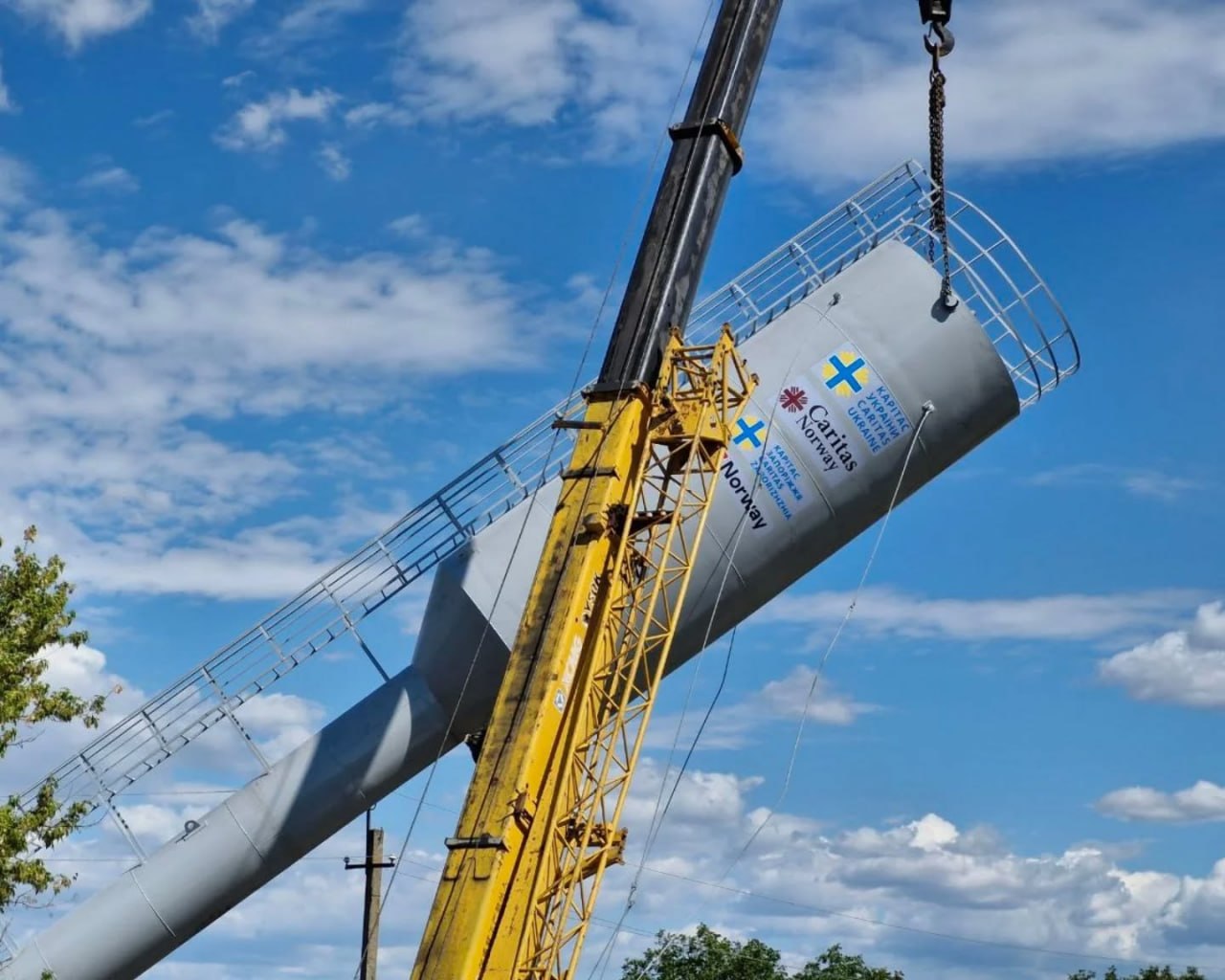
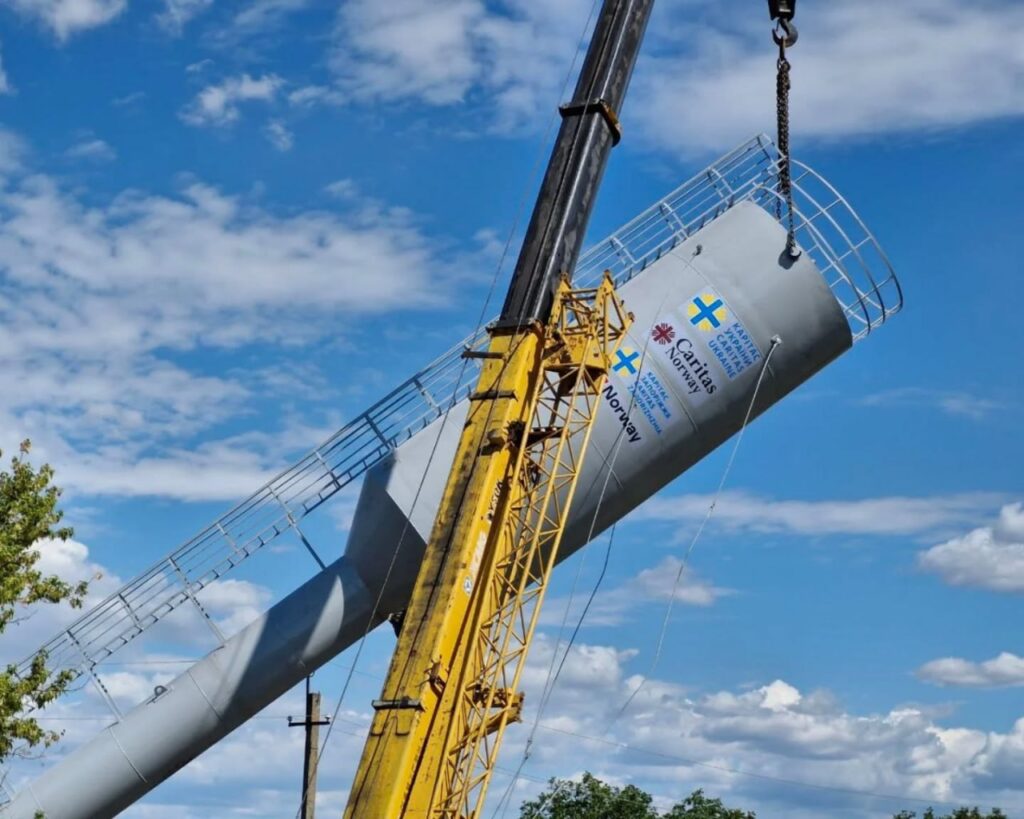
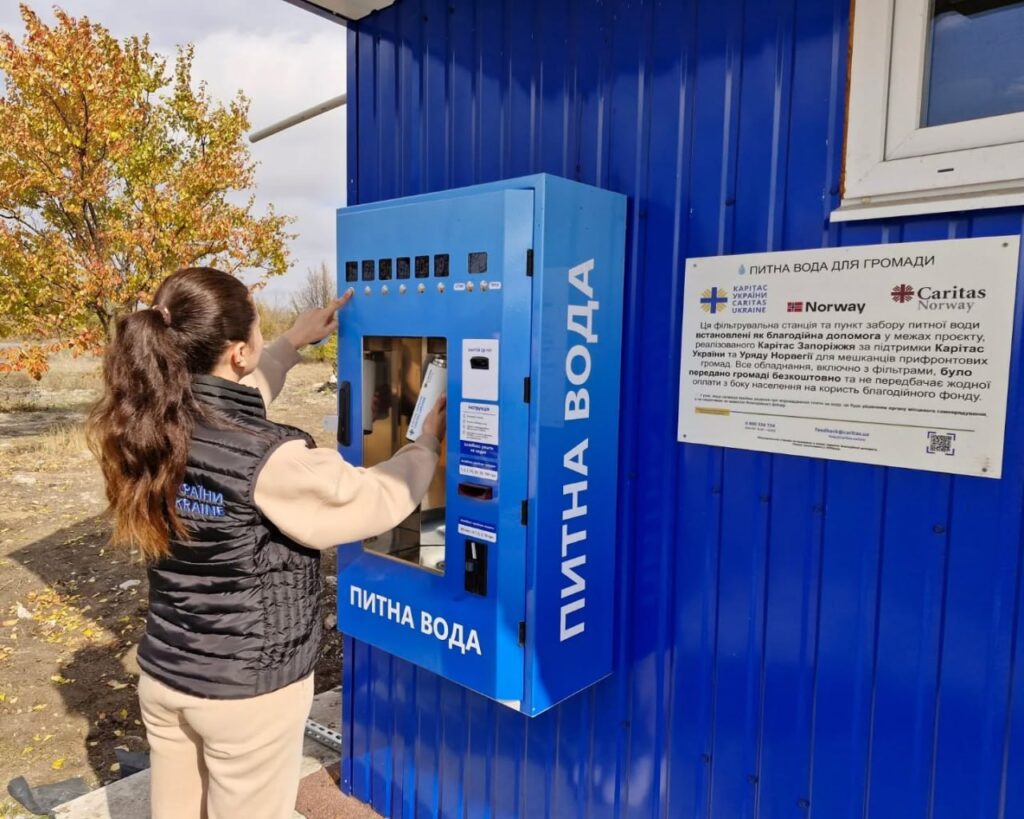
One important thematic area under the ongoing humanitarian programme is WASH. In Ukraine, access to water has long gone beyond being only a “technical sector”. In wartime, water becomes a matter of security, health, dignity, and daily survival:
“When people lose access to water, they begin to realize how dependent they are on it. It is not a choice — water is simply necessary to live. It is needed for cooking, drinking, hygiene, and for people with medical needs. That is why restoring access to water matters so much for communities, especially those close to the frontline” .
She also recalls a phrase she repeatedly heard from people in local communities:
“Water is life.”
And this is not a metaphor. When regular access to water disappears or becomes unsafe due to attacks on critical infrastructure, people lose one of the foundations of normal life: the ability to drink clean water, cook food, maintain hygiene, and care for children, elderly people, or people with chronic illnesses.
The strategy also strongly emphasizes local leadership. Decisions regarding programmes, adjustments, monitoring, or adaptation should not be made without national and local partners:
“Decisions regarding programme, ajustment are made with the national and local partners. Local organizations understand the humanitarian context the best, and any changes inneeds see where they can respond most effectively, and know how to adapt assistance to the real situation”.
For Caritas Ukraine, this is critically important. Local teams do not simply implement humanitarian programmes. They work with communities every day, maintain trust, cooperate with local authorities, and understand not only humanitarian needs, but also the broader realities communities face — exhaustion, risks, and opportunities for recovery.
Another important focus of the strategy is duty of care for teams. Humanitarian response cannot remain sustainable if the people delivering it become exhausted themselves.
She also speaks about the fact that the visible resilience of Ukrainian communities does not mean that people can continue living in such conditions indefinitely. According to her, many people live in a constant survival mode — with air raid alerts, lack of sleep, fear for loved ones, and long-term psychological pressure.
This is especially true for communities near the frontline, which continue to carry the heaviest burden of war.
Another important part of the strategy is communication. Caritas Norway stresses that international partners should not speak on behalfof local organizations. An important role they can play is to support amplifying to local voices
According to her, this means continuous dialogue with local partners, understanding their priorities, and helping the experiences of Ukrainian communities reach donors, governments, international institutions, and societies abroad.
This is the value of such partnership: not replacing local experience with external perspectives, but supporting those who already work closest to people and sustain humanitarian response every day in the difficult reality of war.
When we asked what lies at the heart of such persistence, and the answer:
«Because our friends are here, they understand us, and it feels like home».
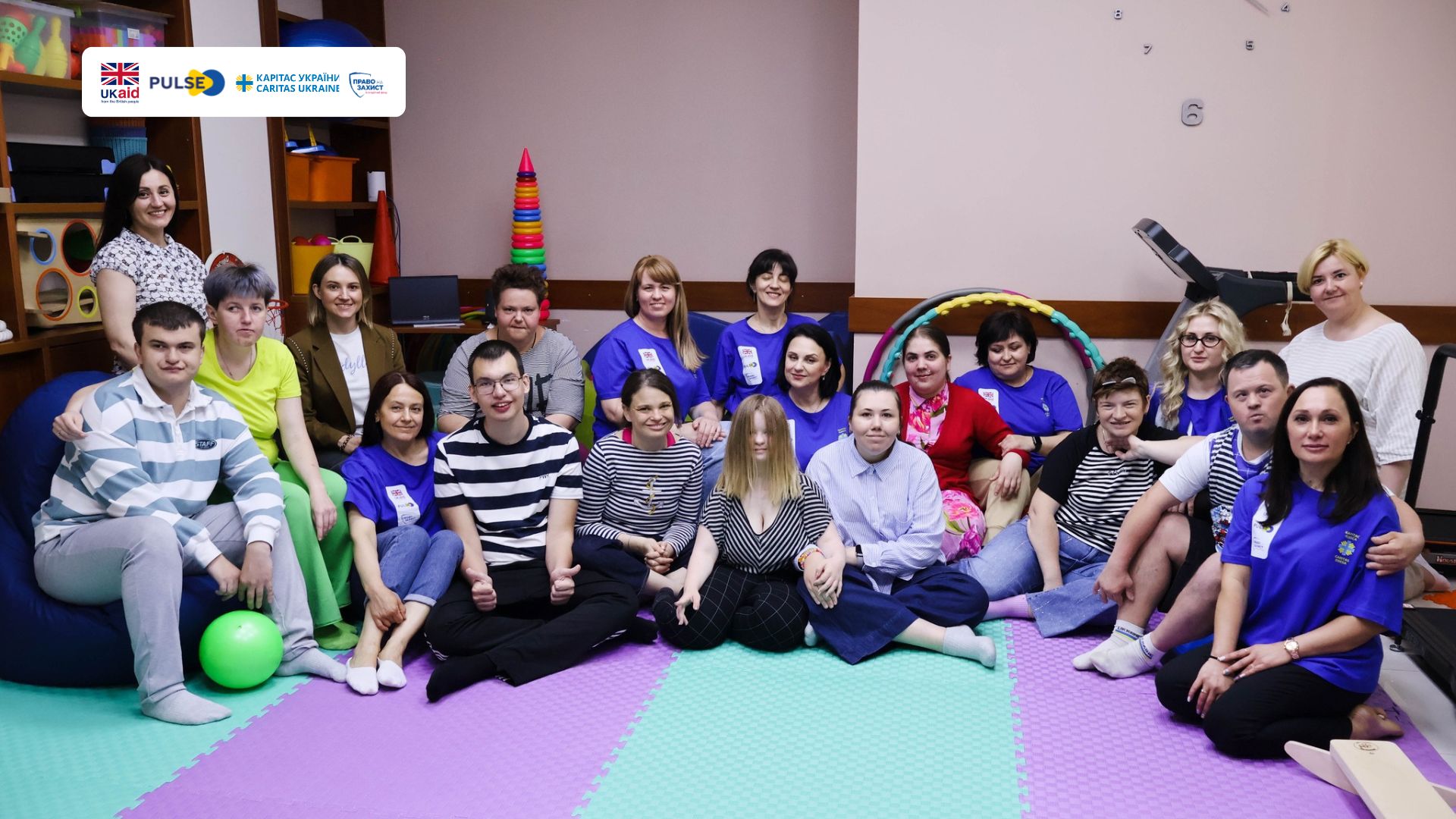
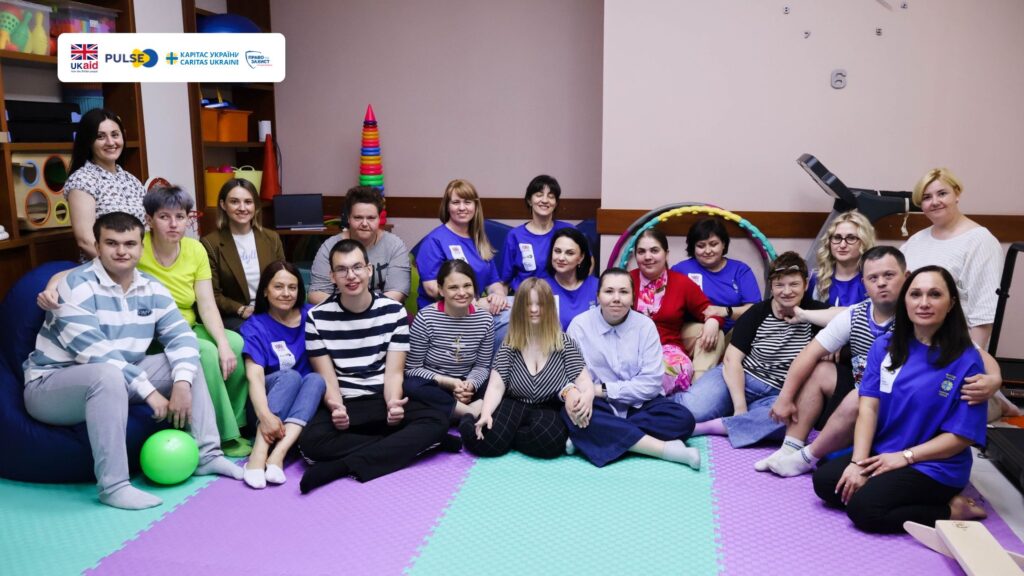
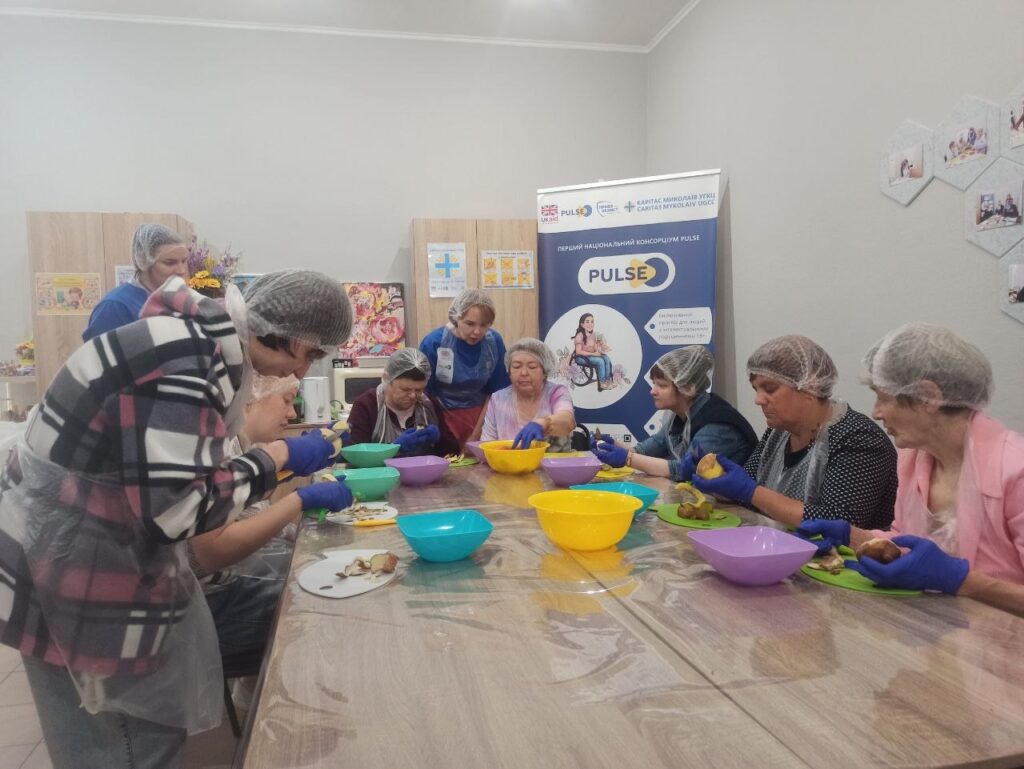
These words describe as best the significance of the inclusive and child-friendly spaces currently operating in Kharkiv, Mykolaiv and Odesa as part of the project “Rescue and Support for the Civilian Population of Ukraine Affected by Hostilities”, which is being implemented under the First National PULSE Consortium.
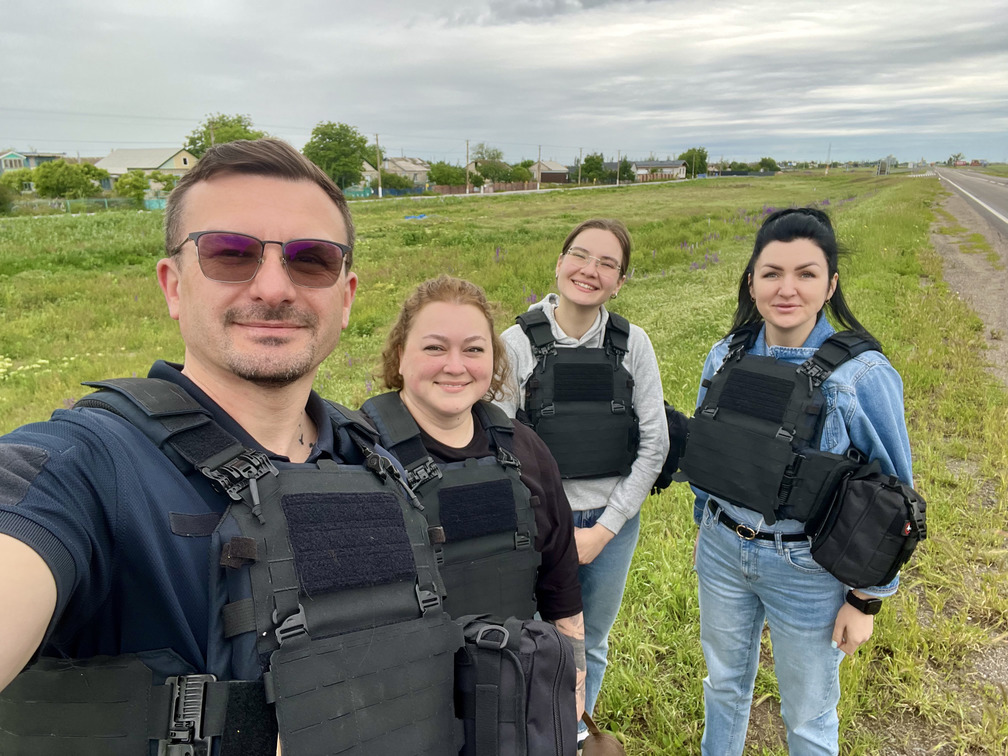
At the end of May, the Caritas Ukraine team visited these local organisations to speak with participants, their families and the specialists who, day in, day out, create a safe environment for children and young people with intellectual disabilities to develop, learn and socialise.
In each city, the centres have their own unique features. In Kharkiv, parents spoke about their children’s future and the need to expand services. For many families, the inclusive centre has become not just a place for activities, but part of their everyday life. It is here that young people make friends, learn to interact with others and gain new experiences.
While speaking with the parents of children attending a child-friendly space in Kharkiv, we heard many expressions of gratitude for the opportunity to take part in the project. Parents noted that, given the security restrictions and the particularities of how the educational process is organised in the city, such spaces remain one of the few opportunities for children to socialise. At present, underground schools and day nurseries operate on a hybrid timetable and can only accommodate a limited number of children: schoolchildren attend lessons for around two hours a day, while toddlers attend for just a few hours a week. In such circumstances, a child-friendly space becomes not only a place for development and leisure, but also a vital environment for socialising, forming friendships and supporting children’s emotional wellbeing.
In Mykolaiv, we saw how a new inclusive space is taking shape and how a community is coming together around it. For the local organisation, this is a new area of activity, but it is already clear just how important it is, not only for the participants and their families, but also for the community as a whole.
We heard a particularly large number of success stories in Odesa.
One of them is about a little boy who started attending a child-friendly centre. When he first came to a session, he hardly spoke and avoided interacting with those around him. Thanks to the dedicated work of the specialists, the support of his family and the safe environment, he now communicates actively, takes part in the sessions and knows all the specialists by name. Admittedly, he still gets them a bit mixed up sometimes, but the team takes it in their stride, as until very recently the boy didn’t address them by name at all.
For the team, this is not just the success story of one child. It is proof that systematic support and patienсe, day-to-day work can change the lives of people with disabilities for the better.
«Every story like this shows that a child’s development takes place when they feel accepted and protected. A child-friendly space is not just about activities, but about creating an environment in which child can realise their potential at their own pace,» says Halyna Yadzhak, an expert with Caritas Ukraine’s “Education, Formation and Protection of Children” Programme.
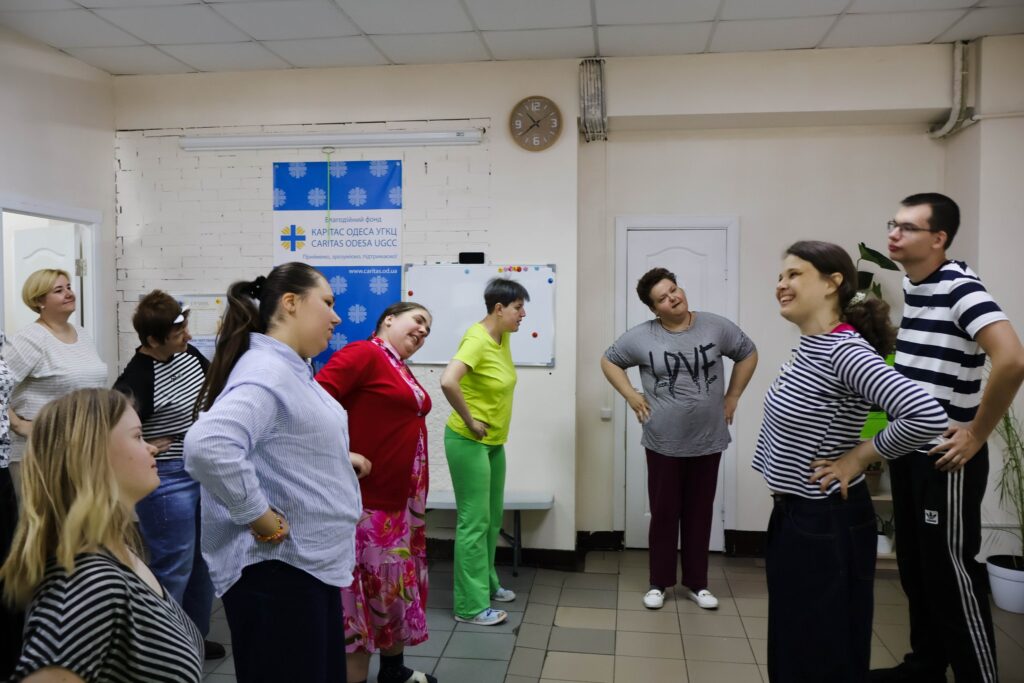
Another heart-warming moment was the meeting with young people who attend an inclusive space in Odesa. During the visit, the participants led a warm-up session for the guests, which they had learnt while taking part in the Theatre of Tolerance. The young people confidently demonstrated the exercises, helped others and happily took on the leader’s role.
At that moment, it was hard to tell who was learning more from whom — us from the young people, or the young people from us. Their openness, confidence and desire to be active participants in events proved once again just how important inclusive approaches are.
«It is very valuable for us to see how the participants in the space not only take part in the sessions, but also become the initiators of activities themselves. The young people have bonded so much, learnt to interact and support one another, that they are now organising and running their own events for their friends. This demonstrates their growing confidence and independence. It is extremely important to give young people the opportunity to socialise, feel needed, showcase their strengths and realise their own potential. “Every new achievement, every new skill or ability is a major personal victory that boosts their self-esteem and helps them to be more independent in their daily lives,» says Olena Bushchak, an expert with the Caritas Ukraine “Inclusion” Programme.
During all three visits, we saw not only the results of the work but also the challenges facing such initiatives. Young people with intellectual disabilities need time to adapt, build trusting relationships and develop a sense of belonging to the community. That is why the continuity of such services is particularly important.
An inclusive space does not come about overnight. It takes months for trust to build, for the first friendships to form, for the first successes to be achieved, and for the first confident steps towards independence to be taken. That is precisely why it is so important that, once the projects have ended, the young people and their families do not lose the place that has become such an important part of their lives.
«We have seen tremendous motivation among local teams and a genuine desire to develop inclusive services. At the same time, it is very important to seek ways to ensure their sustainability. Young people and their families need not just temporary solutions, but long-term support and access to services that help them play an active role in the community,» summarised project manager Oksana Kuzmenko.
After all, behind every space like this there is more than just project figures or reports. Behind them are people, their stories, friendships, support and a sense of belonging to a community.
Sometimes, the full value of this work can be summed up in one simple phrase:
«Because our friends are here, they understand us, and it feels like home».
This project funded with UK aid from the UK Government and is implemented by Caritas Ukraine within the National PULSE Consortium, coordinated by Right to Protection.
UK Government support to this project in Ukraine is provided through the SHARP element of its Humanitarian Assistance, Recovery and Protection Programme.
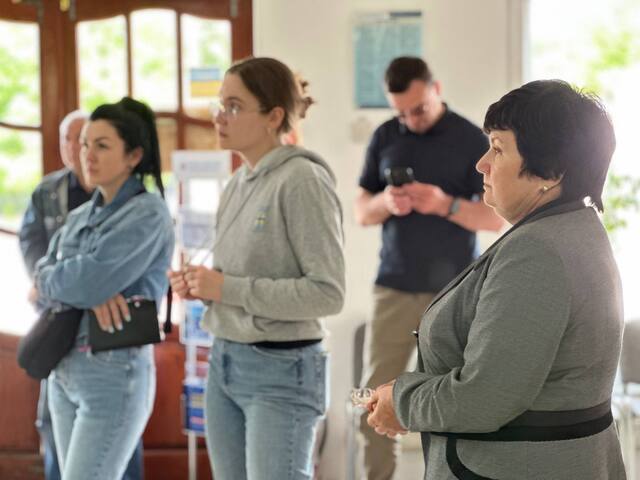
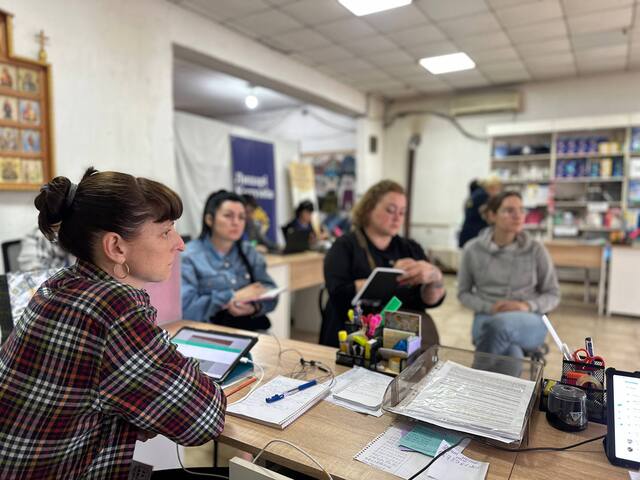
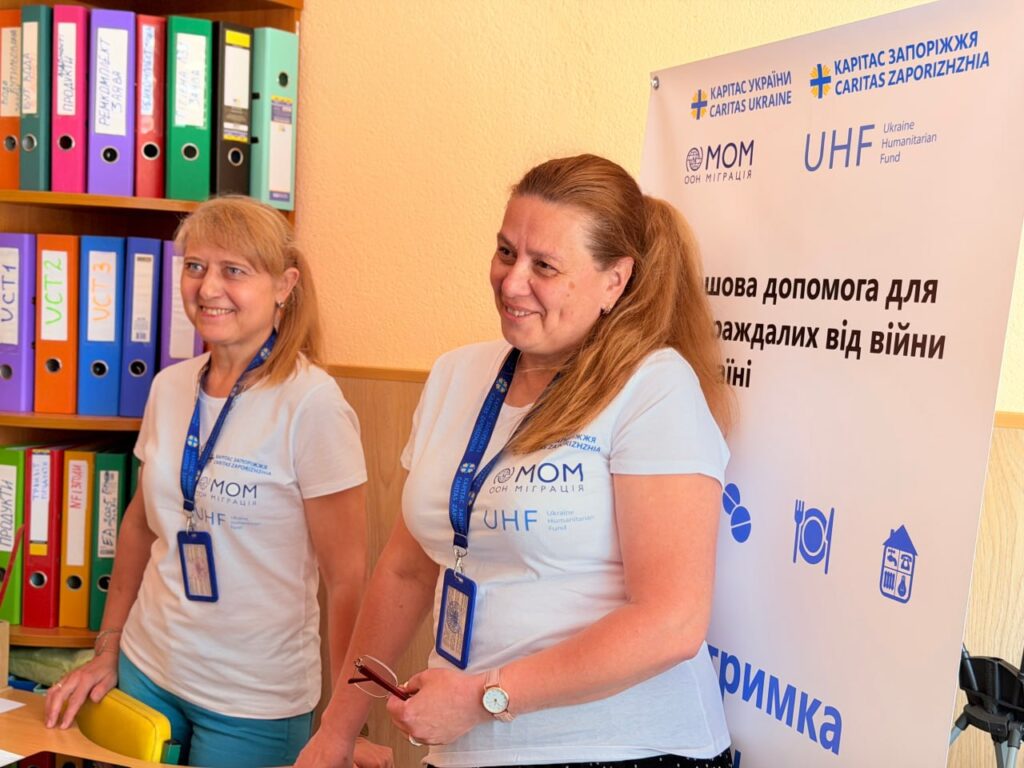
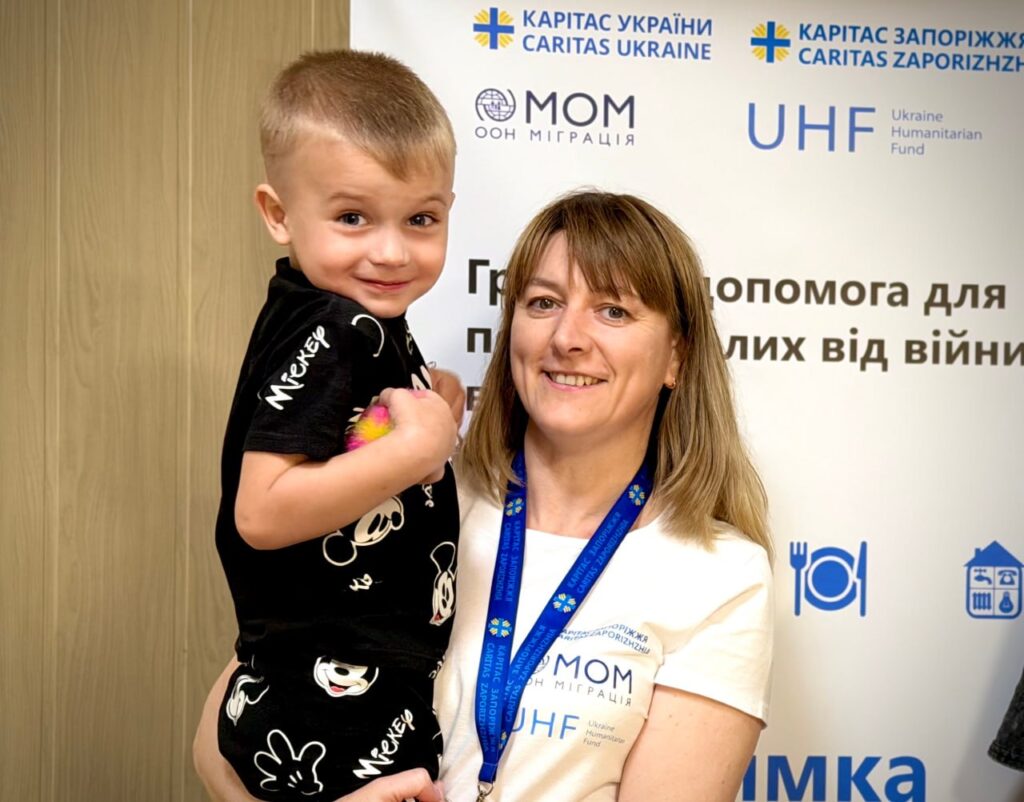
The purpose was to launch a new joint cash assistance project with IOM, supported by the Ukraine Humanitarian Fund, for people most affected by the war.
However, we returned home not focused on project indicators or implementation plans, but on the people behind them.
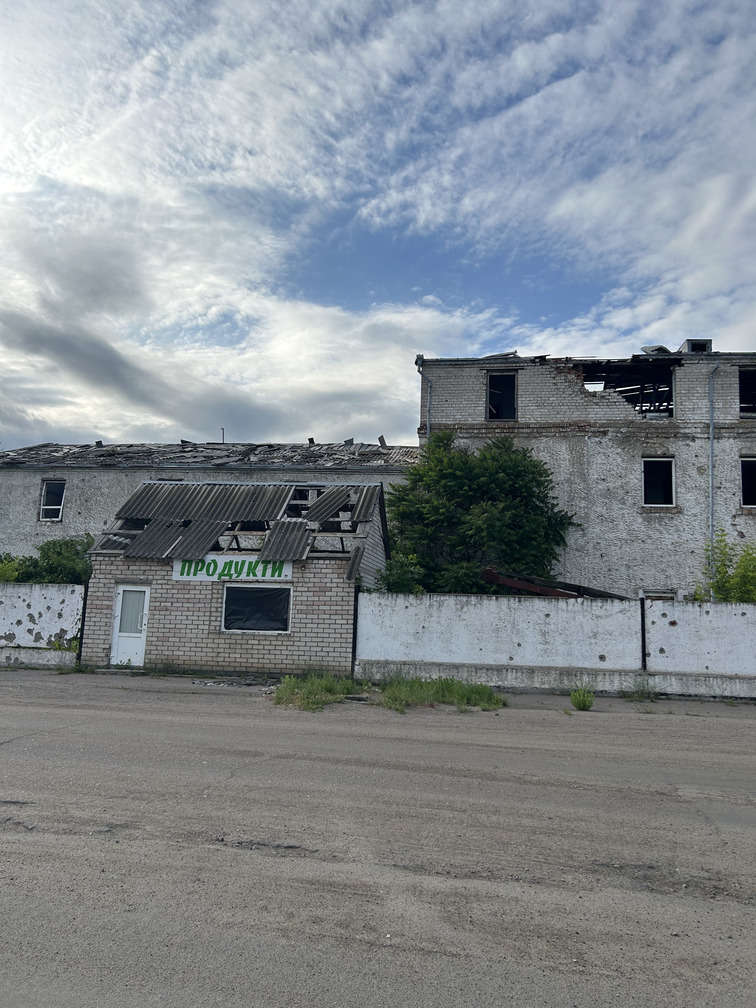
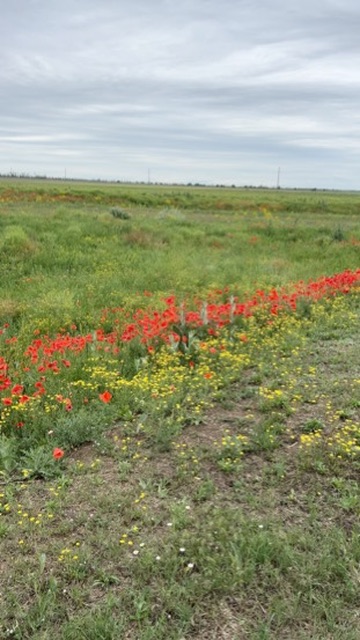
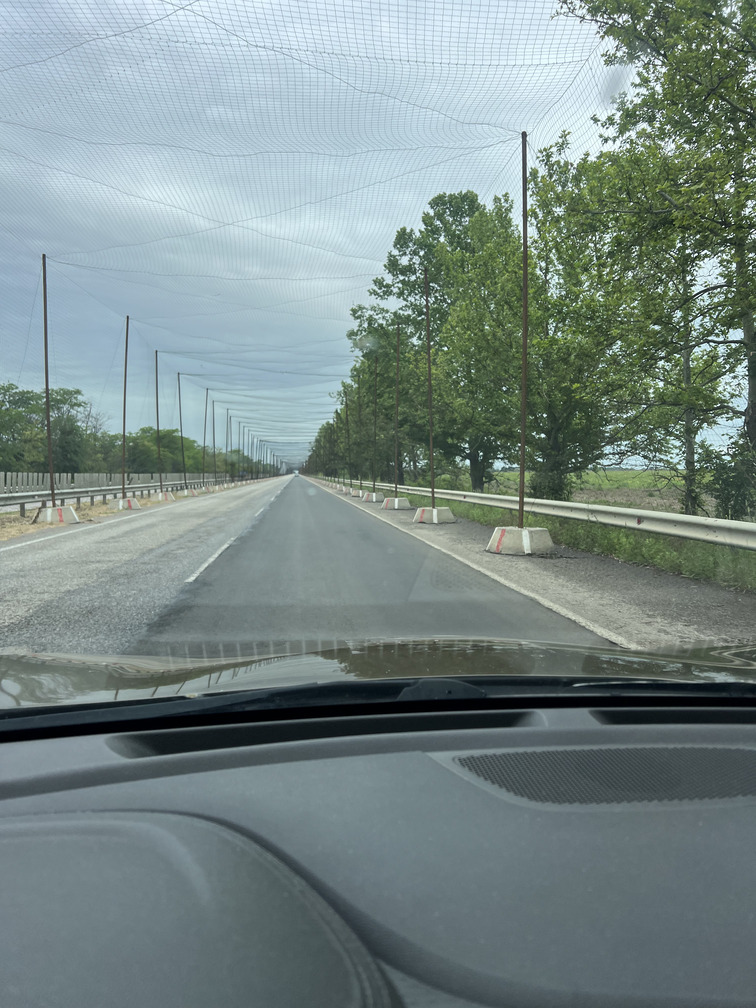
Southern Ukraine today is a land of contrasts. Boundless steppes and red poppies stand alongside houses with shattered walls and destroyed roofs. The bright summer sky is crossed by drones. On the roads, anti-drone nets have become as familiar as road signs.
We saw schools, hospitals and residential buildings left without windows, roofs or even entire walls. We saw settlements where traces of hostilities are visible at every step. At the same time, we met people who continue to plant flowers near their homes, tend their gardens, welcome guests and plan for the future.
One of the most emotional visits was to Velyka Oleksandrivka in Kherson region. We listened to stories of people who lived through the occupation. Eight months without regular access to food, medicine or communication with the outside world. Eight months of fear and uncertainty.
One woman spoke about that time very calmly, almost without emotion. Then she shared: “I dreamed about a meat sandwich.” This brief phrase is a reminder of how quickly war can change a person’s life. How simple dreams become when survival depends on the most basic needs.
We heard stories about the loss of loved ones. About evacuation under shelling. About people who risked their lives to reach a shop or a pharmacy. About those who did not survive to receive assistance or have a chance to leave.
At the same time, we witnessed extraordinary strength.
The strength of local Caritas staff who work in communities every day under constant threat of shelling. The strength of volunteers who know almost every family in their settlement. The strength of residents who, despite everything they have been through, have not lost the ability to help their neighbours, support one another and find motivation to move forward.
During such trips, you come to realize that humanitarian assistance is much more than figures in reports or project budgets.
Behind every cash transfer there is a real person.
An elderly woman who can buy essential medicines. Parents who can purchase food for their children. A family that has just evacuated and is starting life from scratch. A person whose home was damaged by shelling and who is trying to restore at least part of a normal life.
It is for such people that the Unified Cash Transfers programme, which we are launching together with IOM, was created. It is aimed at supporting residents of frontline communities, newly displaced families and households directly affected by shelling. This assistance cannot eliminate the consequences of war. It will not return lost homes or heal all wounds. But it gives people the opportunity to decide for themselves what they need most and provides the resources to get through a difficult period with dignity.
Perhaps the most symbolic moment of our trip happened on the way to Velyka Oleksandrivka. We were driving under anti-drone nets that have become part of the local landscape. The sky was overcast after the rain. Suddenly, a rainbow appeared above the road. It stretched over land that has endured occupation, shelling, loss and pain. That moment, it felt like a very precise metaphor for everything we had seen over those few days.
The war has left deep scars in southern Ukraine. It has changed the lives of thousands of people. It reminds of itself every day through the sounds of explosions, destroyed buildings and stories of loss.
But it has not taken the most important things.
Humanity. Mutual support. Faith. Hope.
That is why, after this trip, we returned with a strong conviction: despite all the challenges, southern Ukraine stands not only because of humanitarian assistance, international support or the work of local organizations.
Tetiana Stawnychy, president of Caritas Ukraine, delivered a testimony on Works of Mercy in the Face of War at the 6th World Apostolic Congress on Mercy, which concluded Thursday in Vilnius, Lithuania, after six days of prayer, testimony, and reflection.
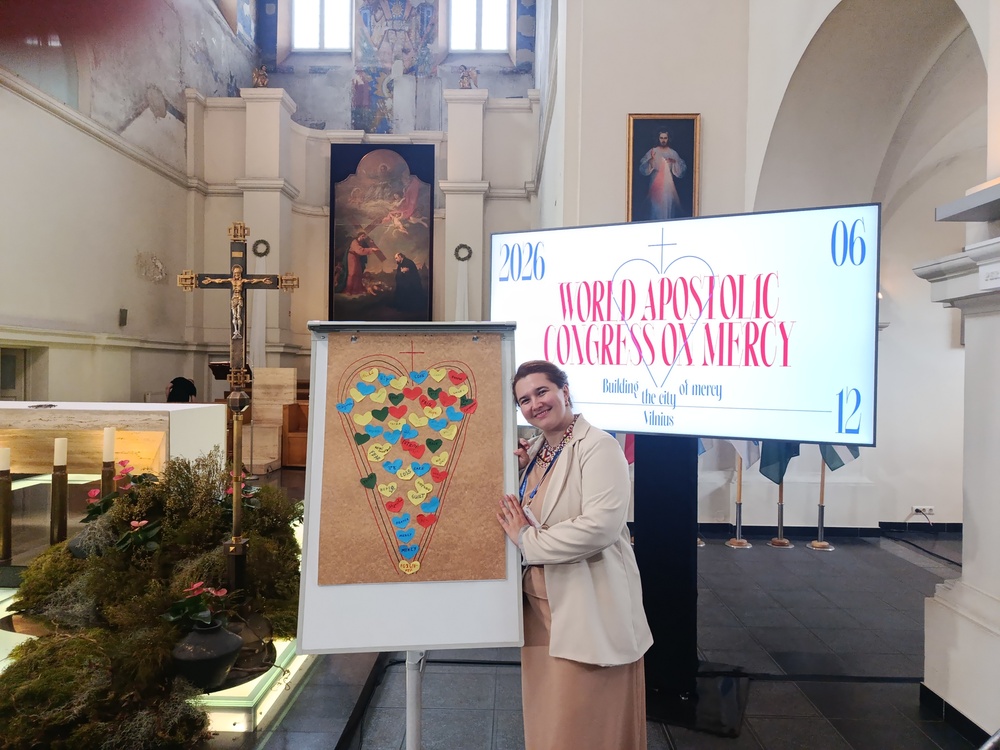
The congress, organized by the Vatican’s Dicastery for Evangelization and held in Lithuania for the first time, brought together more than 5,000 participants from 52 countries under the theme “Building the City of Mercy.” Vilnius was chosen in part due to its historical significance as the birthplace of the Divine Mercy devotion, the original image, painted in 1934, remains preserved in the city’s Shrine of Divine Mercy in the Old Town. Among the speakers were Ecumenical Patriarch Bartholomew and a recorded message from Pope Leo XIV. Previous editions of the congress have taken place in Rome, Kraków, Bogotá, Manila, and Apia, Samoa.
Speaking to an international audience, Tetiana Stawnychy offered a portrait of four years of full-scale war that moved between the concrete and the spiritual — from the logistics of emergency aid to what she called the fundamental question of what it means to stay human.
“War is chaos and destruction,” she said, “but it’s not only a political crisis or a military crisis. At its very core, war rips at relationships. It rips at the core of what it means for us to be human.”
In Ukraine, she explained, Caritas’s response has moved through many layers: basic humanitarian aid: food, water, clothing, shelter, accompanying displaced people and helping them integrate into new communities; repairing homes damaged by strikes; and accompanying survivors of captivity through the long process of recovery from trauma and torture.
At the center of all of it, she said, is what Caritas calls the spirituality of encounter — or, as she prefers, the mystery of encounter.
The encounter, she noted, transforms not only those receiving help but those offering it. One striking statistic illustrated the point: in 2022, forty percent of Caritas Ukraine’s volunteers were people who had themselves been displaced, who had come to receive aid and then returned to help the next wave of arrivals.
Facing the question she is often asked — how do you continue after four years? — Caritas president was candid: “I can’t say that we’re not tired and that we’re not carrying pain. But we find hope by action.“
In the face of that fatigue, she said, Caritas Ukraine has oriented itself around three guiding principles: finding the best way forward through constant innovation; not losing the human person at the core of every intervention; and continuing to build cooperation, on the premise that “there’s no single person, no single organization, no single country that can withstand it on their own.”
War, she concluded, is not only a political or military crisis. “It is a spiritual one. There’s a spiritual battle at play. And that’s another reason why it’s so important that we hold this anchor — this anchor of humanity, this anchor of how God created us to be in communion, to be in relationship.”
Beyond the plenary sessions, the Ukrainian delegation organized a workshop titled “Mercy in Action,” drawing 25 participants from around the world.
Hanna Homeniuk, director of the Department for Social Cohesion Programs, said the workshop was exploring how to remain human during war, and how helping others is itself what sustains us. “We talked about the fact that we need to know not only how to give support, but how to receive it,” she said.
The workshop centered on shared reflection: participants spoke about moments when they had felt supported by others, moments when they had offered support themselves, and what it means to be together in difficult times.
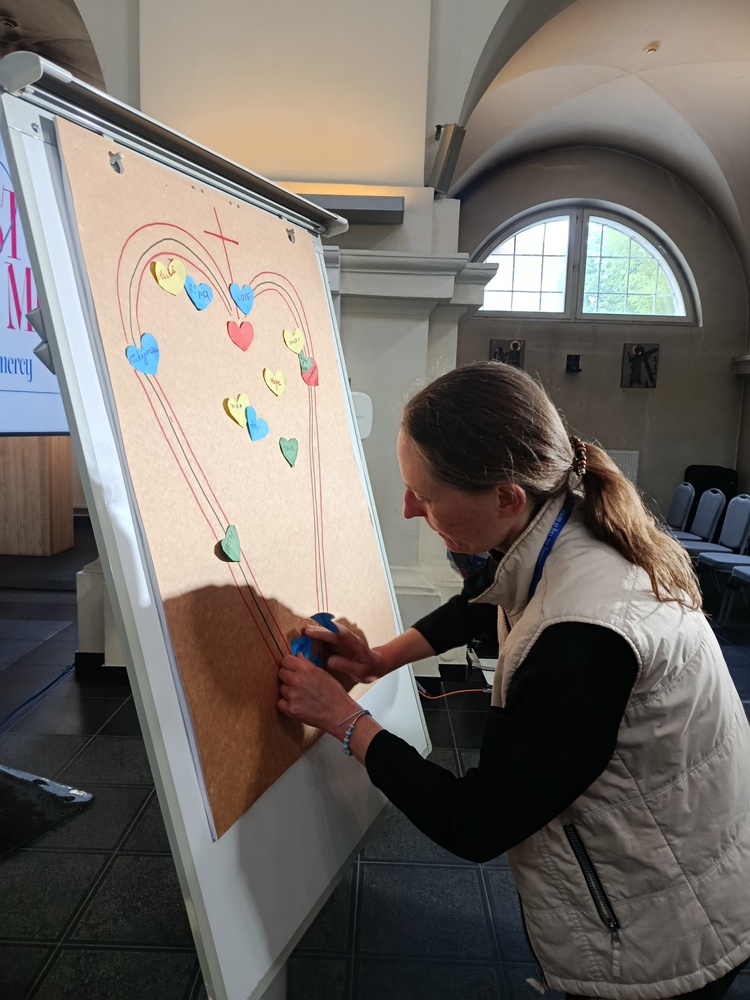
“Many people said they realized they don’t actually know how to receive support,” Homeniuk noted. “And that matters, because self-care is what sustains us right now — especially Ukrainians. Taking care of yourself, taking care of those close to you, and living life even during war.” The workshop closed with a shared prayer: participants formed a heart and asked God for help for those they hold dear. “This is a wounded heart,” said Homeniuk, “that can be healed.“
The Caritas Ukraine delegation also presented the WASHinWAR photo exhibition and hosted a public discussion on the long-term humanitarian and environmental consequences of the war. Olha Sydii, coordinator of the international advocacy campaign #WASHinWAR, and Uliana Krys, Partnership Manager at Caritas Ukraine, spoke about the destruction of water infrastructure, the challenges of rebuilding affected communities, and the importance of keeping international attention focused on Ukraine’s water security and early recovery.
“The WASHinWAR campaign helps us speak to the world in the language of concrete consequences for people,” said Olha Sydii. “When a person loses access to water, a safe environment, or basic services — that is about the future of an entire community. That is why we work to ensure that questions of the aggressor’s accountability, Ukraine’s early recovery, and humanitarian support remain on the international agenda.”
Uliana Krys highlighted the unique challenges of humanitarian work during wartime. “For most humanitarian crises, there is a clear sequence: an emergency, response, stabilization, and recovery. In wartime, that logic is disrupted. We can help people recover from an attack, restore services, or support a community, but we never know where the next attack will occur or who will need assistance tomorrow. That is why we must constantly be prepared to begin recovery again and again.“
Throughout the week, the #WASHinWAR exhibition in central Vilnius has been drawing thousands of residents and visitors daily. Photographs by Ukrainian photographers tell the stories of people and communities living through war, illustrating the humanitarian, environmental, and social consequences of Russia’s aggression against Ukraine.
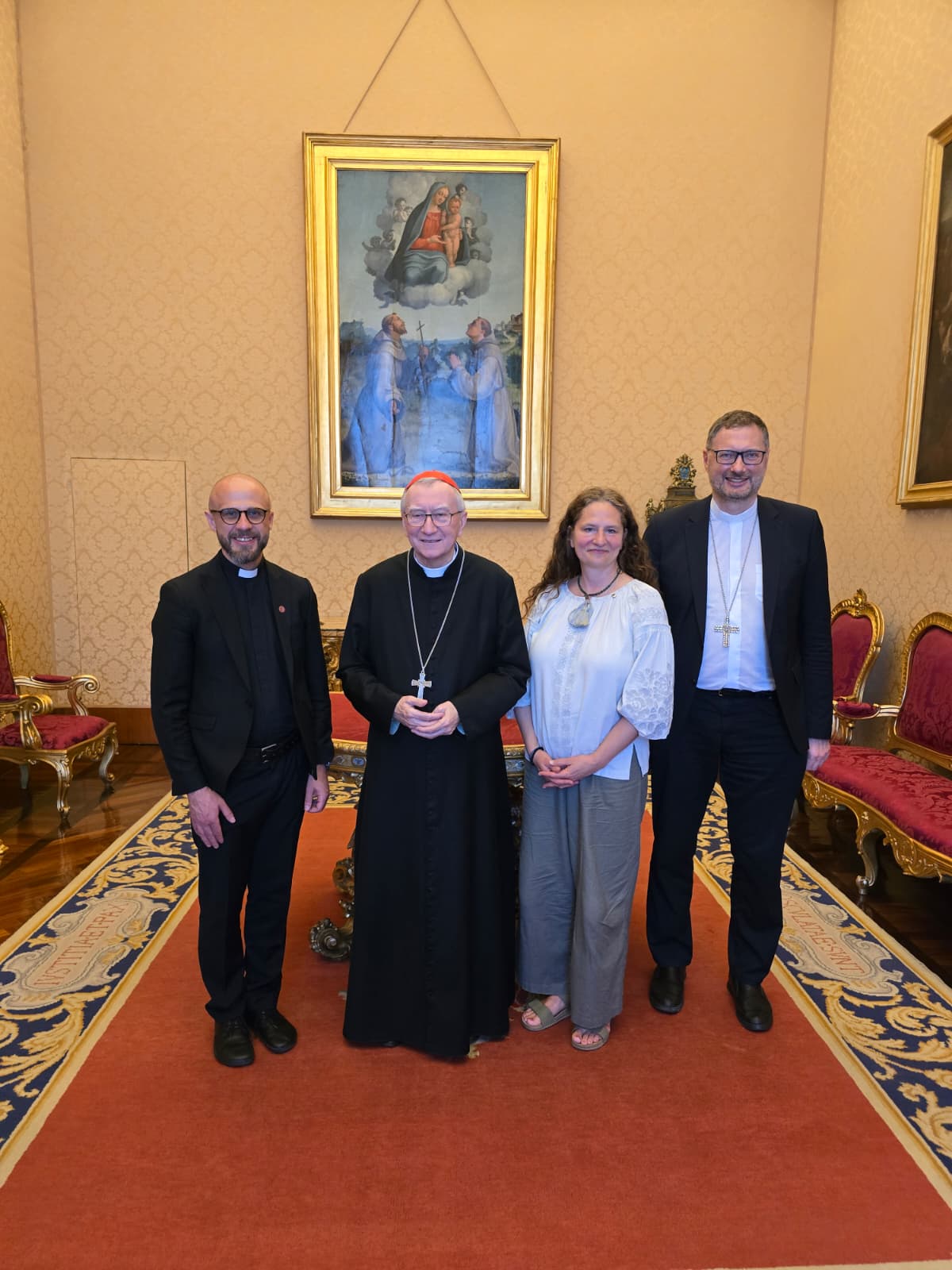
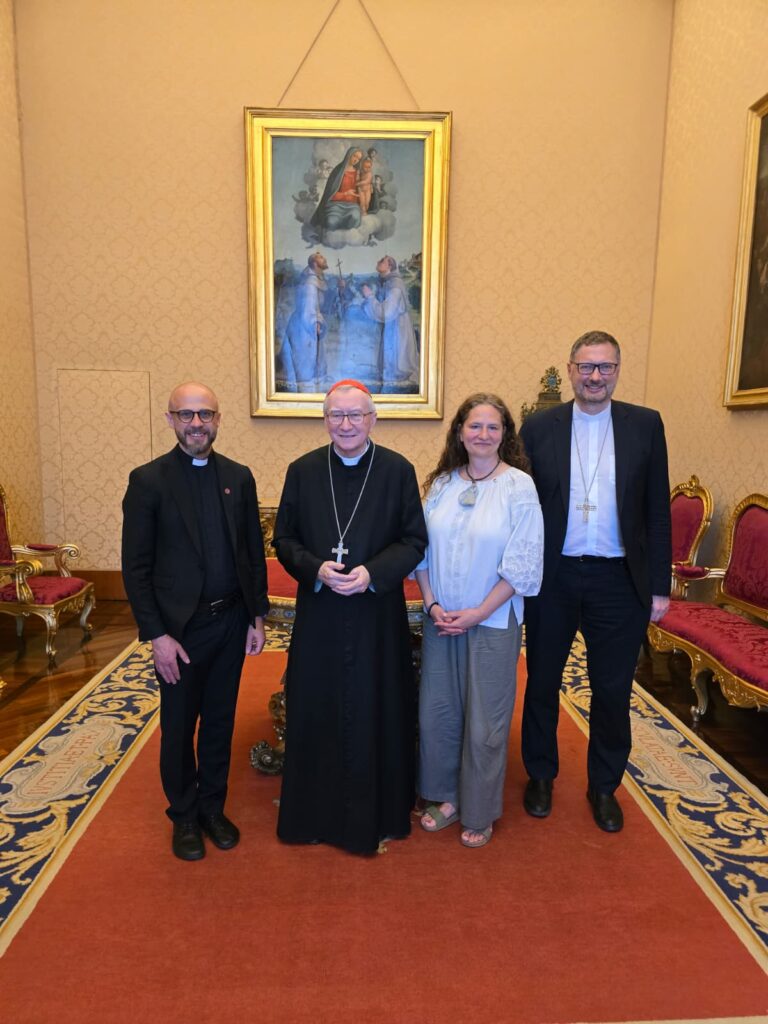
At the end of May, the President of Caritas Ukraine, Tetiana Stawnychy, and the Executive Director of Caritas-Spes, Fr. Viacheslav Hrynevych, met in the Vatican with the Secretary of State of the Holy See, Cardinal Pietro Parolin. The meeting took place with the support of the Apostolic Nuncio to Ukraine, Archbishop Visvaldas Kulbokas.
During the meeting, representatives of the two largest Catholic charitable organisations in Ukraine shared updated information on the humanitarian situation, the challenges Ukrainians face every day amid the full-scale war, and the service carried out by Caritas Ukraine and Caritas-Spes in response to people’s needs.
“We shared information about the real situation in Ukraine, with particular attention to people’s needs and how Caritas is responding to them. It was a very open and personal exchange,” said Tetiana Stawnychy.
She also expressed gratitude to Archbishop Visvaldas Kulbokas for his continued support and assistance to the work of both Caritas organisations in Ukraine.
“From the first days of his service in Ukraine, the Nuncio has always been open to cooperation and has always been present. He works to support the mission of the Church and both Caritas organisations. This is a very important sign of support for us,” the President of Caritas Ukraine emphasised.
Special attention during the meeting was given to issues currently in focus for the Holy See, including the return of Ukrainian children and other humanitarian initiatives.
According to Tetiana Stawnychy, an important aspect of the meeting was the joint witness of the two organisations:
“It was important that Caritas Ukraine and Caritas-Spes spoke with one voice about the situation in Ukraine and the needs of people affected by the war. This shared presentation of our service is highly meaningful.”
Fr. Viacheslav Hrynevych stressed that the meeting itself was a sign of the Holy See’s attention to the Ukrainian people.
“This is a significant sign of attention to Ukraine and of the willingness to listen, understand and be involved. We felt that Ukraine has not been forgotten and that there is solidarity with us. Together, we looked for answers and discussed opportunities that may be implemented in the humanitarian field in the future,” he said.
At the end of the meeting, representatives of Caritas Ukraine and Caritas-Spes presented Cardinal Parolin with a graphic artwork by Ukrainian designer Dmytro Kurshynskyi. The symbolic piece draws attention to groups that are especially vulnerable during the war — children and older people.
The meeting became another sign of the Holy See’s continued attention to the humanitarian situation in Ukraine and its support for the service the Church provides to those affected by the war.
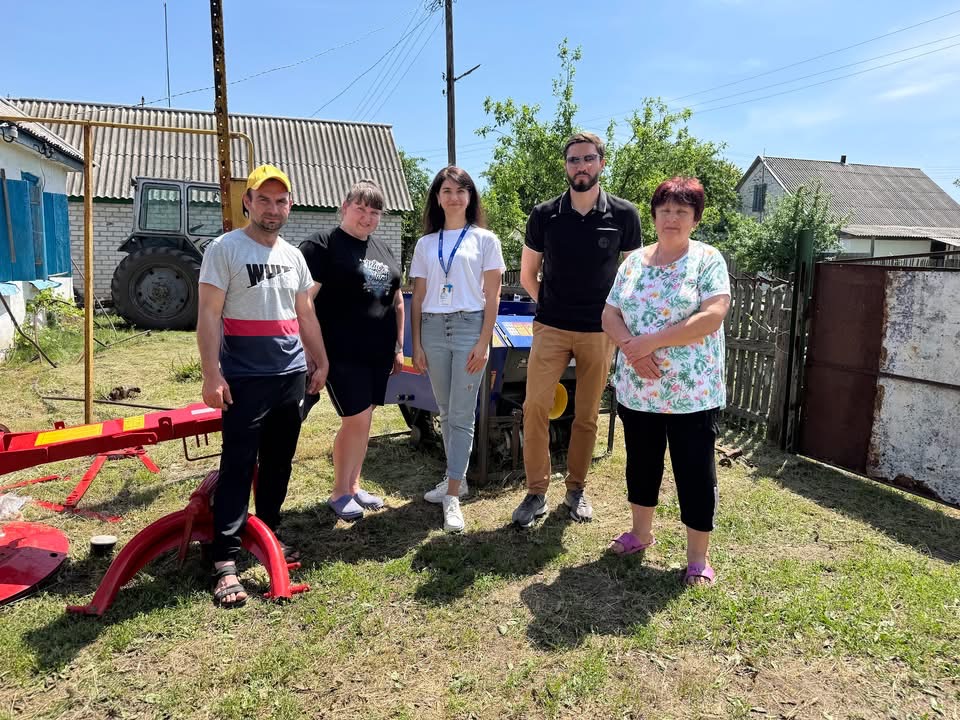
A few years ago, Iryna and Anna from Poltava Oblast received their first micro grant through the AGRIS project. At the time, it provided the initial boost for a small-scale enterprise. The women were producing and selling surplus agricultural products from their households, quickly identified steady demand, and gradually expanded their operations.
This year, they returned as participants in AGRIS 3. Iryna invested the business grant funding in a meat processing facility, while Anna purchased agricultural equipment for fodder production. In the small village where they live, every local enterprise represents an opportunity not only to support a family’s livelihood but also to provide fellow community members with quality local products available close to home.
Veteran-Owned Businesses Gain New Opportunities for Growth
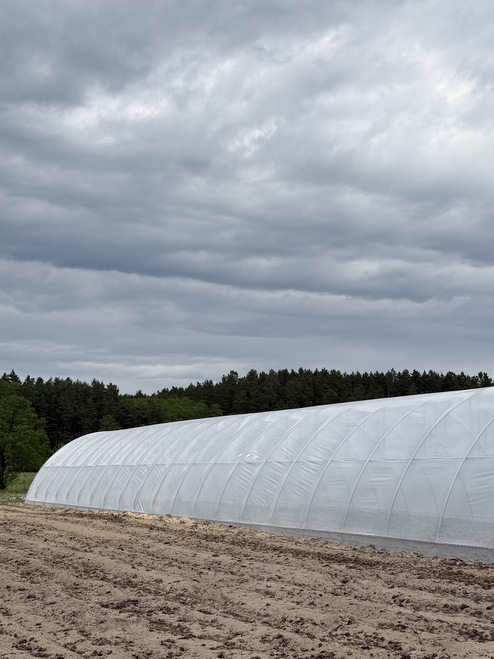
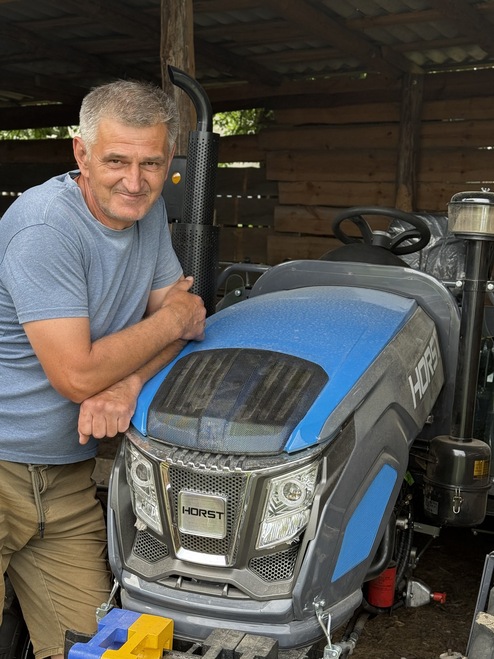
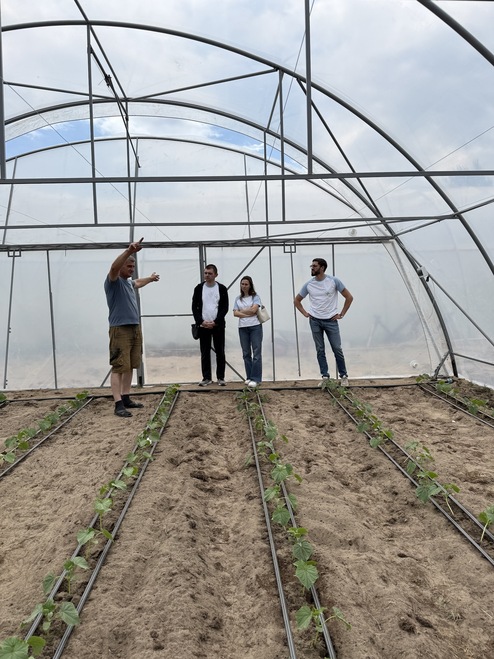
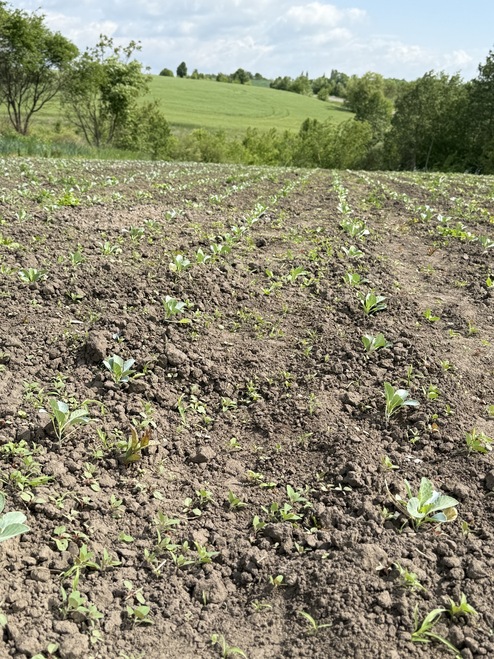
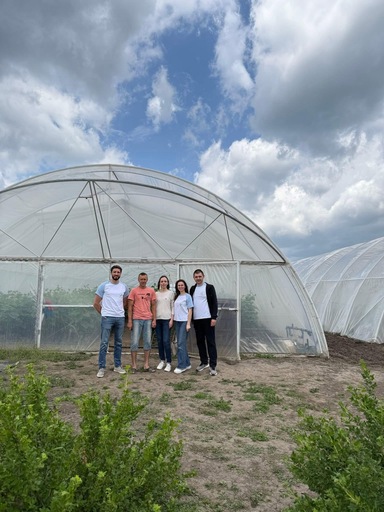
In Khmelnytskyi Oblast, veteran Vitalii Yurchuk is developing a greenhouse enterprise focused on vegetable and seedling production. He used his business grant to purchase a tractor.
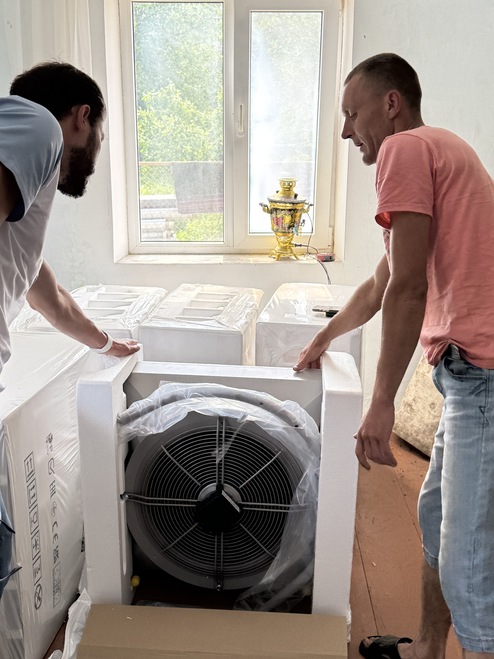
Veteran and former prisoner of war Volodymyr Repiuk invested the grant in a greenhouse heating system and continues to expand the production of cucumbers and seedlings.
Behind each of these stories stands our comprehensive support, enabling people to rebuild their livelihoods, remain and work in rural communities, provide for their families, and contribute to the sustainable economic development of their communities.
50 Agricultural Entrepreneurs Receive Business Grants Through AGRIS 3
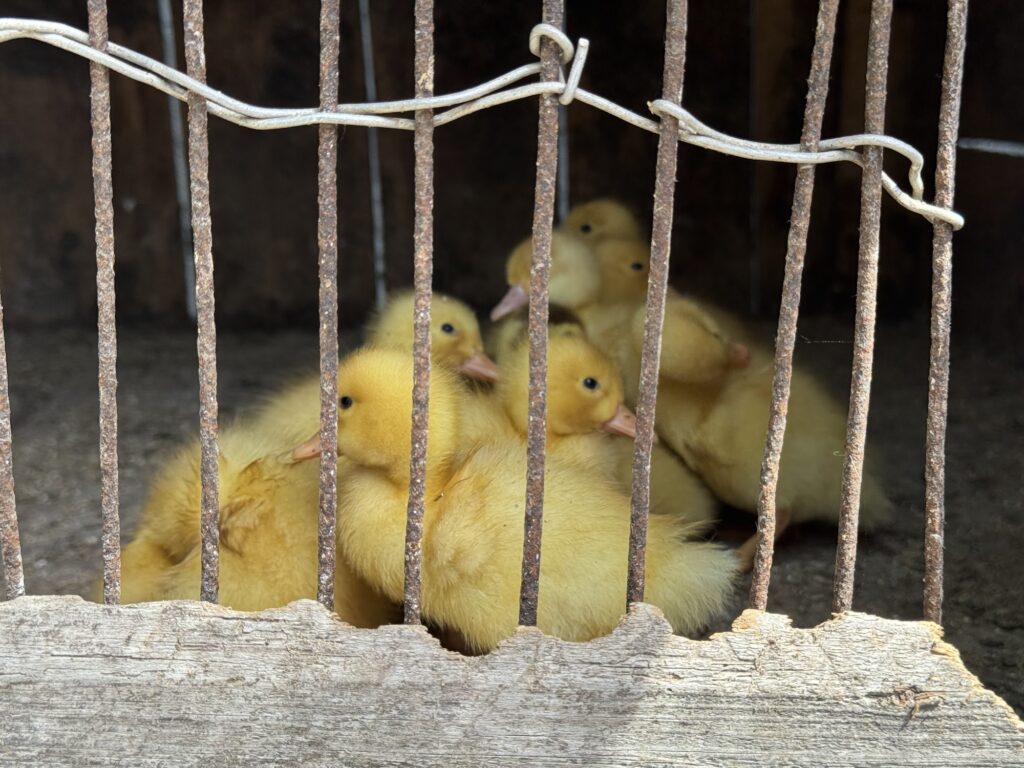
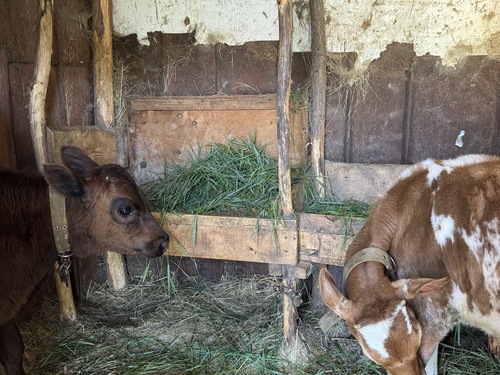
Through the AGRIS 3 project, we provided business grants this year to 24 participants in Poltava Oblast and 26 participants in Khmelnytskyi Oblast. In Poltava Oblast, grants were primarily invested in crop production, livestock farming, and dairy and meat processing. In Khmelnytskyi Oblast, support focused mainly on greenhouse farming and related equipment.
Monitoring Visits and Ongoing Participant Support
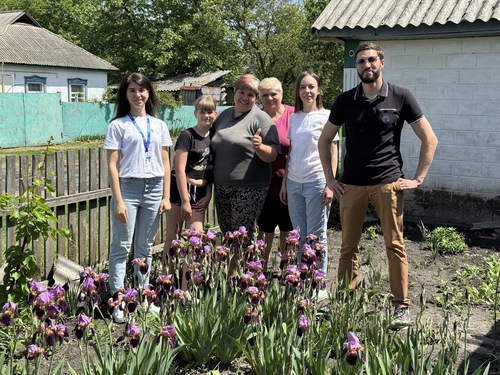
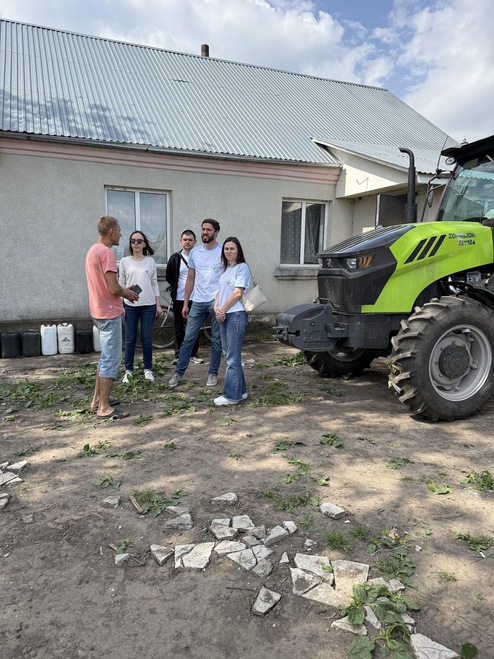
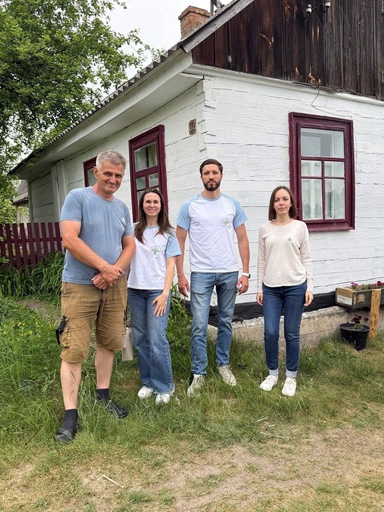
Representatives of Caritas Ukraine – National Project Manager Yaroslav Kyrylenko and Project Management Officer Viktoriia Kharchenko – together with colleagues from local organisations, conducted monitoring visits to project participants. We maintain regular communication with them and provide support throughout every stage of their business development. During these visits, we confirmed that partner funding is being used appropriately, responsibly, and effectively.
The meetings focused not only on achievements but also on future plans. Many agricultural entrepreneurs noted the value of receiving an external perspective from someone able to assess their business with fresh eyes and help identify new opportunities for growth. Therefore, the next phase of the project will include mentoring sessions tailored to participants’ specific needs and requests.
“It is truly encouraging to see participants return to new phases of AGRIS. For some, the project marked the beginning of their entrepreneurial journey, and today they are already expanding their businesses. Others are sharing their experience with fellow participants. Over the years, AGRIS has fostered a strong community of mutual support, where people help one another grow and discover new opportunities,” Yaroslav concluded.
About AGRIS 3
AGRIS 3 contributes to the recovery of small-scale farming households and livelihoods, strengthens food security, and reduces dependence on humanitarian assistance in rural communities. In Khmelnytskyi Oblast, particular attention is given to women-headed households.
The #AGRIS3 project in Poltava Oblast is implemented by Caritas Poltava in partnership with Caritas Ukraine, with financial support from Caritas Österreich and NACHBAR IN NOT.