


From Humanitarian Catastrophe to Evacuation: How Caritas Ukraine Supported the Residents of Oleshky
Caritas Ukraine contributed to preparations for the evacuation of people from Russian-occupied Oleshky in Kherson Oblast and helped meet their most urgent needs.
Caritas Ukraine, together with its local member organisations, contributed to evacuation preparations, welcomed evacuees, and provided assistance to meet their most urgent needs.
A Humanitarian Catastrophe Years in the Making
Oleshky has been under Russian occupation since the first days of the full-scale invasion. Located near the front line, the city has gradually lost access to essential services.
Following the destruction of the Kakhovka Hydroelectric Power Plant on 6 June 2023, Oleshky experienced catastrophic flooding. Many residents lost their homes, belongings, and identity documents, while much of the city was left without reliable electricity, water, or heating.
In late December 2025, the situation deteriorated dramatically as the city came under an effective blockade. Mined roads, drone attacks, and restrictions on movement made deliveries of food and medicine virtually impossible. According to available reports, the last vehicle carrying food supplies managed to reach Oleshky on 7 January 2026.
Residents were forced to survive on dwindling food reserves and whatever they could grow themselves. Some travelled up to 20 kilometres along dangerous routes to purchase food. For older people and those with limited mobility, such journeys were virtually impossible.
The lack of medical care, drinking water, electricity, and communications further deepened the humanitarian crisis. There were reports of civilian deaths caused by hunger, cold, injuries, and the inability to access essential medical treatment.
Humanitarian Mission and Evacuation
The critical humanitarian situation in Oleshky attracted the attention of the international community and the Holy See.
On 16 October 2026, Pope Leo XIV held a telephone conversation with Vladimir Putin, during which he called for a humanitarian ceasefire to allow the delivery of food and medicine and ensure the voluntary and safe evacuation of civilians from Oleshky.
On 19 October, Pope Leo XIV discussed the situation with Ukrainian President Volodymyr Zelenskyy, emphasising the need for cooperation between the parties to protect civilians and ensure humanitarian access.
On 23 October 2026, following mediation by US First Lady Melania Trump, agreements on conducting a humanitarian mission and establishing a temporary ceasefire in Oleshky were officially confirmed.
A ceasefire came into effect on 27 October, and preparations for evacuation routes and humanitarian supplies began on 29 October. On 30 October, a Ukrainian delegation arrived in the city, delivered urgently needed food and medicines, and began evacuating civilians.
On 31 October, evacuated residents were brought to Kyiv. The ceasefire ended on 1 November.
The operation, organised with the involvement of the Office of the Ukrainian Parliament Commissioner for Human Rights, was carried out under extremely tight time constraints. The evacuation route passed through the Belarusian border in Chernihiv Oblast.
For security reasons, the exact number of evacuees has not been disclosed. Some residents remain in Oleshky, where the humanitarian situation continues to be critical.
How Caritas Ukraine Contributed to the Humanitarian Response
Caritas Ukraine worked in close coordination with the Ombudsman’s Office. The humanitarian response involved the Caritas Ukraine National Office, Caritas Chernihiv, and Caritas Kyiv.
Evacuation preparations. Caritas Ukraine staff received and processed requests from Oleshky residents and their relatives regarding possible evacuation. The team worked almost around the clock, as only a few days were available to organise the humanitarian mission.
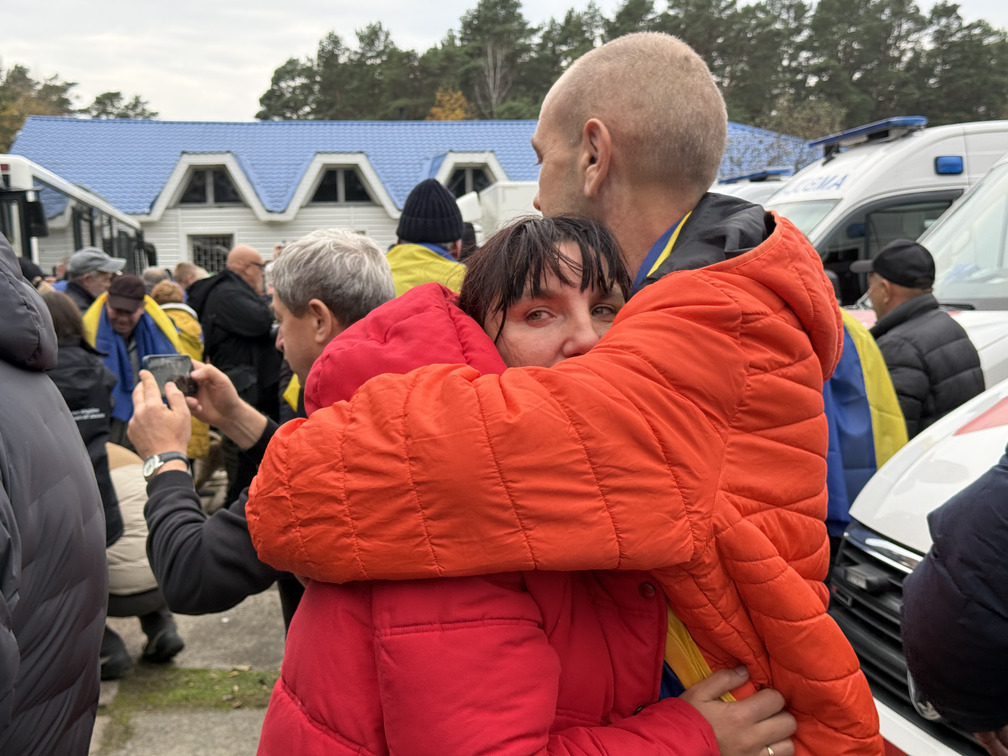
Family reunification. Caritas Kyiv organised transportation for relatives of evacuees from Kyiv to the border and their return journey. For many families, this was their first reunion after a prolonged separation.
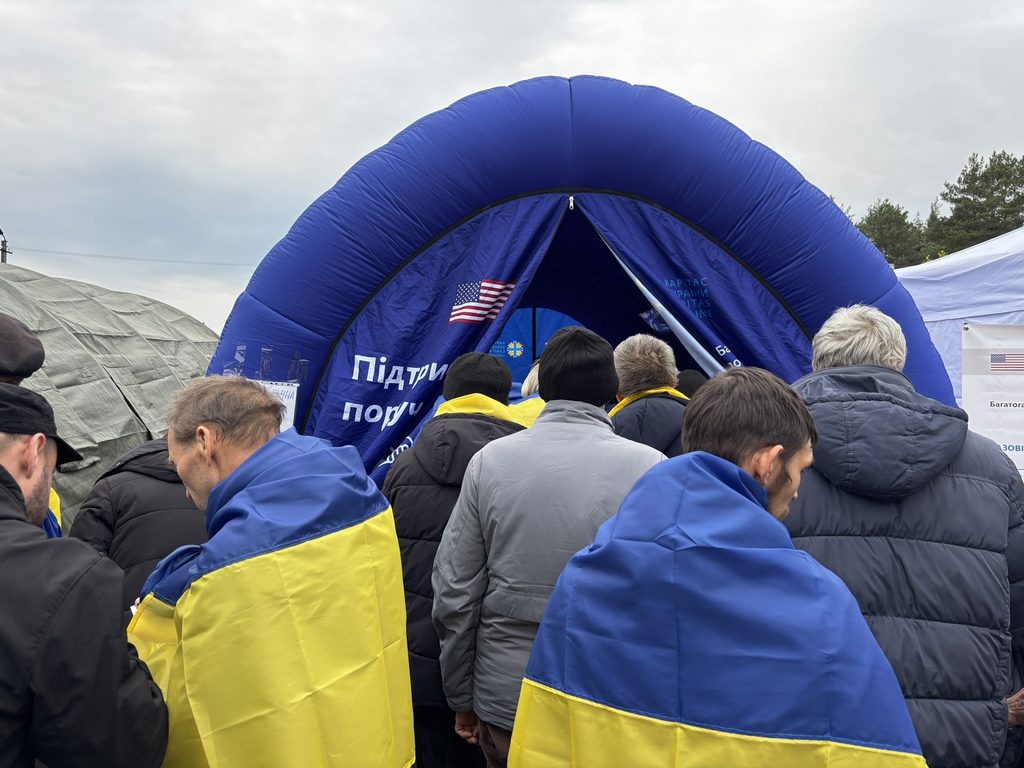
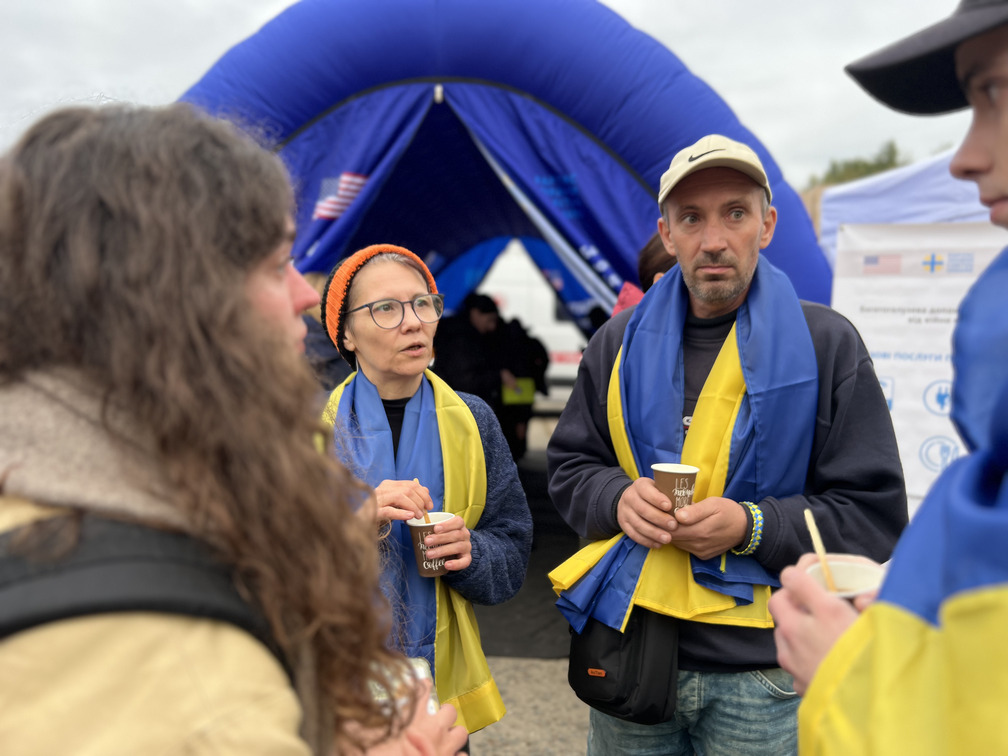
Assistance at the border. Caritas Chernihiv set up a heated tent where people could warm up, enjoy hot drinks, have a snack, and access the internet. Psychological support was available, a children’s area was arranged, and Ukrainian mobile operator SIM starter packs were distributed.
“This was an unusual deployment for our team, as our mobile heated tents are normally set up directly at the sites of shelling, where we assist people immediately after attacks. For us, this was a deeply moving and important moment. These people had endured a difficult evacuation journey, leaving their homes behind, and we wanted them to have an opportunity, after everything they had been through, to warm up, drink some hot tea, have something to eat, and feel cared for and supported,” said Stanislav Fedorchuk, Project Manager of the Multi-Sectoral Assistance to War-Affected People in Ukraine project.
Through its partnership with mobile network operator lifecell, Caritas Ukraine received 500 SIM starter packs to support people returning from occupation.
Post-evacuation support. Many evacuees arrived exhausted, severely underweight, ill, or injured. Some used wheelchairs or crutches. After crossing the border, the evacuees were transferred to medical facilities.
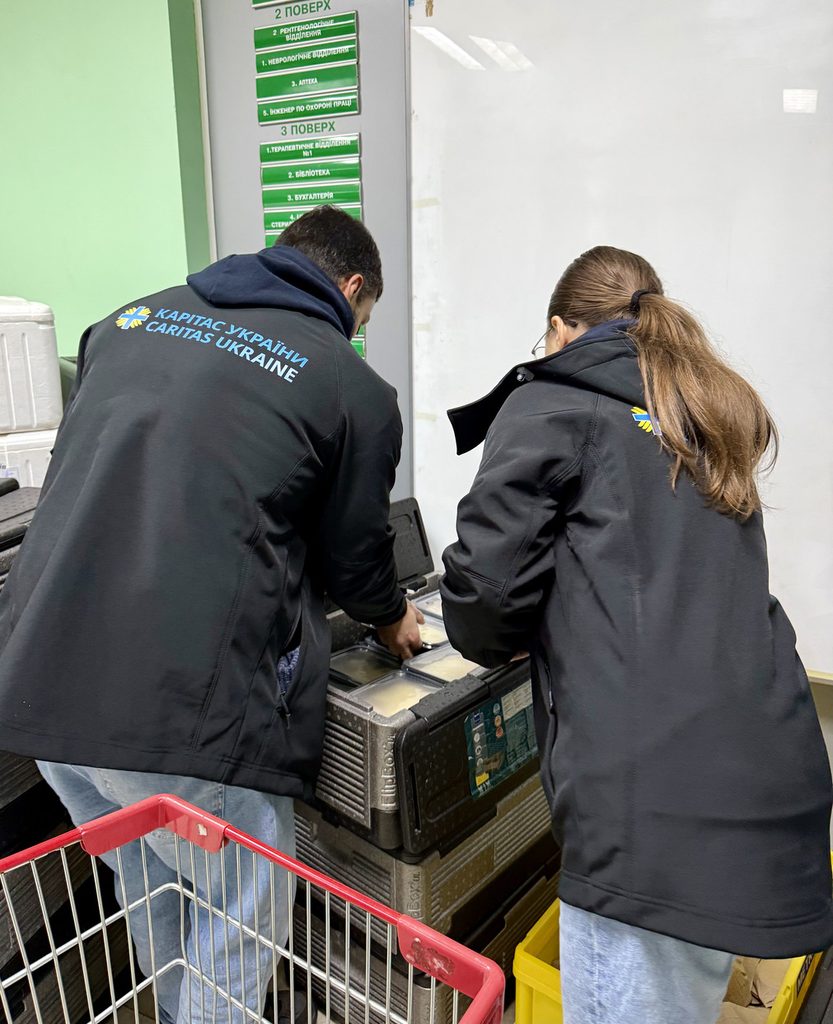
Caritas provided hygiene kits, pillows, bed linen, and hot meals. During their four-day hospital stay, evacuees received two hot meals a day, adapted to their health conditions in accordance with recommendations from Ukraine’s Ministry of Health.
As part of its assistance to evacuated residents of Oleshky, Caritas provided:
- Approximately 600 sets of bed linen;
- Approximately 1,300 hot meal portions;
- Around 500 basic hygiene kits;
- Around 2,000 specialised transit hygiene kits.
The humanitarian response is ongoing. Among the current priorities is access to safe drinking water, as attacks on energy infrastructure have disrupted the operation of water purification systems.
“For us, humanitarian assistance is not only about meeting basic needs. It is also about protecting human dignity, helping people reunite with their loved ones, and ensuring they do not feel alone in what they have experienced. This is how international solidarity translates into concrete action, helping people regain a sense of safety and stability,” said Ivanna Ulei, Project Manager of Humanitarian Assistance and Restoration of Essential Services 2026, Phase 2.
Supporting People After Their Return
Assistance to residents of Oleshky forms part of Caritas Ukraine’s broader efforts to support people returning from temporarily occupied territories.
Since February 2025, the project Emergency Humanitarian Support for Internally Displaced Persons and Ukrainians Affected by Military Aggression has been implemented in Volyn Oblast. Cooperation with the Office of the Ukrainian Parliament Commissioner for Human Rights is an important component of this work.
“Cooperation between Caritas Ukraine and the Ombudsman’s Office is an essential part of supporting Ukrainians returning from temporarily occupied territories. This partnership brings together the coordination capacities of a state institution and Caritas’ experience in delivering humanitarian assistance, ensuring a comprehensive approach to people’s needs at every stage of their return. Through close coordination, timely information sharing, and joint planning, we can organise assistance more effectively, respond promptly to evacuees’ needs, and provide continued support. Such cooperation is particularly important for people who have experienced prolonged isolation and need assistance in rebuilding their lives,” said Haik Stepanyan, Project Manager.
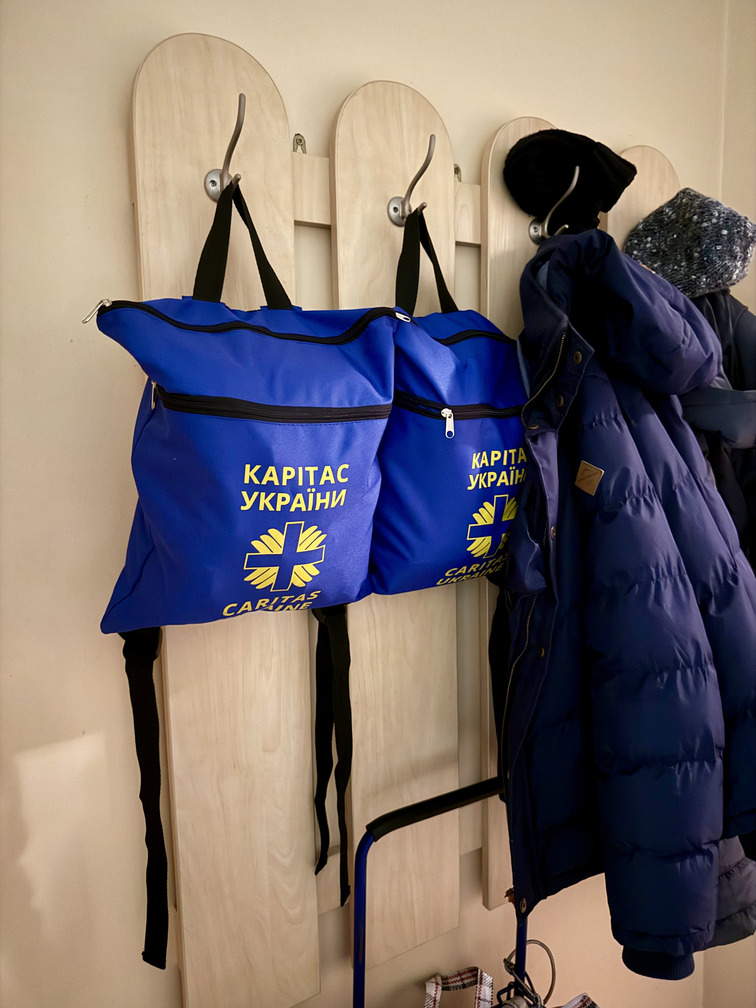
Caritas Volyn assists people returning through the Domanove border crossing on the Ukrainian-Belarusian border. Support includes access to mobile communications, cash assistance, the purchase of tickets to onward destinations, transfers to the railway station, temporary accommodation in a shelter, hot meals, and support from crisis managers.
In this way, assistance does not end when people cross the border. It continues throughout the subsequent stages of their return to a safe and stable life.
International Partnerships and Support
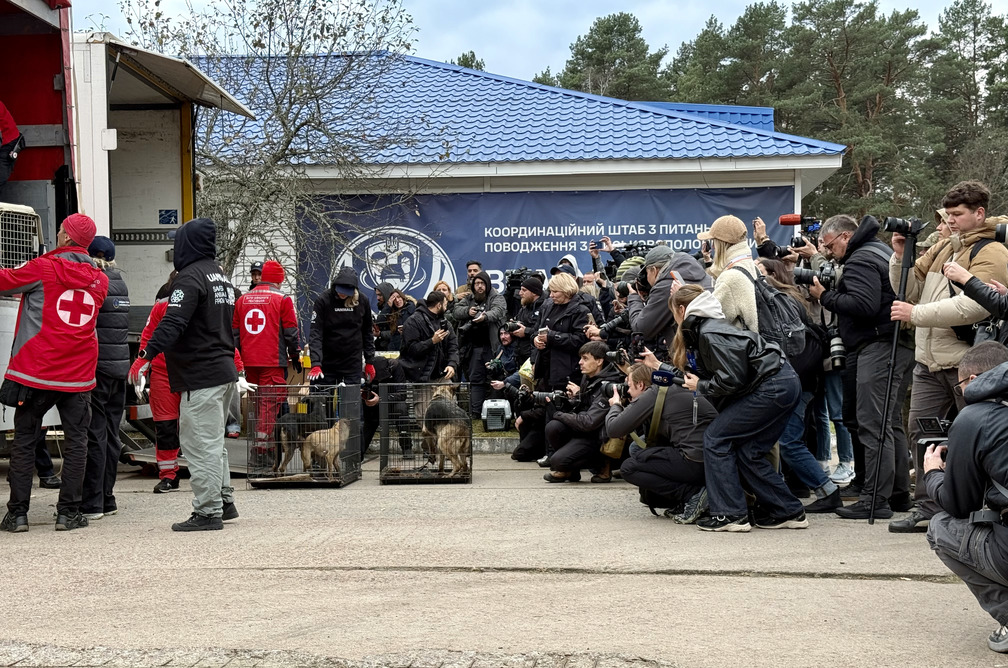
Humanitarian assistance was provided through several projects implemented with the support of international partners:
- The United States Government, through the US Department of State — Multi-Sectoral Assistance to War-Affected People in Ukraine.
- Caritas Norge — Humanitarian Assistance and Restoration of Essential Services 2026, Phase 2.
- Catholic Relief Services (CRS) — Emergency Humanitarian Support for Internally Displaced Persons and Ukrainians Affected by Military Aggression.
- Caritas Österreich and the European Union — Ensuring Comprehensive Access to Protection and Hygiene for War-Affected Populations in Frontline Areas of Ukraine (ECHO4).
Tags
More news
Caritas Ukraine Hosts Expert Discussion on Housing Recovery
On November 5, Caritas Ukraine’s Housing Solutions Program hosted a case study presentation and expert discussion titled “Integrated Housing Solutions for Community Recovery” in Kyiv.
“The mystery of encounter”: Caritas Ukraine meets hundreds of evacuees from occupied Oleshky
In late October, hundreds of people were brought out of occupied Oleshky in the Kherson region during a limited ceasefire.
Russian Attack Damages Caritas Building in Kramatorsk
On October 17, 2026, a Russian attack involving guided aerial bombs (KABs) damaged a Caritas building in Kramatorsk, Donetsk region.