
A person may wait to leave until local services have stopped operating, public transportation has become unreliable or an older parent can no longer travel without help. Even after deciding to go, a family may have nowhere to stay. And for someone who has lived in the same home for decades, evacuation can mean deciding in hours what can come with them and what must remain behind.
In the Donetsk region, one woman recalled that emergency services had already stopped operating before her family fled under shelling. Other families describe streets emptying as attacks intensify. Still, people stay — because they have nowhere else to go, care for relatives who cannot easily travel or cannot yet imagine abandoning the life they built there.
The scale is easy to lose inside individual stories. According to the Ukraine Protection Cluster, a humanitarian coordination network, more than 89,000 people were evacuated from war-affected areas in eastern Ukraine in 2025. Forty percent of those evacuated were age 60 or older, and 7% were people with disabilities. That works out to more than 240 people every day — many of them people for whom a seat in a vehicle could never solve the whole problem.
This is why Caritas Ukraine uses what it calls full-cycle evacuation: connecting a person’s departure from danger to a safe, workable place to go next. Transportation is one part of that process, alongside informed consent, case management, security planning, transit support, housing and follow-up after arrival.
The call that starts an evacuation
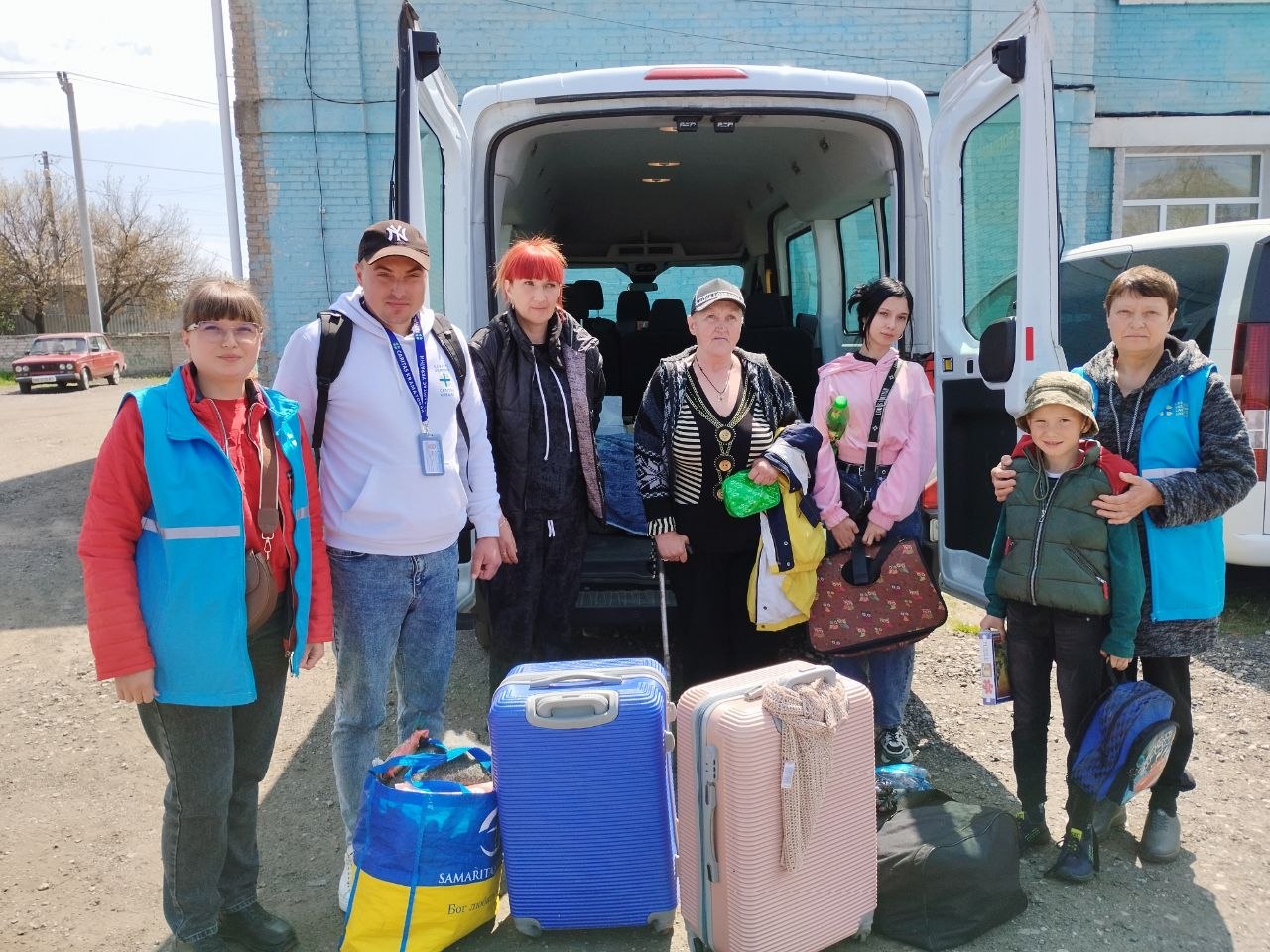
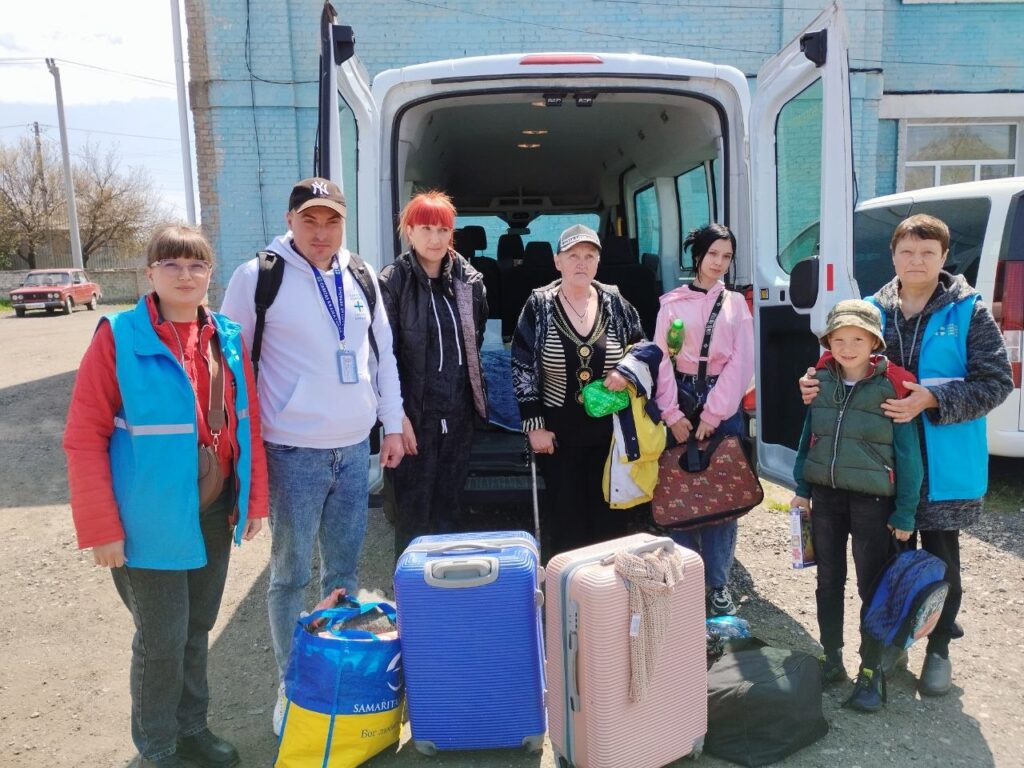
For Inna, this was the second time she had to leave home.
She had already evacuated from the Donetsk region with her mother and two children after Russia’s full-scale invasion began in 2022. The family later returned, hoping the situation would improve.
It did not.
“The children have everything at home … except peace,” Inna said as they prepared to leave again.
This time, four people from three generations needed not only a way out, but somewhere to go.
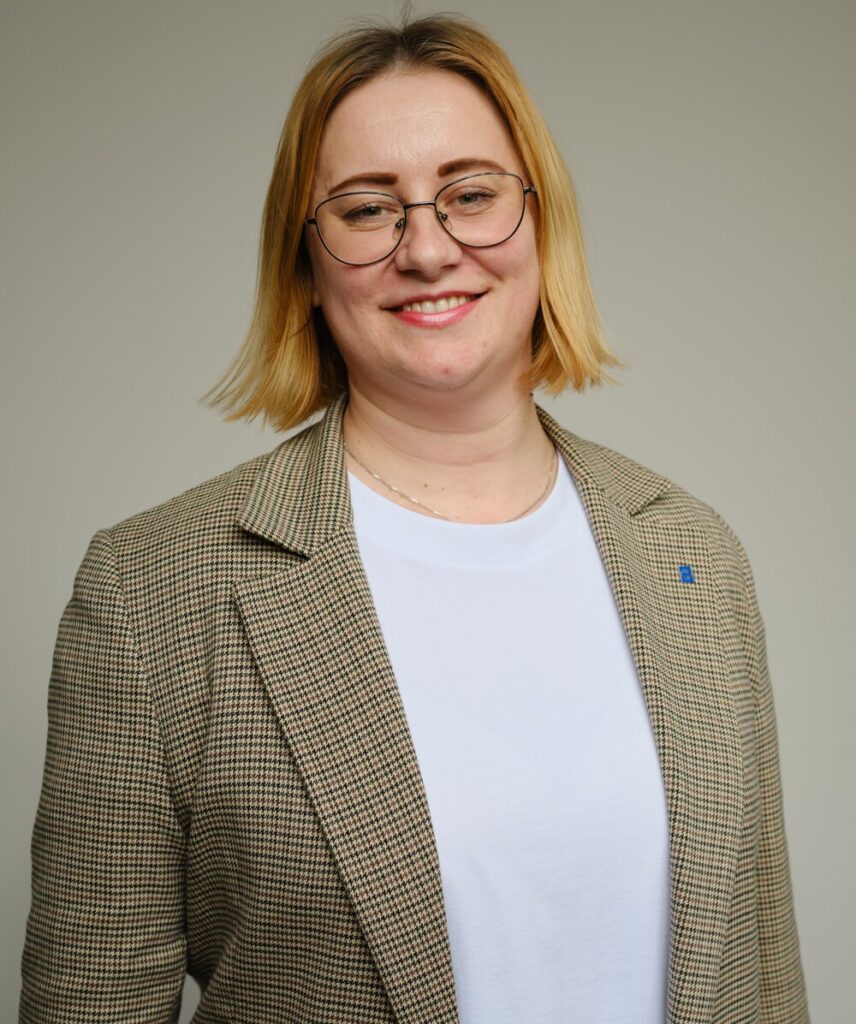
After dozens of communities said they had no space, Hanna Timchenko, a case manager with Caritas Kramatorsk, found a Facebook post from a community in the Khmelnytskyi region offering vacant homes to displaced families with children. New families could also help keep local schools open. Hanna spoke with the community leader, confirmed that the option worked for Inna’s family and began connecting the stages of the journey.
“People see the evacuation vehicle or the train, but they don’t see what happens in parallel,” Hanna said. “We search for housing, call communities, coordinate with several organizations, arrange transfers between transit centers — and at the same time stay in contact with a frightened family waiting for every update.”
Hanna’s job is to confirm the chain before a family leaves: where they will sleep, who will meet them, how they will move between stages and what help they will need along the way.
At the Pavlohrad transit center, another layer of that work becomes visible. In about three months, roughly 300 people received temporary care there, primarily older adults and people with limited mobility who could not manage basic daily tasks on their own after evacuation.
A Caritas care worker may help someone get to the restroom, prepare food, buy medicine or groceries, or wash clothes. Caritas introduced the service after repeated cases showed a gap: reaching a safer place did not necessarily mean an older person or someone with limited mobility could manage there alone. This kind of hands-on daily care is not a standard part of evacuation support, but for people arriving without a caregiver, it can determine whether they are actually able to manage after the journey.
How one request becomes a route
Four local teams — Caritas Kramatorsk, Caritas Kharkiv, Caritas Poltava and Caritas Zaporizhzhia — carry out full-cycle evacuation for people leaving high-risk areas of the Donetsk, Kharkiv, Dnipropetrovsk and Zaporizhzhia regions. The work is part of the Multi-Sector Assistance to War-Affected People in Ukraine project, financed by the U.S. Department of State and implemented by Caritas Ukraine and local Caritas organizations in partnership with Catholic Relief Services.
Evacuation routes are often built in stages. In the most dangerous areas, the first leg may be carried out by a local volunteer or humanitarian team already operating closer to the front. Caritas can then pick up the route at a safer point, arranging transit support, onward transportation and accommodation so the person is not left to navigate the next steps alone.
Transit centers are where many of those stages connect. People can eat, wash, rest and register for available assistance while the next part of the journey is confirmed or arranged. Some continue to relatives, others by train or bus; some need temporary housing or a place where daily care is available.
Between April 2026, when the project’s full-cycle evacuation work began, and July 31, 584 people were evacuated.
Numbers become abstract quickly, so picture the same figure another way: place 584 people into 50-seat buses, and they would fill almost 12 of them.
But there were not 12 identical busloads.
There were 584 individual decisions to leave. Hundreds of different family situations, destinations and needs. Hundreds of cases in which somebody had to know who was traveling, where they could safely go and what might prevent them from completing the journey.
When the standard route does not fit
Sometimes people remain in danger because they cannot picture how life will work once they leave.
Olena was evacuating from the Zaporizhzhia region for the second time. A direct strike had already destroyed most of the home her family had built and furnished. Now she was leaving again — with her grandchildren, her elderly mother and the family’s animals.
“I also took the chickens, dogs and cats,” Olena said. “The chickens will lay eggs, so we won’t starve.”
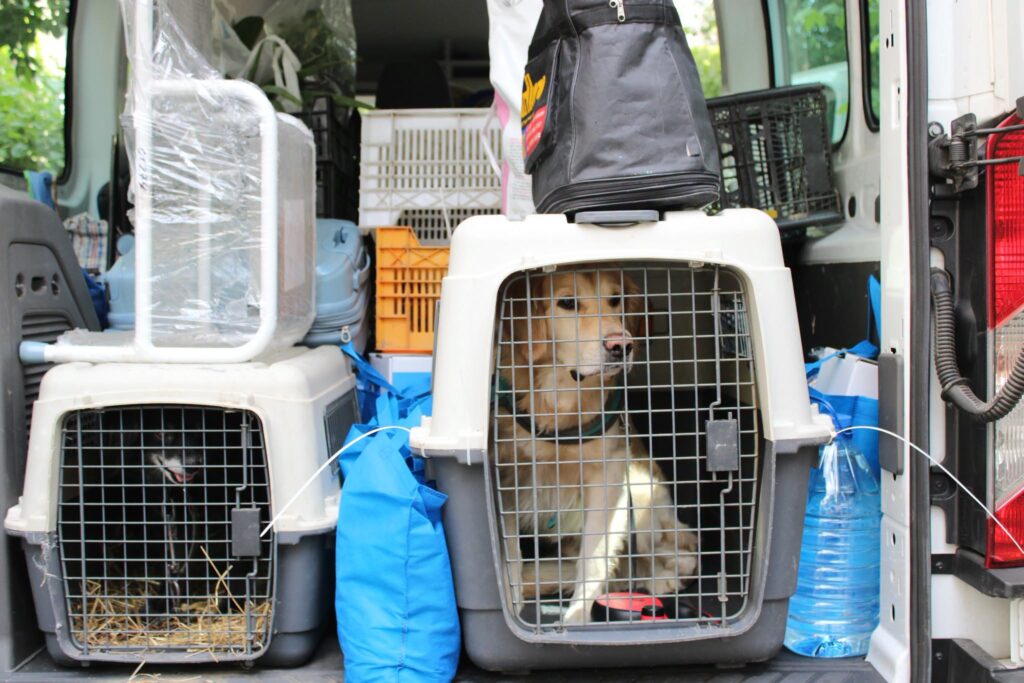

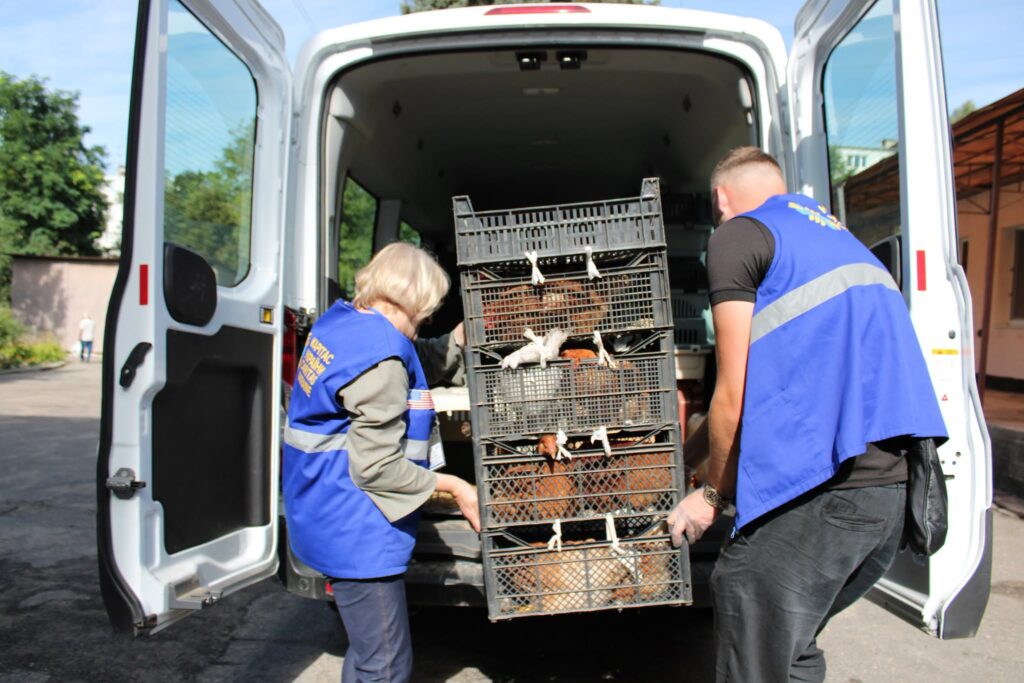
For Father Lyubomyr Ivanochko, who leads Caritas Ukraine’s evacuation work, the chickens are not a side note. They point to a larger fear behind many decisions to stay: people may know they are in danger and still have no idea how they will support themselves somewhere else.
“People are afraid because they don’t know what life will look like afterward — where they will live, how they will earn money, what they will eat,” he said. “Those chickens mean that a person can still provide something for the family. You have to understand what gives someone something to hold on to.”
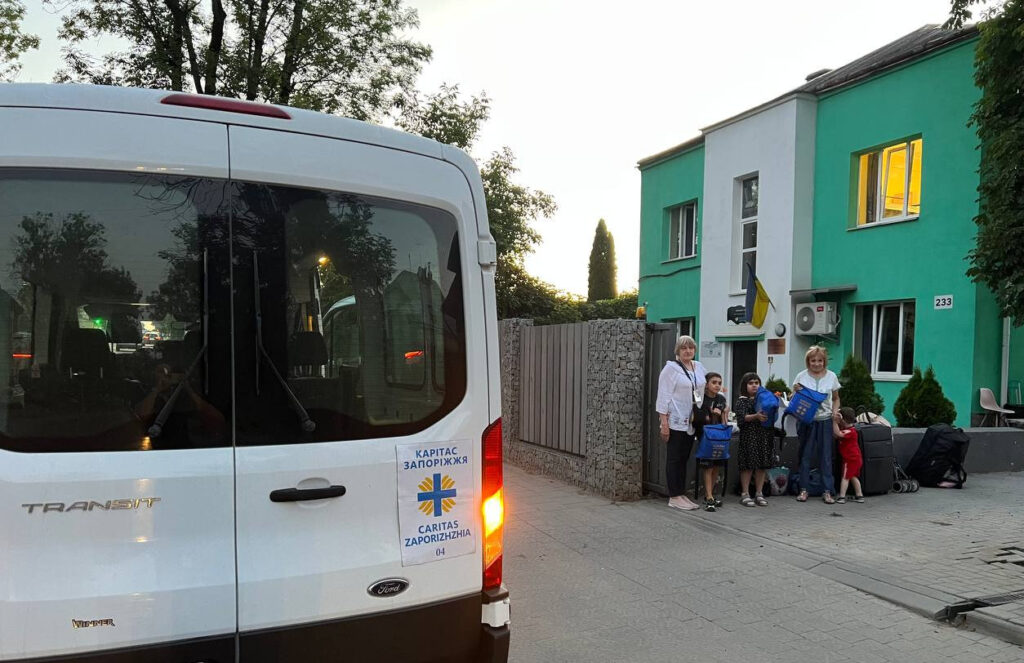
Olena faced another obstacle. An evacuation train would have been difficult for her elderly mother, and taking all of the animals that way would have been nearly impossible. Caritas Zaporizhzhia arranged transportation that allowed the family to travel together and took them to the rented home they had found in the Chernihiv region.
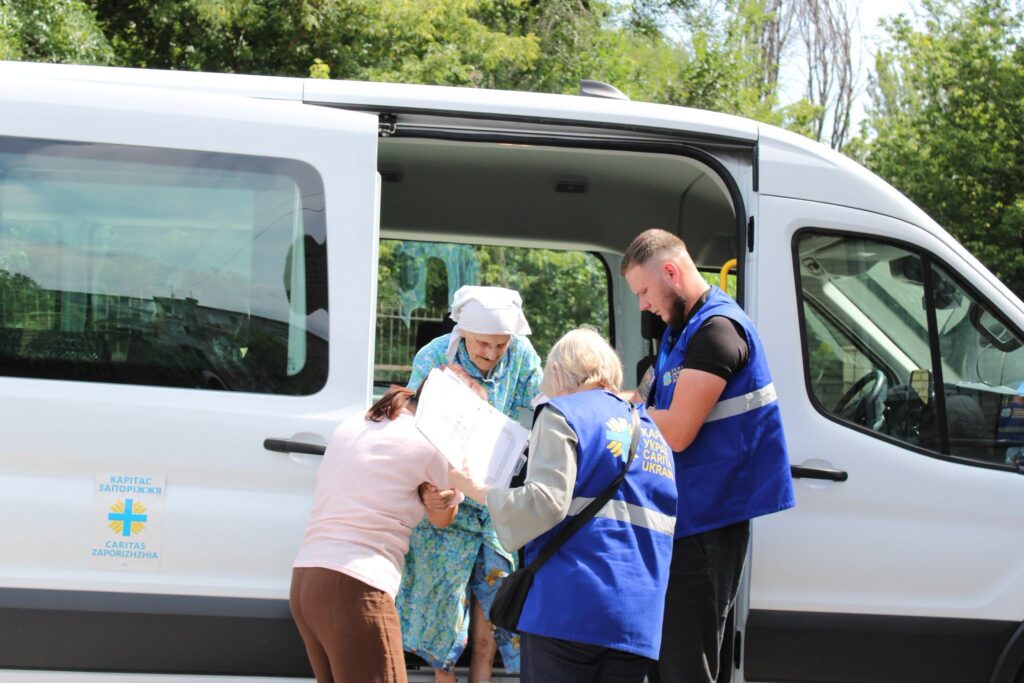
Caritas teams have learned that trust grows when people know what to expect. Before departure, they explain the housing options, living conditions, available support and who will meet the family at the other end. Photos or videos can help turn an unfamiliar destination into something a person can actually consider — and decide on for themselves.
“We do not impose a solution,” Lyubomyr said. “We discuss the conditions with the person and agree on what will work for them. The decision remains theirs.”
That transparency matters when someone is being asked to trust people they may have only just met. A social worker may travel with evacuees, answer questions and stay beside someone who is frightened or disoriented. The next step is explained before it happens, and the support does not disappear halfway through the journey. After arrival, Caritas checks whether the arrangement is working; if it is not, the team and the person look for another option.
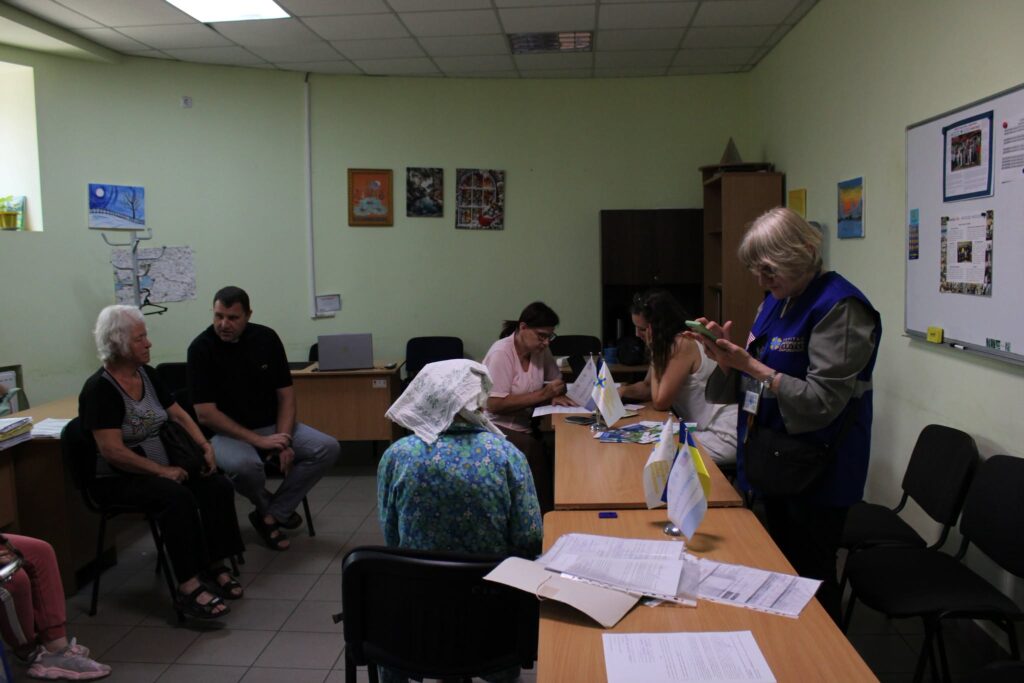
Caritas can remove barriers and build a workable route. It can make a choice possible without making that choice for the person.
What happens after arrival
The road can end before the case does.
Caritas Zaporizhzhia supported a mother traveling with three children, including a child with a disability, who needed to continue to Austria. Before they left, Olena Bugel, a case manager with Caritas Zaporizhzhia, re-established contact with an Austrian organization that had supported the family before, confirmed that support would be waiting and coordinated the next stages of the journey.
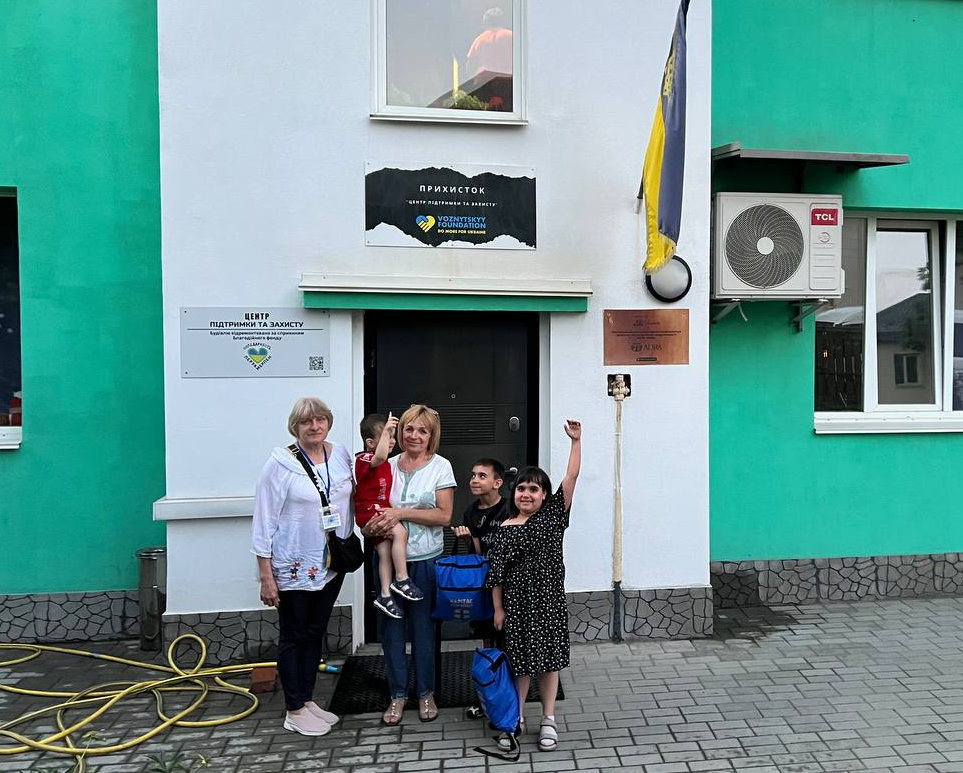
After one night in temporary accommodation in western Ukraine, the family continued to Austria. By the time they arrived, the next stage was already in place: a local support team was expecting them, transportation had been arranged and housing was ready.
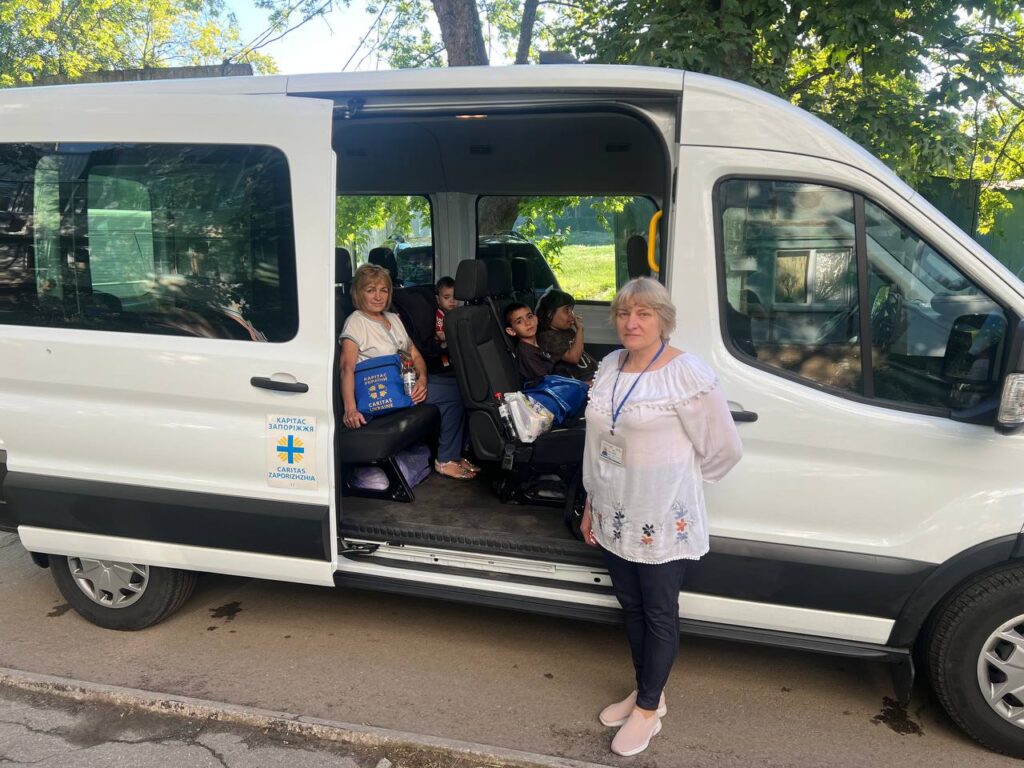
For Olena, that was not the end of the case.
She kept calling after the family arrived — first to confirm that they were safe, then to find out whether the arrangements made before departure were working in real life. Was the housing suitable? Was the child with a disability receiving medical care? Were the children being enrolled in school?
“For me, the fact that a family has left does not yet mean that they are truly safe or getting the help they need,” Bugel said. “I need to know that they reached their destination, have somewhere to live, that the children can access medical care and education, and that the family has not been left alone with new problems.”
In later calls, the family reported that those arrangements were taking hold. They had moved into an apartment; the children were being connected to schools, including specialized education for the child with a disability; and a local social worker was helping with medical appointments, documents and social services.
For a case manager, the plan made before departure has to work after arrival. The case does not end because the last vehicle has stopped; it ends when the support promised at the other end is actually there.
From a distance, evacuation can be counted in vehicles, passengers and miles traveled. Up close, it is measured one person at a time.
One journey may depend on a volunteer team reaching the edge of a dangerous area, a case manager finding housing hundreds of miles away, a care worker helping at a transit center, another team waiting at the destination — and a phone call days later to make sure the plan actually held.
That is what the 584 evacuations in this project represent: hundreds of individual lives requiring hundreds of different solutions, connected across teams, regions and sometimes borders.
For Caritas, getting someone away from shelling is where the responsibility begins. The work is to make sure there is still someone beside that person when the road ahead becomes unfamiliar — and somewhere real for that road to lead.
How to request evacuation support
Full-cycle evacuation is provided only with the person’s voluntary consent. The team can offer options, explain the conditions and help organize the relocation, but it does not decide where a person should go on their behalf. This is one of the fundamental principles of the evacuation process.
- Call Caritas. Let the team know right away that you are seeking evacuation assistance. Tell them where you are currently located and how many people need to leave.
- Explain the needs of everyone who will be traveling. It is important to mention from the outset if anyone has a disability, is an older adult or has limited mobility, if children are traveling, or if anyone needs regular medication, a wheelchair, transportation for animals or essential belongings. These needs determine what type of transportation is required and how the route is planned.
- Tell the team whether you already have somewhere to go. If you can stay with relatives or friends, or have already found accommodation, the team will take this into account when planning the journey. If you have nowhere to go, a case manager can help look for available accommodation options.
- Review the proposed option and make your own decision. The team will explain the conditions, the route and the assistance available. You have the right to accept or decline the option, or to change your decision.
- Once you agree, the team organizes the route. Depending on the security situation, the journey may involve several stages, different teams, a transit center, a train or other transportation. When needed, a social worker may accompany the person during the journey.
- At a transit center, you can receive basic assistance and prepare for the next stage of the journey. People can rest, eat, use hygiene facilities and receive information about their onward route and accommodation.
- Support does not end after arrival. The team checks that the person has reached the agreed destination and that the arrangements are working. If a problem arises, the team can help look for another solution or connect the person with appropriate assistance.
Who to Call
Caritas Kramatorsk: +380 55 942 20 12, Monday–Friday, 9:00 a.m.–5:00 p.m.
Caritas Kharkiv: +380 67 33 604 55, Monday–Friday, 9:00 a.m.–5:00 p.m.
Caritas Zaporizhzhia: +380 75 173 27 91, Monday–Friday, 9:00 a.m.–5:00 p.m.
Caritas Poltava: +380 95 288 87 07, Monday–Friday, 9:00 a.m.–5:00 p.m.
Caritas Ukraine hotline: 0 800 336 734, available Monday through Friday, 9:30 a.m. – 4:00 p.m.