


Practical solidarity: Caritas partners meet for Country Forum
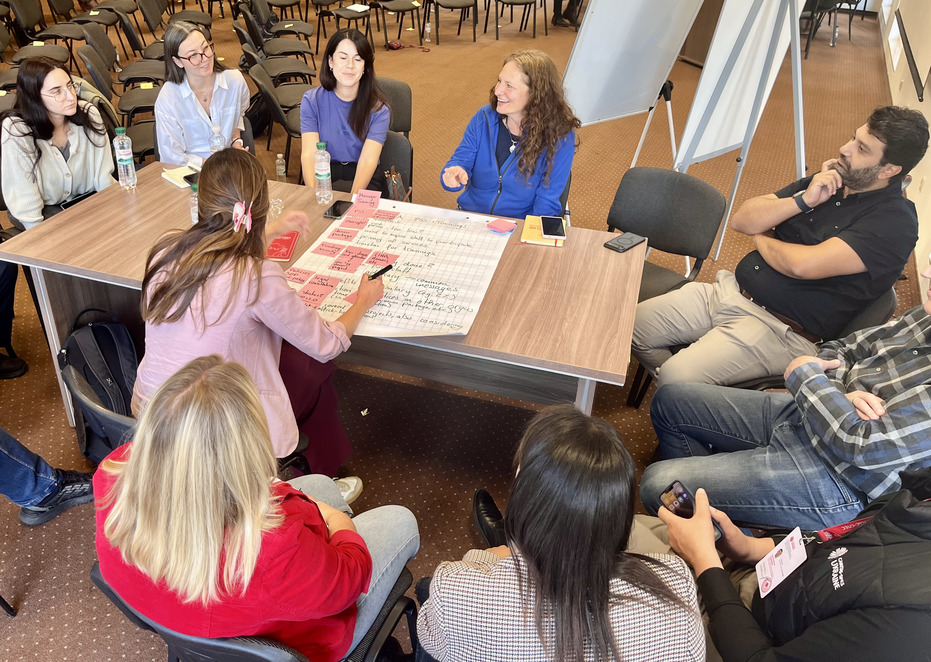
On September 23, 2026, representatives of “Caritas Ukraine,” “Caritas-Spes Ukraine,” and their partners held a Country Forum.
Менеджерка з комунікацій
The war is now in its fifth year, and much of the day came down to one practical question: how a humanitarian network keeps working in the context of a protracted war and crisis.
The Country Forum is the Caritas confederation’s standard structure for coordinating members working in the same country, meant to bring the various Caritas organizations together to share analysis, plan jointly and avoid duplication. In Ukraine it is co-run by Caritas Ukraine, founded by the country’s Greek Catholic bishops, and Caritas-Spes, the Roman Catholic Church’s Caritas mission in Ukraine. Caritas Ukraine is led by its president, Tetiana Stawnychy; Caritas-Spes Ukraine’s executive director is Fr. Vyacheslav Hrynevych, SAC.
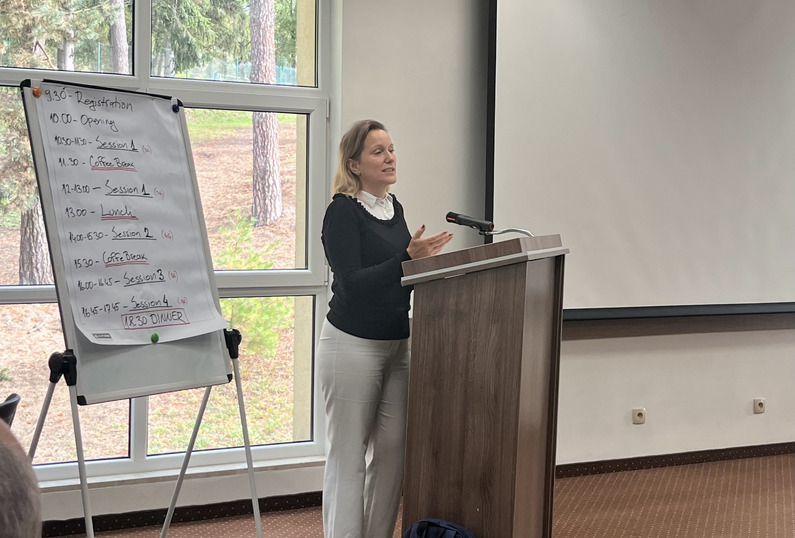
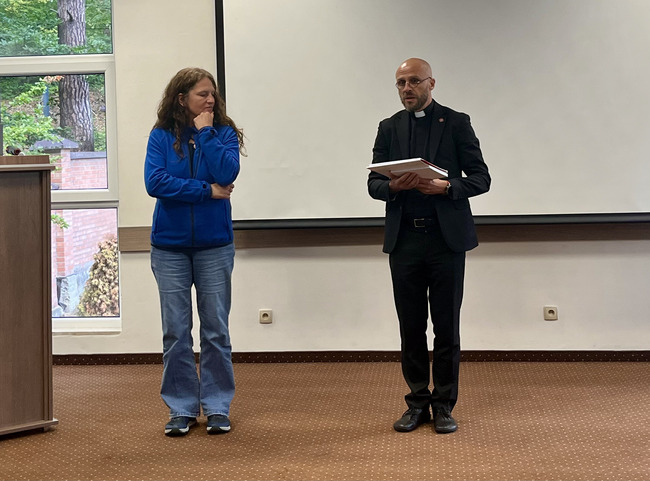
The Forum opened with an address from Maria Nyman, Secretary General of Caritas Europa, who told participants she was “proud” of the work of Caritas in Ukraine to help people suffering from the war. Speaking about the mission of Caritas, Nyman recalled a 2019 visit to Ukraine, early on in her tenure as Secretary General, where she met a Caritas Ukraine beneficiary living with quadriplegia. “Thanks to Caritas I feel hope for tomorrow,” he told her — and these words have shaped her understanding of the Caritas mission and stayed with her ever since. “It says so much of Caritas.” The hope Caritas offers, she added, “is not naive optimism” but one rooted in “cross and resurrection.”
Planning for a war that keeps intensifying
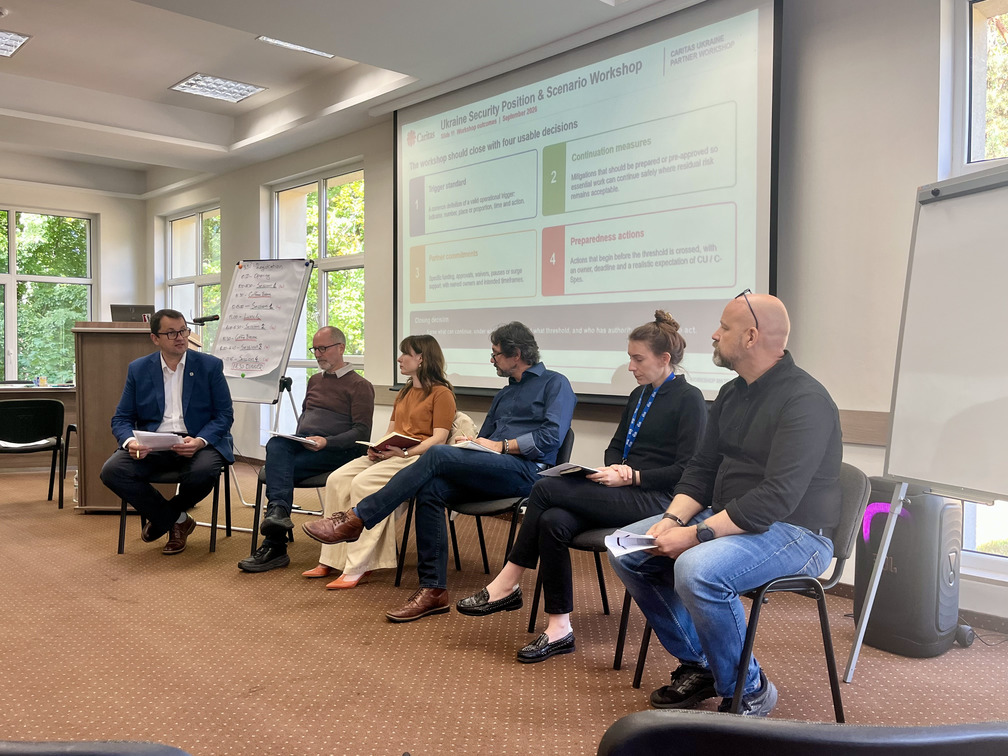
The Forum continued with a security briefing and a scenario-planning exercise. Participants identified warning signs and decision triggers, along with the practical steps that would let Caritas keep working safely if conditions worsen. The session also addressed what such shifts would mean for donors, partner commitments and communication across the network.
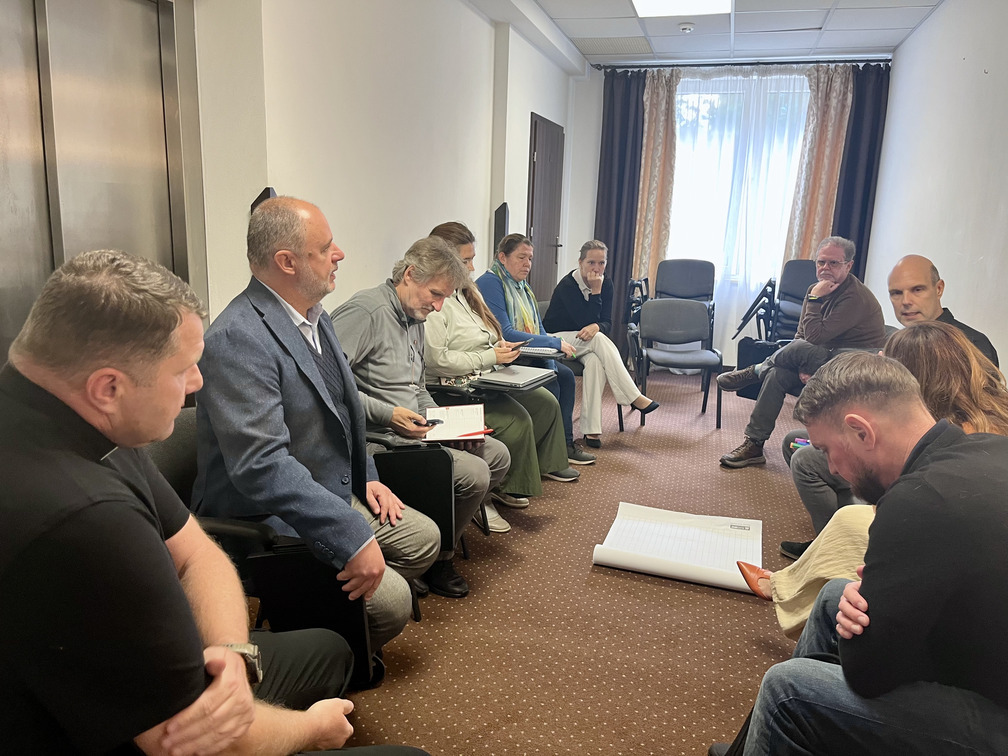
A second block of the day covered what organizers called “duty of care and duty of Caritas”: Caritas Ukraine and Caritas-Spes Ukraine presented draft initiatives to strengthen protection and support for staff and volunteers. Participants reviewed priorities, existing resources, gaps and where partners could help close them.
The day closed with a discussion of the Forum’s objectives and structure for 2027, under Caritas Internationalis’s updated Country Forum Framework. Participants talked through what the Forum’s role should be going forward.
A true partnership, not just emergency response
“Country Forum is a gathering of all the Caritas organizations working together on the territory of Ukraine,” said Tetiana Stawnychy, president of Caritas Ukraine. “It brings together Caritas Ukraine and our colleagues from Caritas-Spes, together with all the international Caritas organizations from other countries that are working with us and helping us develop and implement essential programming.“
The format traces back to an emergency mobilization effort. “This is an initiative that Caritas Internationalis launched back in 2022 — the Emergency Support Team,” Tetiana Stawnychy said. “That group was set up to serve as a support team for all the countries responding to the humanitarian crisis unfolding at the time, not only in Ukraine, but including, for example, our partners in Poland, the Czech Republic, Slovakia, Romania and Moldova. The team helped everyone mobilize quickly and assisted us with the additional technical support and expertise crucial to put in place the systemic approaches needed to respond to a crisis of that scale.“
“In 2023, that first team transformed — and it was in Ukraine specifically that we chose this format called the Country Forum,” she continued. “We lead the Forum together, Caritas Ukraine and Caritas-Spes, with several dedicated international staff supporting the operations.“
“It’s an opportunity to come together, to discuss shared themes that help us respond better, coordinate better, and plan our work for the future better,” Tetiana Stawnychy mentioned. “This is Caritas’s way — a way of meeting, of community — and together we are stronger, together we can resolve many difficulties. And like in any relationship, the longer you stay in it, the deeper and more mature it becomes. That’s exactly the direction we’ve been moving in for four years — better communication, supporting organizational development, coordinating better. It’s a process, a path. It’s also how we hold solidarity with one another and fulfill our mission.“
Natalia Kryva, Director of the Social Program Department at Caritas Ukraine, described the same shift in more institutional terms. “Every program has these three stages: a stage of rapid response, then stabilization, then a development stage,” she said. “And it’s very important to understand how all three of these stages are connected to one another, because it affects the implementation of the social, development programs that it’s important not to stop even in wartime — because this is systemic, transformational work that will shape Caritas’s future, people’s well-being, and Ukraine’s future.“
“Those Caritas organizations that have their own representatives here understand that this is no longer someone else’s war — that it touches them too, that it’s their war as well. Through regular engagement, partnership has taken on an additional intensity in fundraising, in designing programs and projects and working through challenges together with us, addressing needs, both programmatic and organizational,” she said.
The shift runs in both directions, Natalia Kryva added. “This hasn’t only changed the international Caritas organizations — it has changed us, Caritas Ukraine, too. Thanks to platforms like this and to this kind of dialogue, Caritas Ukraine has also grown through these encounters. We see the dedication of our partners, and it strengthens us and pushes us to continue to develop organizationally.“
“And there’s one more important shift that has changed us,” she said: “we no longer think of this as a relationship between ‘donor and Caritas Ukraine’ — for us, it’s a partnership, on equal, mutual terms.”
Volodymyr Yakymets, who works on network infrastructure development and partnerships at Caritas Ukraine, said the sharper challenge this year is not capacity but resources. “Our understanding of the complexity of the challenges has improved — we have, at the same time, an emergency humanitarian response, the beginning of stabilization, and even recovery. People who became internally displaced three years ago can already talk about a way out of that situation, while people who were evacuated yesterday or the day before are not at that stage — still need an emergency humanitarian response. And I think most partners understand this.“
“A key difference from 2022 is the changing nature of the resource needs,” he continued. “Since the beginning of the full-scale war, our partners have provided significant and sustained support, which has enabled us to respond to enormous and evolving needs. Today, both the scale of the needs and our capacity to respond continue to grow. This means that, alongside emergency funding, we also need to further develop predictable, longer-term resources that can sustain humanitarian assistance while supporting stabilization and recovery.”
Tags
More news
Speech Therapy, Horseback Riding and the Latest Summer Trends: A Look at Caritas Inclusive Camps
A summer camp is a familiar part of childhood and youth: making new friends, spending a few days away from home, and coming back with dozens of photos and stories to tell.
Practical solidarity: Caritas partners meet for Country Forum
On September 23, 2026, representatives of “Caritas Ukraine,” “Caritas-Spes Ukraine,” and their partners held a Country Forum.
When every minute counts, but rushing can put lives at risk
How Caritas Rapid Response teams organise assistance in the aftermath of attacks.