


How Caritas Norway is changing the logic of humanitarian support for Ukraine
From crisis reaction to long-term solidarity. From centralized decisions to local leadership.
Комунікаційна менеджерка
From working for communities to working with them. This is how Caritas Norway is rethinking humanitarian support for Ukraine.
Today, humanitarian response is no longer only about rapid emergency assistance. It also needs to consider early recovery elements and long-term solidarity support for communities that have spent years living under shelling, losing access to basic services, experiencing exhaustion, displacement, and constant uncertainty.
It is in this context that Caritas Norway presented its strategy for Ukraine and Moldova for 2026–2027.
At the core of the strategy locally led humanitarian response e , and where some important approaches include predictable partnership, flexible humanitarian programming, duty of care for teams, and strengthening the voices of communities and local partners.
For Caritas Ukraine, this approach is especially important because it recognizes that the experience of local teams and communities is not an addition to humanitarian response — it is its foundation.
One of the main frameworks of this work is the Nansen Programme. According to Melissa Søvik, Regional Representative for Ukraine and Moldova at Caritas Norway (Caritas Norge), the 3 year long programme provides a certain predictability for humanitarian response — in funding, programme duration, and the possibility to plan work beyond the short term.
At the same time, she emphasizes that even a pluriannual program with set objectivessupport must remain flexible. War creates highly volatile conditions: frontlines shift, people are forced to evacuate, and new humanitarian needs can emerge very rapidly. This is why humanitarian programmes must be able to adapt — from supporting newly arrived IDPs to assisting with evacuations from communities under threat of occupation or heavy shelling.
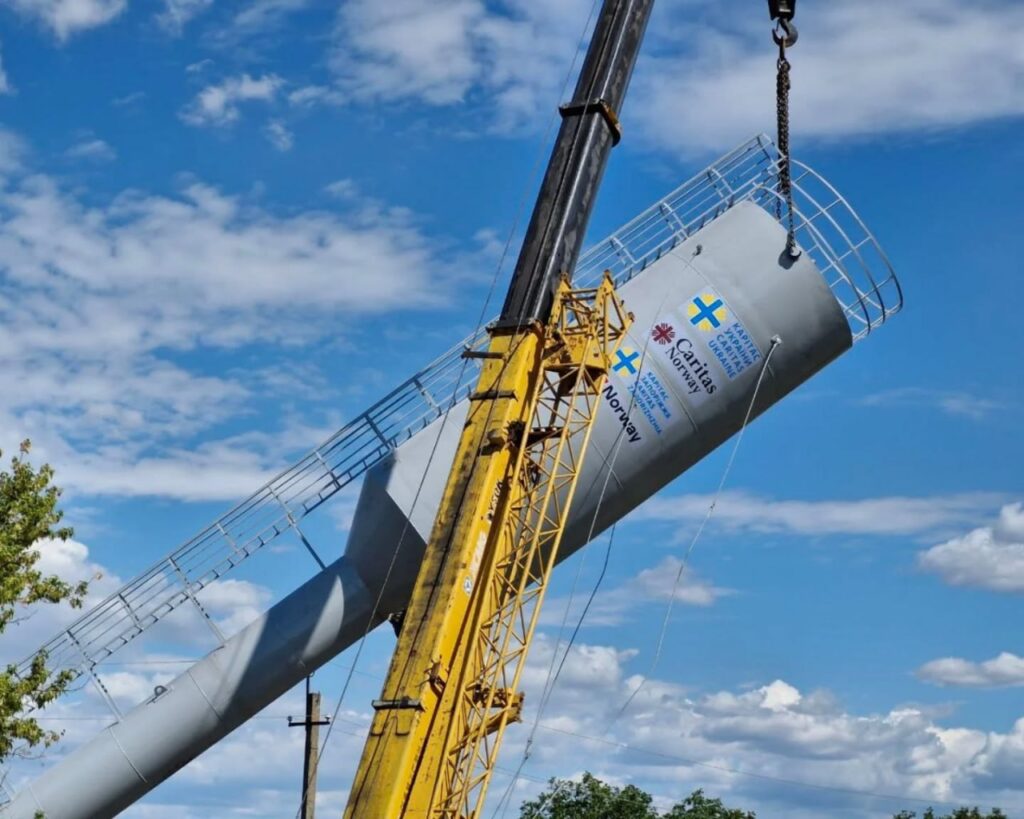
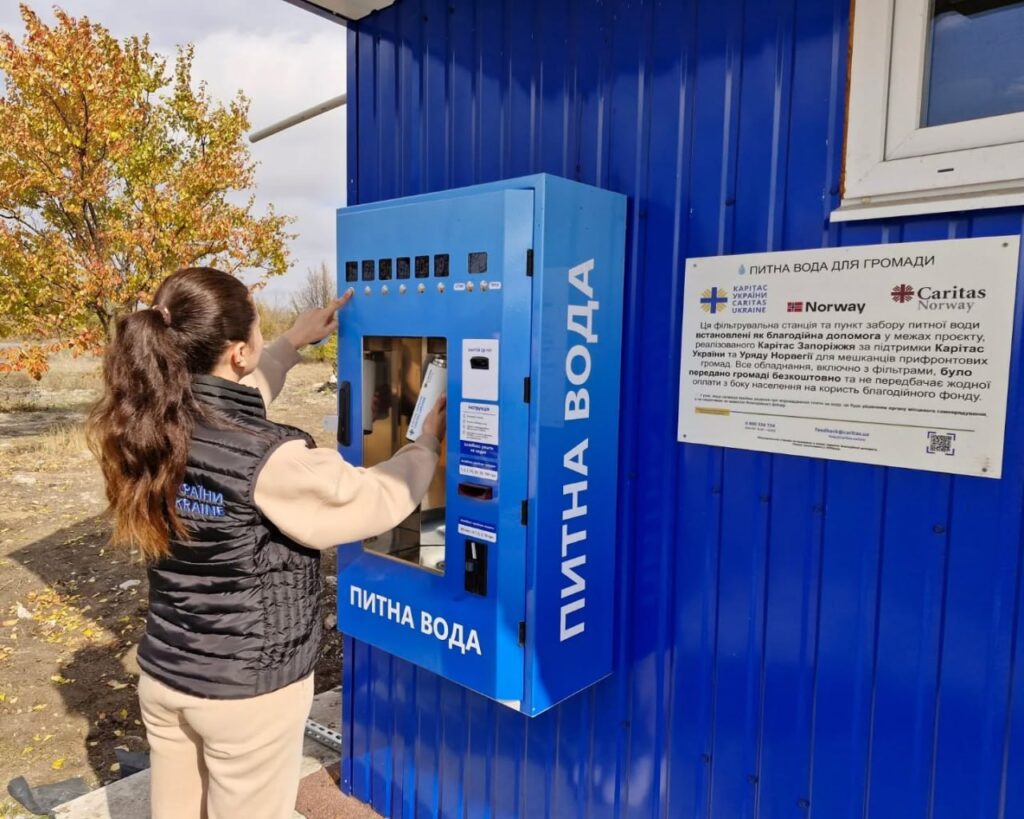
One important thematic area under the ongoing humanitarian programme is WASH. In Ukraine, access to water has long gone beyond being only a “technical sector”. In wartime, water becomes a matter of security, health, dignity, and daily survival:
“When people lose access to water, they begin to realize how dependent they are on it. It is not a choice — water is simply necessary to live. It is needed for cooking, drinking, hygiene, and for people with medical needs. That is why restoring access to water matters so much for communities, especially those close to the frontline” .
She also recalls a phrase she repeatedly heard from people in local communities:
“Water is life.”
And this is not a metaphor. When regular access to water disappears or becomes unsafe due to attacks on critical infrastructure, people lose one of the foundations of normal life: the ability to drink clean water, cook food, maintain hygiene, and care for children, elderly people, or people with chronic illnesses.
The strategy also strongly emphasizes local leadership. Decisions regarding programmes, adjustments, monitoring, or adaptation should not be made without national and local partners:
“Decisions regarding programme, ajustment are made with the national and local partners. Local organizations understand the humanitarian context the best, and any changes inneeds see where they can respond most effectively, and know how to adapt assistance to the real situation”.
For Caritas Ukraine, this is critically important. Local teams do not simply implement humanitarian programmes. They work with communities every day, maintain trust, cooperate with local authorities, and understand not only humanitarian needs, but also the broader realities communities face — exhaustion, risks, and opportunities for recovery.
Another important focus of the strategy is duty of care for teams. Humanitarian response cannot remain sustainable if the people delivering it become exhausted themselves.
She also speaks about the fact that the visible resilience of Ukrainian communities does not mean that people can continue living in such conditions indefinitely. According to her, many people live in a constant survival mode — with air raid alerts, lack of sleep, fear for loved ones, and long-term psychological pressure.
This is especially true for communities near the frontline, which continue to carry the heaviest burden of war.
Another important part of the strategy is communication. Caritas Norway stresses that international partners should not speak on behalfof local organizations. An important role they can play is to support amplifying to local voices
According to her, this means continuous dialogue with local partners, understanding their priorities, and helping the experiences of Ukrainian communities reach donors, governments, international institutions, and societies abroad.
This is the value of such partnership: not replacing local experience with external perspectives, but supporting those who already work closest to people and sustain humanitarian response every day in the difficult reality of war.
Tags
More news
Practical solidarity: Caritas partners meet for Country Forum
On September 23, 2026, representatives of “Caritas Ukraine,” “Caritas-Spes Ukraine,” and their partners held a Country Forum.
When every minute counts, but rushing can put lives at risk
How Caritas Rapid Response teams organise assistance in the aftermath of attacks.
Water through calm and air-raid alerts
Water at the tap depends on an entire system: wells, pumps, electricity, water networks and treatment facilities.