


Localization as a path to sustainable solutions: Caritas Ukraine held its Partnership Meeting in Lviv
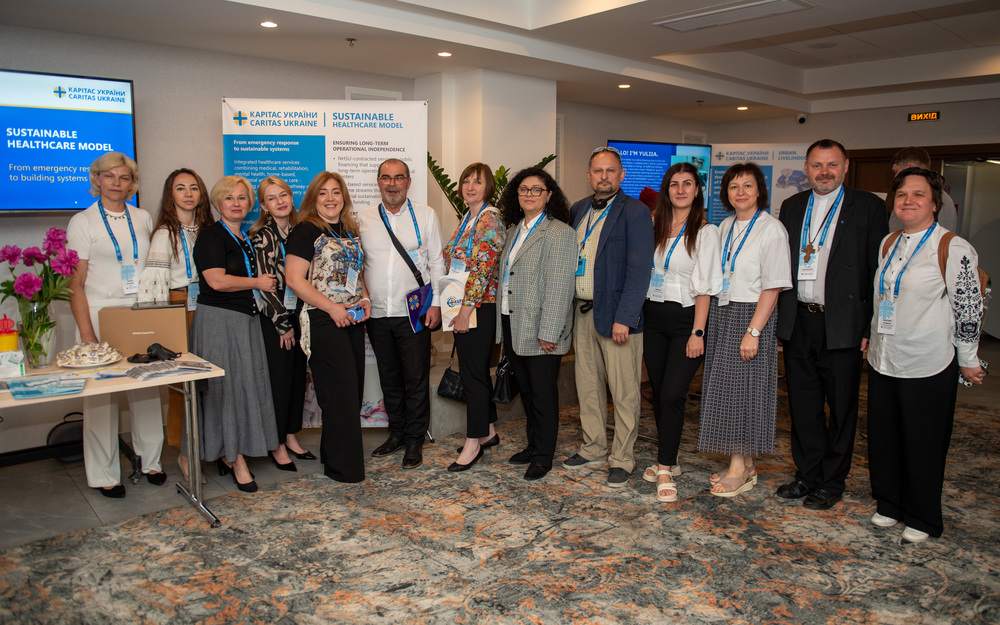
The annual Caritas Partnership Meeting took place in Lviv on 15–19 June. It brought together Caritas Ukraine, Caritas-Spes, local organizations within the Caritas network, international partners, representatives of the state, civil society, and the clergy, as well as program teams from the national office.

Бренд і комунікації
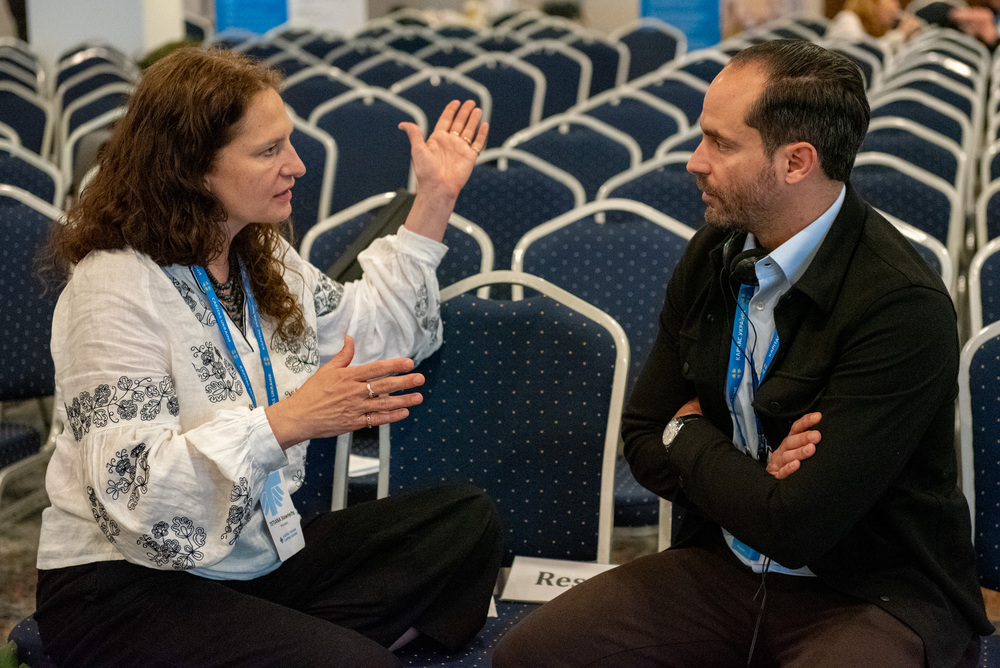
This year, the meeting’s cross-cutting theme was localization as a path to sustainable solutions. Participants discussed how local presence, experience of working in communities, and partnership with the state and the international community help move from emergency response to sustainable solutions for communities.
Local organization visits
The first two days were dedicated to visits to local Caritas organizations in different regions. Partners had the opportunity to see the work of local teams, speak with staff, and better understand the local context in which the network operates.
One of these visits was to Caritas Volyn. Representatives of CRS, Caritas Austria, and Caritas-Spes Ukraine learned more about the infrastructure supporting people leaving temporarily occupied territories via the humanitarian corridor.
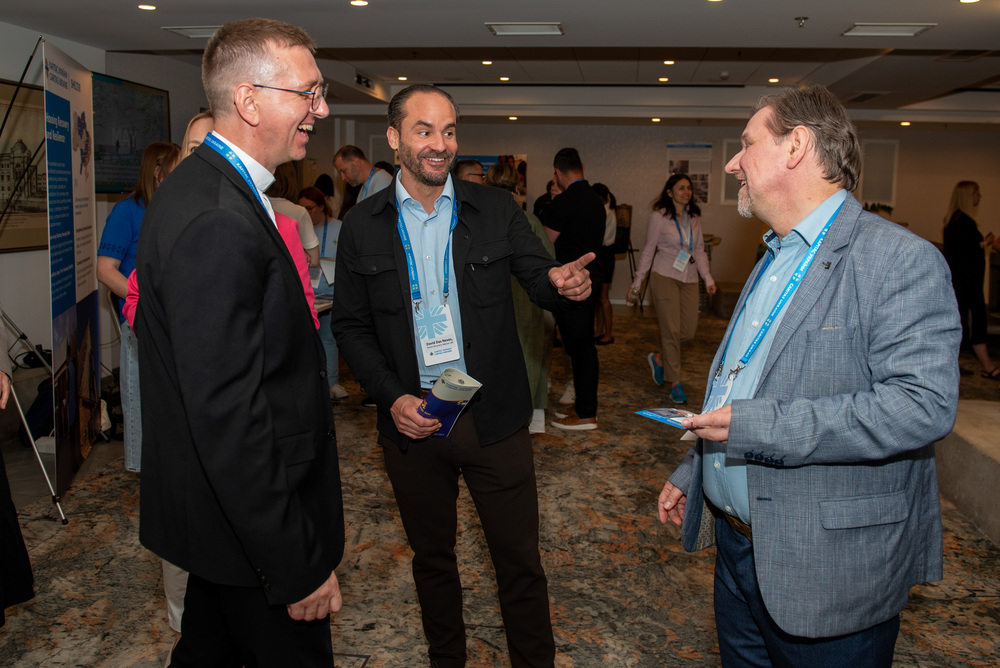
The partners visited the Domanove checkpoint, where the Caritas Volyn team welcomes people, the shelter in the village of Kortelisy, where they can rest before continuing their journey, and the Caritas space at the railway station in Kovel, where people can wait for their train or bus.
“If since 2024 this work has primarily included an emergency response component — stabilizing people after an exhausting journey, creating dignified conditions for rest, and helping them move onward — today we are adding referrals within the Caritas network and support for full reintegration in host communities,” said Hayk Stepanyan, IDP Support Project Manager.
Main part of the meeting in Lviv
The main part of the Partnership Meeting took place in Lviv. The day began with a joint prayer and Divine Liturgy at St. George’s Archcathedral, a place that holds special importance in the history of the Church’s social ministry in Ukraine.
Welcoming participants on behalf of Metropolitan Ihor, Fr. Ivan Hobela of the Lviv Archeparchy stressed that Caritas is not only a charitable organization, but also an expression of the Church’s living service where people need support the most.
“Sustainable solutions are born where there is unity: in society, the state, the Church, and small local communities. They will be strong when they pulse from the very core of the word caritas — love,” he said.
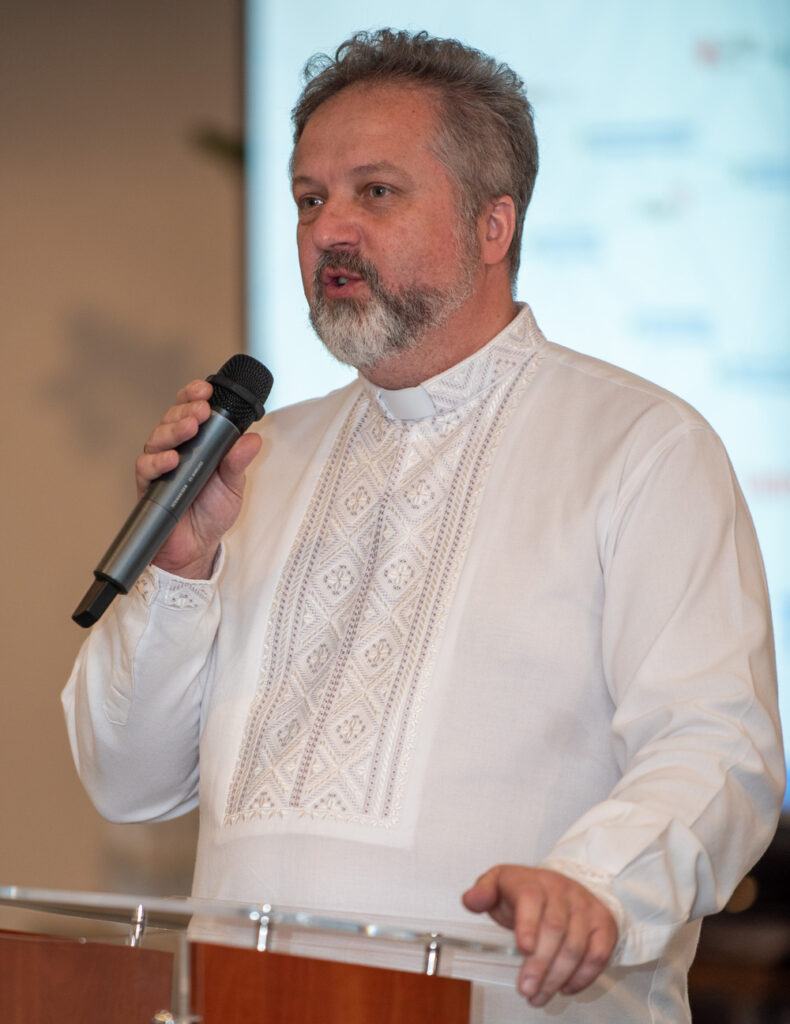
Fr. Andrii Nahirniak, Director for Network and Identity at Caritas Ukraine, noted that the format of the Partnership Meeting is gradually changing.
“We wanted to transform partnership meetings into meetings of reflection, dialogue, discussion, and debate. This is a moment to pause and think, to develop a shared position and shared solutions not only within Caritas, but also together with a wider circle of partners,” said Fr. Andrii Nahirniak.
From humanitarian response to sustainable solutions
Opening the strategic part of the meeting, President of Caritas Ukraine Tetiana Stawnychy stressed that Caritas and its partners are moving together from emergency response to sustainable solutions for communities.
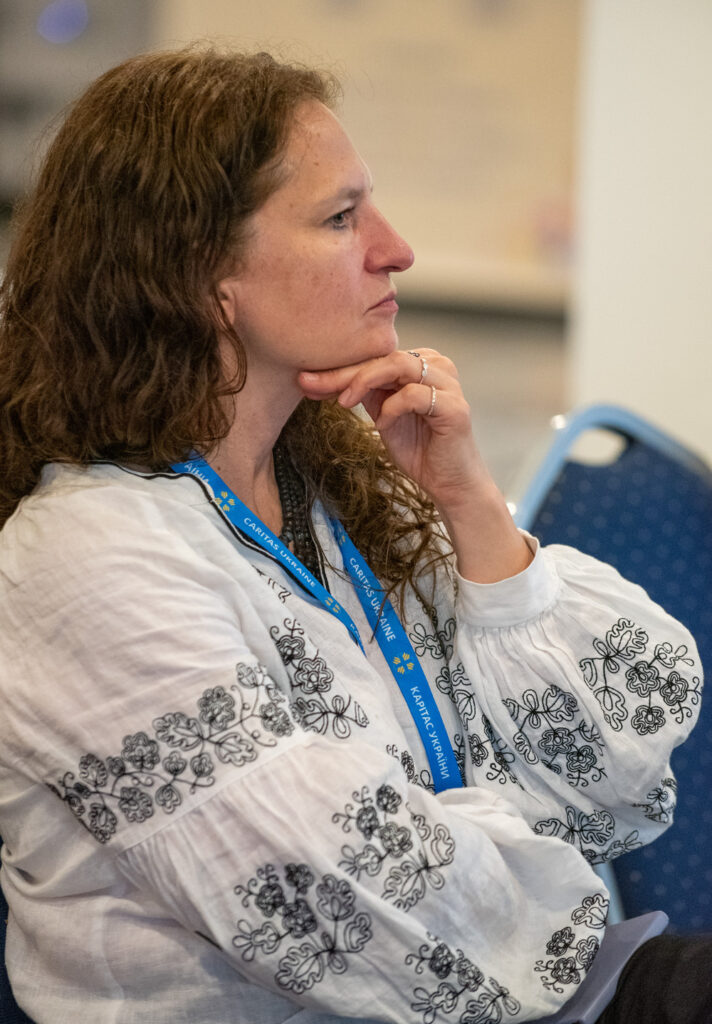
“Today it is important for us to move from humanitarian response to sustainable solutions without losing sight of the person, neither the person we serve nor the person who serves within the Caritas Ukraine network. That is why our principles remain unchanged: to seek the best way, to see the person, and to work together as one network, one community, one family,” said Tetiana Stawnychy.
According to her, resilience is not an abstract characteristic or a “superpower” but a long-term process grounded in values, systems, and flexibility in responding to people’s real needs.
Participants were also addressed by Khrystyna Zamula, Deputy Head of the Lviv Regional State Administration. She underlined that during the full-scale war, charitable and civil society organizations have become an important source of support for thousands of Ukrainian families.
“Through joint efforts, we are not only responding to today’s challenges, but also building sustainable mechanisms to support people and develop communities. This kind of cooperation is the basis of our society’s resilience,” she said.
Localization as a path to sustainable development
The discussion continued during a panel on localization as a path to sustainable development. The panel included David Das Neves, UN Senior Advisor on Recovery; Halyna Bordun, Head of the Coordination Center for Civilian Support at the Lviv Regional Military Administration; Fr. Vasyl Kolodchyn, Director of Caritas Odesa UGCC; and Daria Chekalova, Coordinator of the PULSE Consortium. Oksana Zashchykivska, PhD in Political Science, moderated the discussion.
The discussion focused on the role of local organizations that remain close to communities and understand the local context well.
David Das Neves stressed that sustainable solutions cannot simply be brought in from the outside.
“Sustainable solutions are local by nature. Ukrainian local organizations did not wait for international partners to come and start responding. They were here from the beginning and will remain here in the future. That is why the question is not only how to support local organizations, but also how the international system can learn from them,” he said.
According to him, real localization requires not only partnership language but also a willingness by international structures to change how decisions are made. At the same time, local organizations should not replace the state or compete with it. Their role is to complement the system, bring practical expertise into it, and help public decisions become closer to people.
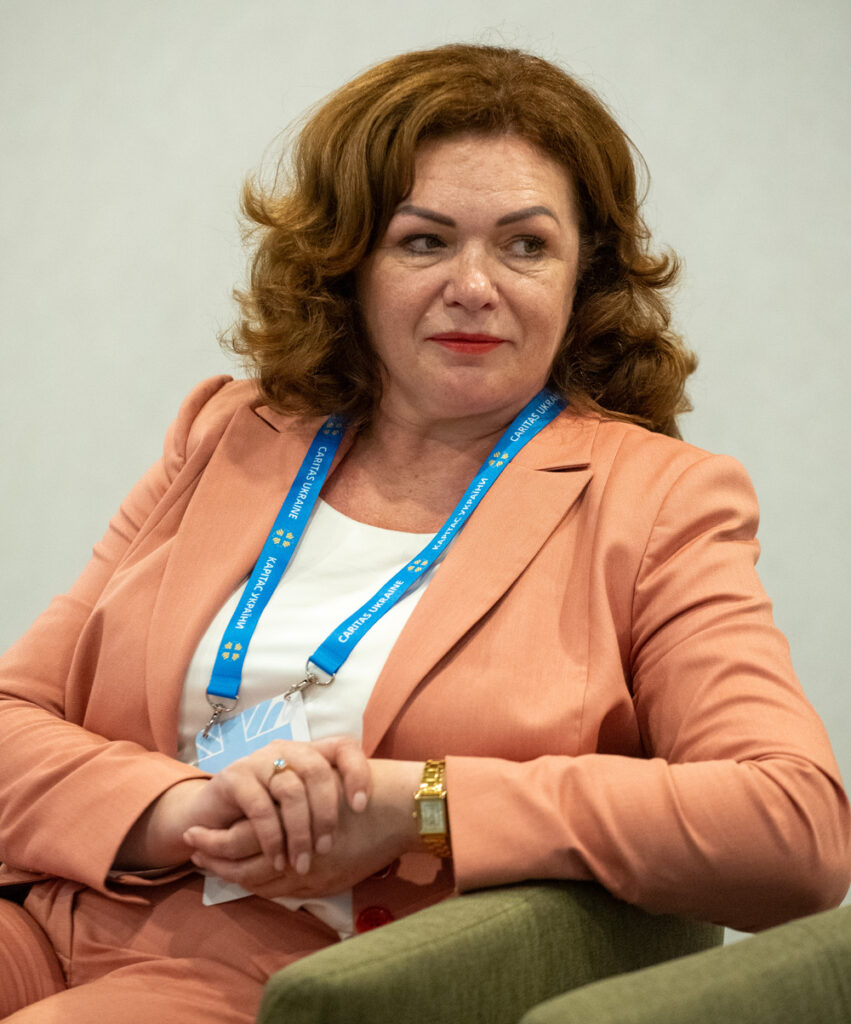
Halyna Bordun noted that since 2022, Caritas has become an important source of support for the authorities in emergency response, and that this cooperation is now moving towards long-term solutions.
“Today, communities have many responsibilities, and this is what localization is about — when we help communities learn how to respond to challenges, build support systems, and preserve people,” she said.
She also stressed that sustainable solutions require honest dialogue, clear distribution of roles, and a willingness to assess not only successes, but also what did not work.
Trust between communities and local organizations was another important focus of the discussion. Fr. Vasyl Kolodchyn, Director of Caritas Odesa UGCC, stressed that the strength of Caritas lies not only in its organizational structure but, above all, in its rootedness in communities.
“We live alongside people, raise children in the same communities, and share responsibility for their future. International partners can bring financial support, knowledge, and experience. But they cannot bring community trust. Trust is built over years and decades of constant presence,” he said.
Sustainability in program solutions
During the program presentations, Caritas Ukraine teams showed how sustainability is being put into practice through concrete solutions.
Housing solutions
In the housing area, the discussion focused on the need to move from separate housing projects to integrated support models that account for a person’s path from temporary accommodation to permanent housing.
“Millions of Ukrainians who lost their homes also lost a point of stability. And the biggest mistake in such a situation is to address this problem in a fragmented way. A single project does not change the system.
That is why Housing Pathways is not a set of isolated initiatives, but an integrated support architecture: from emergency accommodation through social support to long-term housing solutions embedded in community housing policy. We work where humanitarian assistance and systemic change meet, and we believe this is where our resilience becomes stronger,” said Iryna Noha, Head of the Housing Program at Caritas Ukraine.
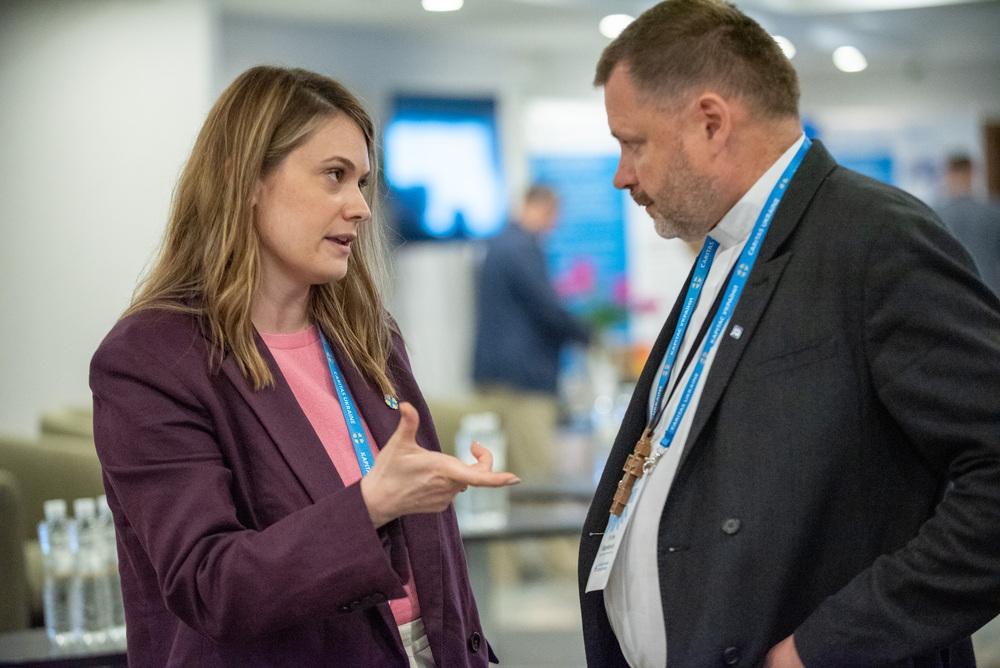
Romana Makolovych, Head of the Housing Program at Caritas Ukraine, added that for many people, housing determines whether they can stay in a community, return to normal life, and plan for the future.
“That is why, alongside repairs and emergency response, solutions that can work for years are becoming increasingly important. For us, it is extremely valuable to discuss these challenges with partners. It is in this kind of dialogue that solutions are born — solutions that combine community resources, support from international donors, and the experience of civil society. Ultimately, they help people regain not only housing, but also a sense of safety, stability, and home,” she said.
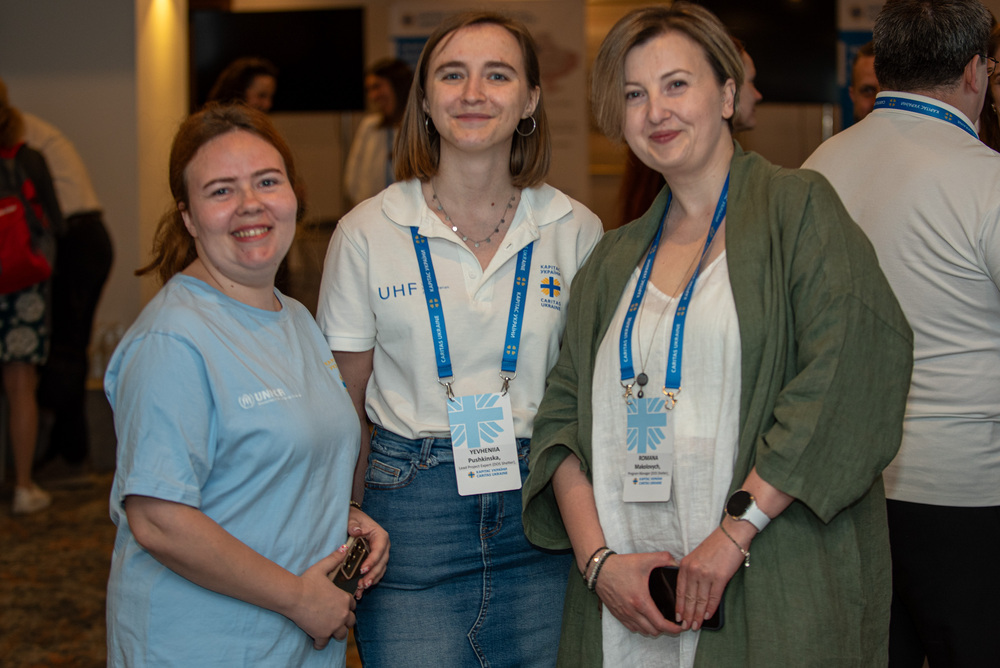
Healthcare
The Healthcare Program presented the development of the Caritas medical center network as a model that helps local organizations become more capable and less dependent on short donor funding cycles.
“Building the Caritas medical center network is an investment in a sustainable healthcare model. It helps local organizations think strategically, plan their development, and become less dependent on donor funding. Investments, cooperation with the National Health Service of Ukraine at the local level, and paid services all have one goal — to reach as many vulnerable people as possible with support,” said Khrystyna Semehen-Bodak, Head of the Healthcare Program at Caritas Ukraine.
Psychosocial support
In the area of psychosocial support, the team stressed that work with veterans and families of service members requires time, sensitivity, and space for trust.
“For us, the challenge is to support people while the war is still ongoing and, at the same time, care for the staff of local organizations. But we already see that after projects end, services for veterans and service members’ families change and expand. Beneficiaries themselves also come together and bring support to their brothers and sisters in arms,” said Iryna Maksymenko, Head of the MHPSS Program.
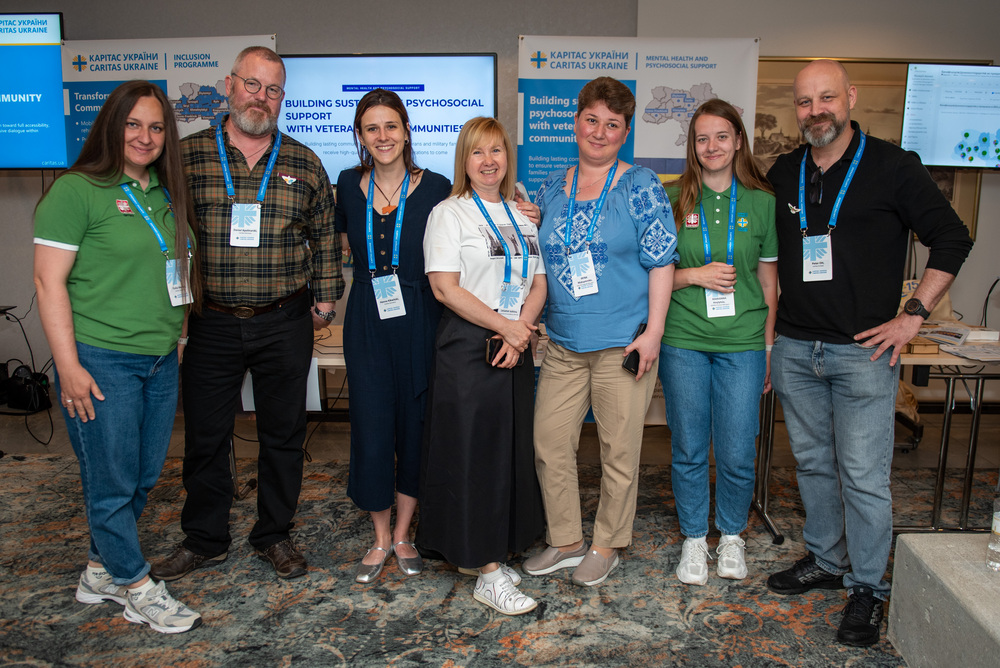
The Social Protection and Rights Defence Programme presented its work with the Resilience Centres – an initiative of the Ministry of Social Policy of Ukraine as part of the All-Ukrainian mental health programme ‘How Are You?’, launched by First Lady Olena Zelenska.
“The partners viewed with great interest the sustainable solutions being implemented by the Caritas Ukraine network. In particular, the concept of Resilience Centres. The partners did not even expect that, of all the Resilience Centres in existence (of which there are 368), 82 are run by local Caritas organisations. That is as much as 22 per cent of all Resilience Centres across Ukraine,” says Anastasia Stetsenko, head of the “Social Protection and Human Rights” programme at Caritas Ukraine.
Safe return and reintegration
The Safe Migration and Counter-Trafficking Program presented its approach to the safe return of Ukrainians and support for their reintegration into communities.
“During the meeting, we were able to show partners how local Caritas organizations support Ukrainians who plan to return, and how this support can become part of a wider reintegration system,” said Iryna Maievska, Head of the Safe Migration and Counter-Trafficking Program.
Social cohesion, integration, and peacebuilding
Participants also focused on social cohesion, integration, and peacebuilding.
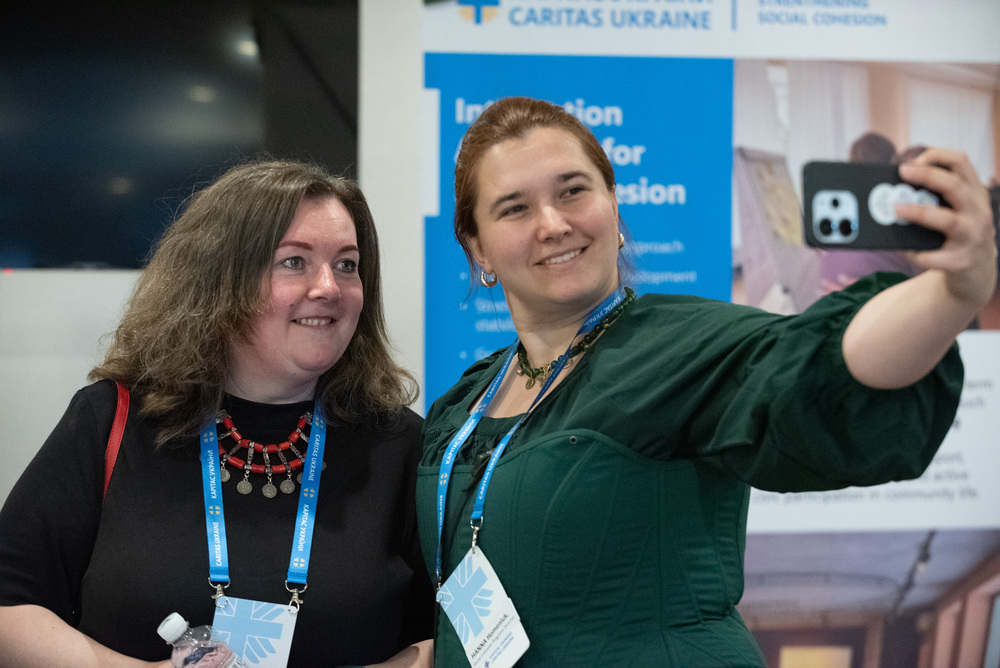
“This was an exchange between long-standing partners with whom we can speak openly. We spoke with Caritas Italiana and Renovabis about peacebuilding and the risks of conflict that may arise in any scenario for the end of the war. We also spoke a lot about the nexus — the connection between the humanitarian, development, and peacebuilding components of civil society work. Together with Caritas Kamianske, we shared not only our experience in integration activities. We also spoke about examples of organizations that experienced displacement themselves, but became agents of cohesion in their communities,” said Hanna Homeniuk, Director of the Social Cohesion Programs Department at Caritas Ukraine.
Caritas Ukraine’s experience through the eyes of international partners
International partners stressed that Caritas Ukraine’s experience is important not only for program implementation but also for a broader understanding of how sustainable solutions should work at the community level. Local practices that emerge close to people can strengthen international approaches and become a basis for public policy.
“The UN supports the work of local organizations, and during the meeting, it was clear how much of this work is already taking place in partnership with UN agencies. We want this cooperation to continue, but it is also important to change the system itself — so that local organizations not only receive support, but also influence how assistance is planned and delivered,” said David Das Neves.
Dr. Markus Ingenlath, Executive Director of Renovabis, stressed that for Western partners, Caritas Ukraine’s experience is an example of how, even during war, it is possible to preserve humanity, professionalism, and trust.
He also underlined the importance of parish social ministry as a model of decentralized responsibility.
“One of the most significant results of our cooperation is the development of parish social ministry. It has helped parishes take more responsibility for the most vulnerable people in their communities and become part of a wider support system. For us, this is an example of how sustainability begins where people start taking responsibility into their own hands,” he said.
Laura Stopponi, Project Manager at Caritas Italiana, noted that cooperation among Caritas organizations grows out of long-term relationships and that the meeting helped participants better understand not only the scale of assistance but also the human dimension of this work.
“What you are doing is not only a response to needs, but also human development, building the future, communities, and bridges between countries,” she said.
Looking for solutions for the future
The final day of the Partnership Meeting was dedicated to identifying solutions for 2027–2028. The meeting showed that sustainable solutions are not created through separate projects or short assistance cycles. They grow out of trust, local presence, team professionalism, partnership with the state and the international community, and a constant readiness to keep people at the center of every action.
This is how Caritas Ukraine continues to move from emergency assistance to recovery, from crisis response to solutions that help communities endure, recover, and plan for the future.
Tags
More news
Practical solidarity: Caritas partners meet for Country Forum
On September 23, 2026, representatives of “Caritas Ukraine,” “Caritas-Spes Ukraine,” and their partners held a Country Forum.
When every minute counts, but rushing can put lives at risk
How Caritas Rapid Response teams organise assistance in the aftermath of attacks.
Water through calm and air-raid alerts
Water at the tap depends on an entire system: wells, pumps, electricity, water networks and treatment facilities.