


“My guiding principle is to be where I can help, when it matters most”: Samira’s story as a Child Case Manager
Samira has been working as a Child Case Manager with Caritas Donetsk (based in Dnipro) since the very beginning of the PULSE Consortium’s operations.
Комунікаційна менеджерка програм Інклюзія, Соцзахисту та ПЗПСП
She supports families with children by helping them find accommodation, liaising with local authorities, identifying child protection risks and working to reduce them. Her schedule of meetings with people seeking assistance is booked months in advance. Yet, despite her busy workload, she remains attentive to every need of those who require support.

“I take on the most challenging cases,” Samira says. “Often, these are situations where people have to start from scratch — even with something as basic as replacing damaged passports or obtaining IDP certificates.”
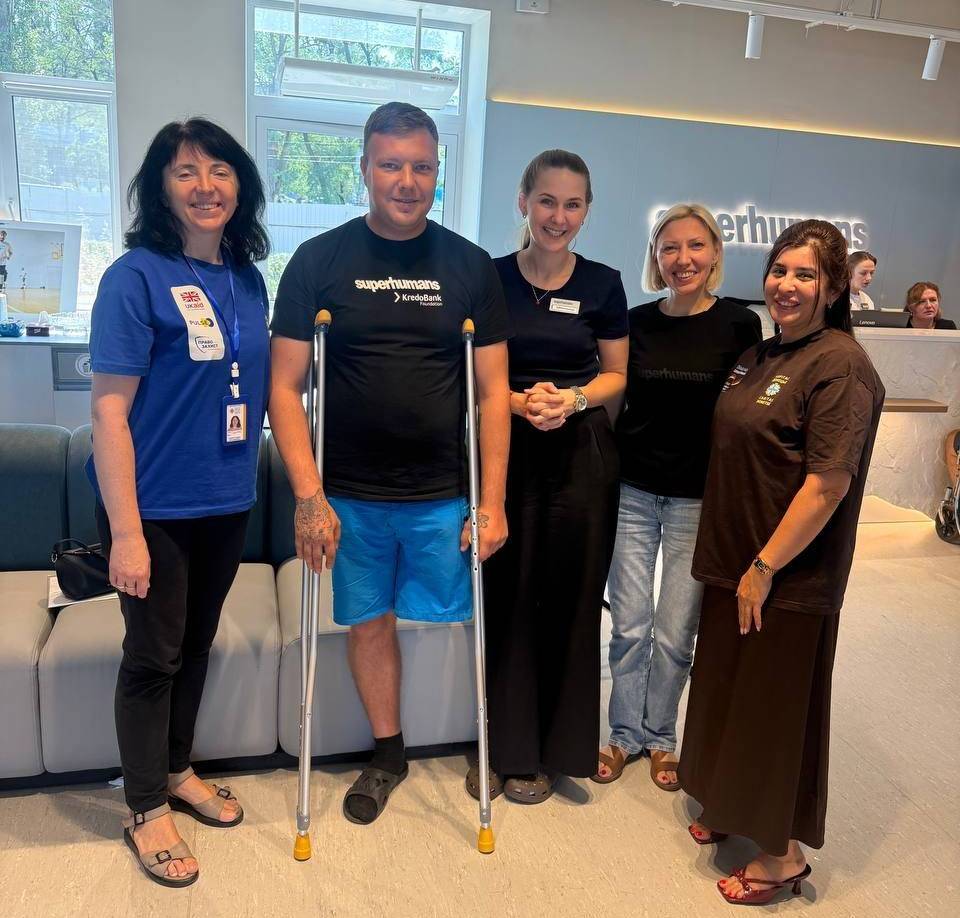
She says that close cooperation with colleagues from the Right to Protection Foundation is invaluable in addressing these needs. They often provide legal assistance and practical support, helping families restore or obtain documents, arranging transportation, and assisting with accommodation during evacuations.
This allows Samira to focus on the person and their immediate needs: finding a place for a family to live, securing funds to cover rent, and improving their living conditions. Officially, her role involves providing financial assistance for protection-related needs. In practice, however, Samira is much more than that: she is someone who takes families with children by the hand and guides them through many of the challenges they face as they settle into a new place.
Samira also values working alongside a strong multidisciplinary team of specialists — psychologists, rehabilitation professionals and speech therapists — who provide children with comprehensive support.
Reaching people in remote communities
According to Samira, internally displaced people in Dnipro are generally aware of the various charitable organisations operating in the city and know where to turn for help. The situation is different in remote communities, she explains. People often have no idea where to seek assistance, while aid organisations may not even know that newly arrived families in need of support are there.
“That is why we have established excellent communication with a family doctor who serves ten villages located 80 kilometres from Dnipro. Whenever she sees a new family with children arriving in the area, she calls me straight away. This allows me to reach out first and help people overcome the difficulties they face after relocating,” Samira explains.
She recalls one of her recent cases.
It involved a large family who had been evacuated and were temporarily accommodated in a school with virtually no suitable living conditions. The case was shared with a colleague. While the colleague focused on the adults — the grandmother, grandfather and a grandson with a disability — Samira took responsibility for their underage granddaughter, who had recently given birth.
“We found them a house to live in, but then another problem emerged: there was no electricity. So the situation was this: a teenage girl trying to continue her education remotely, unable to join online classes because of an electricity absence, while also caring for a newborn who needed constant attention.”
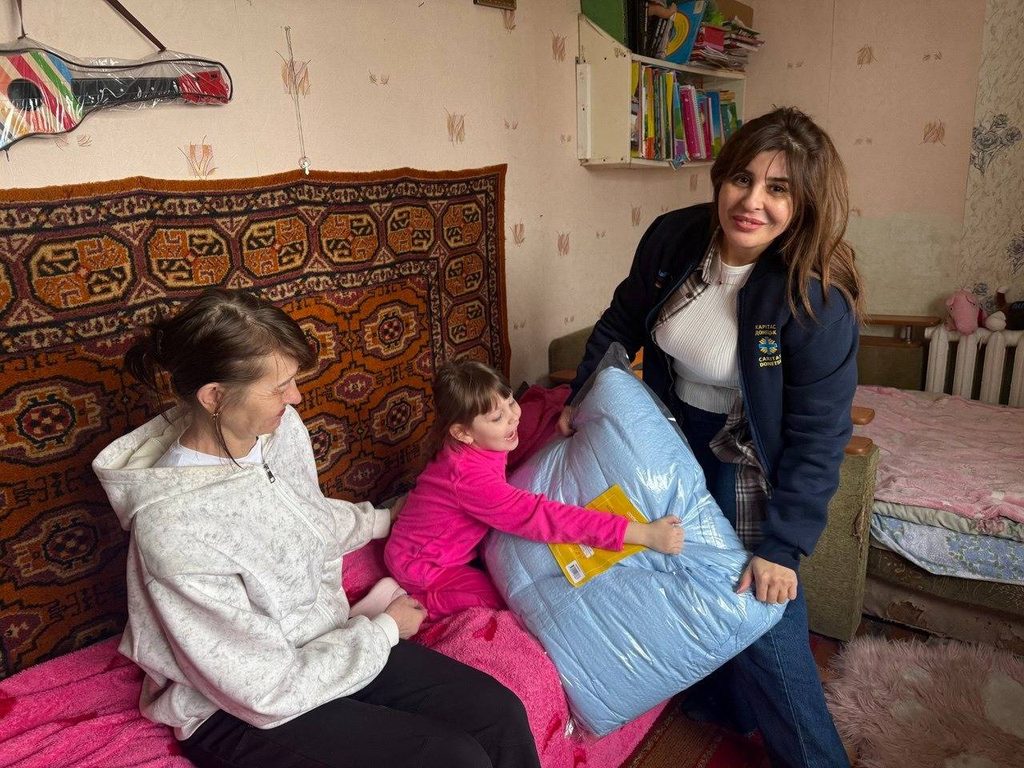
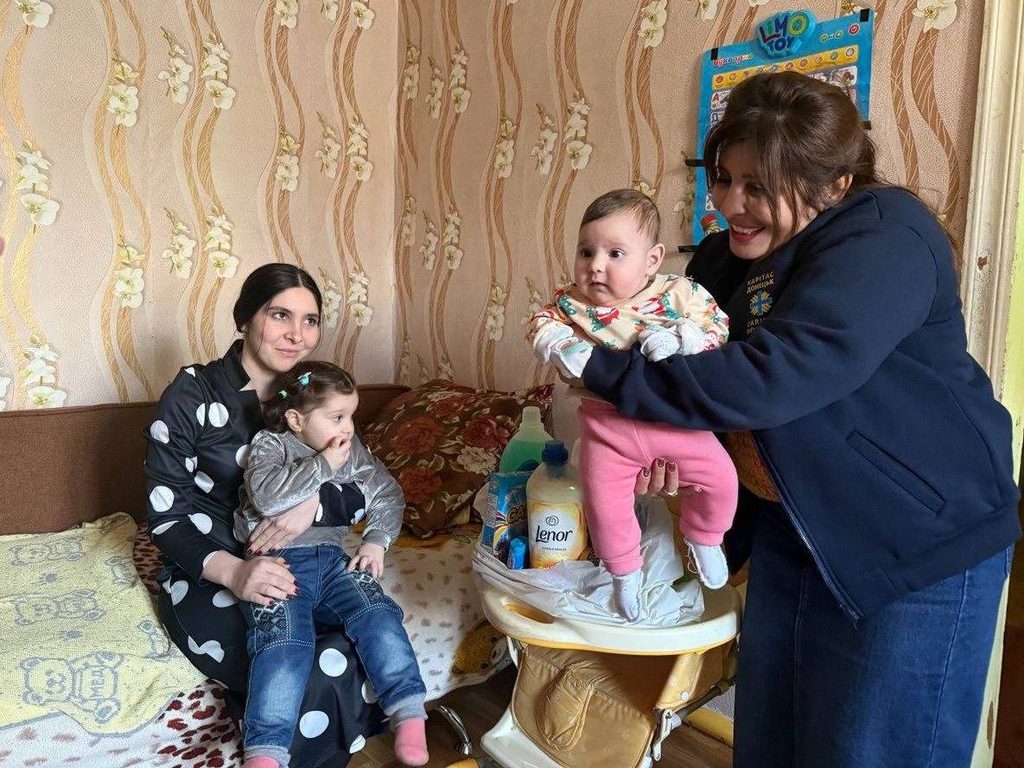
The support was provided step by step, taking into account the family’s different needs. First, all the necessary documents for the baby were arranged, the young mother’s status as a single parent was officially confirmed, and she obtained an IDP certificate. She is now receiving government benefits. The family was also provided with essential humanitarian assistance.
At that point, the project had reached the limits of what it could offer. But Samira knew it was not enough.
Having gained a thorough understanding not only of the family’s needs but also of the wider community’s situation, she knew that electricity shortages were affecting the school, kindergarten and local medical point as well. Finding a solution went beyond the standard responsibilities of a case manager — but Samira found one.
Taking the initiative herself, she embarked on what is known as fundraising. She wrote dozens of letters and eventually found a donor in the Netherlands who helped provide generators to three of the most vulnerable families, as well as to the school, kindergarten and medical point.
Her persistence and attentiveness to people’s needs brought light back into homes, made it possible to provide children with essential supplies and warmth, and ensured that the family doctor — the only one serving ten villages — could work on her computer without interruptions and issue referrals for medical examinations on time.
New challenges brought by the war
For Samira, every working day at Caritas is, in many ways, a form of service. Most of the children she supports have disabilities, but she also has previous experience working with children living with HIV. That experience continues to be invaluable in her current role.
“People arrive, get tested, and we identify new cases. For these families, it is crucial to have uninterrupted access to treatment. The government currently provides all the necessary medication free of charge. But it is equally important that people actually take it. I try to make sure that such families receive case management support as soon as possible,” Samira explains.
A wellspring of purpose
“These are very difficult times,” Samira says. “And I feel genuinely happy whenever we manage to make something happen. Sometimes I return to the village where I worked on that recent case. People there greet me with tears of gratitude in their eyes. Those emotions are simply impossible to put into words.
That is where I find the greatest meaning and strength in my work. I know for certain that I am in the right place at the right time, ready to help someone who reaches out to me for support.”
Tags
More news
“My guiding principle is to be where I can help, when it matters most”: Samira’s story as a Child Case Manager
Samira has been working as a Child Case Manager with Caritas Donetsk (based in Dnipro) since the very beginning of the PULSE Consortium’s operations.
President of Caritas Ukraine Presents Pope Leo XIV with Gifts from a Family Evacuated from Oleshky
On November 19, Tetiana Stawnychy, President of Caritas Ukraine, attended a meeting with Pope Leo XIV on the occasion of the 75th anniversary of the Caritas Internationalis Confederation.
Beyond construction: Developing Sustainable Housing Solutions and Systems in Ukraine
Due to the war, Ukrainian families are facing housing challenges that require not only immediate assistance but also sustainable solutions for the recovery of their communities.